
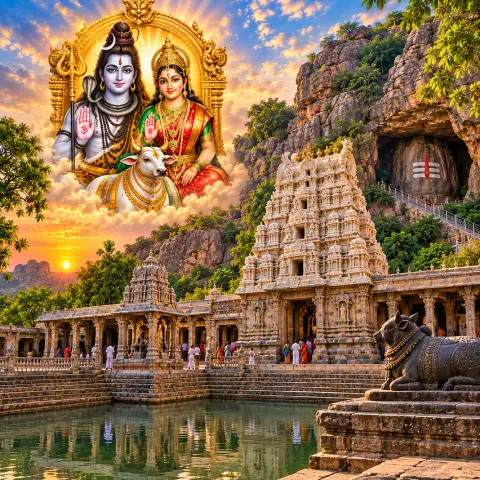
Sri Yaganti Uma Maheswara Swamy Temple – Overview
Introduction
Located amid the scenic Yerramala hill ranges in the Nandyal district of Andhra Pradesh, Sri Yaganti Uma Maheswara Swamy Temple is one of the distinctive Shaiva pilgrimage centres of the Rayalaseema region. The temple is dedicated to Lord Uma Maheswara Swamy, worshipped together with Goddess Parvati, and is renowned for its unusual natural surroundings, ancient rock formations, sacred caves, Pushkarini and the enormous Nandi statue known as Yaganti Basavanna.
Unlike the many Shiva temples in which the principal deity is worshipped in the form of a Shiva Linga, the presiding deity at Yaganti is traditionally represented in an anthropomorphic form of Uma Maheswara. The temple's combination of Shiva and Parvati in one sacred representation is one of its most distinctive religious features.
Yaganti is situated approximately 11 kilometres from Banaganapalle and around 58 kilometres from Nandyal. The Nandyal District administration describes the temple as being surrounded by natural scenery, caves and waterfalls, with the huge Nandi being one of its most striking features. :contentReference[oaicite:1]{index=1}
The Name Yaganti
The traditional origin of the name Yaganti is associated with a devotional story concerning a devotee named Chitteppa and Lord Shiva.
According to the Sthala Purana, Chitteppa was an ardent devotee of Lord Shiva. One day, Shiva is believed to have appeared before him in the form of a tiger. Realising that the tiger was actually Lord Shiva in disguise, Chitteppa exclaimed that he had seen Shiva and expressed his joy through dance.
The traditional phrase associated with this episode is often interpreted as “Nē Kanti Shivunni” or “I saw Shiva,” and the name Yaganti is popularly connected with this devotional episode.
A cave in the surrounding hills is also associated with Chitteppa in local tradition. This account belongs to the sacred legend of the region rather than independently verified historical evidence.
Legend of Sage Agastya
One of the principal legends associated with Yaganti concerns Sage Agastya.
According to traditional accounts, Sage Agastya visited this region and intended to establish a temple dedicated to Lord Venkateswara. An image prepared for the proposed shrine was found to have a damaged toe, and the sage is said to have considered the image unsuitable for installation.
Agastya then performed penance seeking the blessings of Lord Shiva. Shiva is traditionally believed to have appeared before him and declared that the surroundings were more suitable for his own worship, as the landscape resembled Mount Kailasa.
Agastya subsequently requested Shiva to manifest together with Goddess Parvati in a unified form as Uma Maheswara. According to the legend, Lord Shiva granted this request, resulting in the unique form of Uma Maheswara worshipped at Yaganti.
This story is one of the central Sthala Purana traditions of Yaganti. It explains the unusual anthropomorphic form of the principal deity and the temple's close association with Sage Agastya.
Lord Uma Maheswara
The principal deity is Sri Uma Maheswara Swamy, representing Lord Shiva together with Goddess Parvati. The divine couple is traditionally associated with harmony, divine union, spiritual strength and the balance of masculine and feminine principles.
The deity is particularly distinctive because the principal representation is not a conventional Shiva Linga. Instead, Shiva and Parvati are worshipped together in a sculptural form carved from a single stone.
This unusual representation has made Yaganti especially important among devotees who wish to experience a distinctive form of Shaiva worship.
History
The present temple complex belongs primarily to the medieval period and is traditionally associated with the Vijayanagara Empire.
The Nandyal District Survey Report records that the Yaganti Uma Maheswara Swamy Temple was constructed and completed in the 15th century during the reign of the first Vijayanagara Sangama rulers, Harihara and Bukka Raya. The report also notes that the temple was built according to Vaishnava architectural traditions, despite being a shrine dedicated to Lord Shiva. :contentReference[oaicite:2]{index=2}
The temple and surrounding sacred landscape preserve evidence of different religious and architectural influences that developed over successive periods. The wider region also contains ancient caves and rock formations that form an important part of Yaganti's heritage.
The Archaeological Survey-related national monument records also list the Uma-Mahesvaraswami Temple and an old cave temple at Yaganti among protected historical monuments of Andhra Pradesh. :contentReference[oaicite:3]{index=3}
Temple Architecture
The temple is built amid naturally occurring rock formations of the Yerramala hills. The architecture is closely integrated with the surrounding landscape, giving Yaganti a character different from temples constructed on large urban plains.
The main temple contains a sanctum dedicated to Uma Maheswara, together with mandapas, entrance structures, sculptural elements and subsidiary sacred spaces.
Although the temple is dedicated to Shiva, historical accounts associate its construction with the Vijayanagara period and note the influence of Vaishnava architectural traditions. The sculptures and stonework demonstrate the craftsmanship characteristic of South Indian temple architecture.
The surrounding caves and natural rock formations are not merely scenic attractions; they form an important part of the religious landscape and are traditionally associated with sages and saints who are believed to have performed meditation and penance in the area.
Yaganti Basavanna – The Sacred Nandi
The enormous stone Nandi, popularly known as Yaganti Basavanna, is one of the most famous features of the temple.
The Nandyal District administration describes the Nandi as approximately 15 feet long, 10 feet wide and 8 feet high. Its massive size and position in front of the temple make it one of the most visually striking features of Yaganti. :contentReference[oaicite:4]{index=4}
A popular religious belief holds that the stone Nandi has been gradually increasing in size. Devotees traditionally regard this as a divine phenomenon.
According to a popular tradition associated with the saint Potuluri Veera Brahmendra Swamy, the Nandi is believed to rise and roar at the end of Kali Yuga. This is a devotional prophecy traditionally associated with the site and should not be presented as a scientifically established prediction.
The belief in the growth of the Nandi has become one of the most recognisable legends of Yaganti and contributes greatly to the temple's cultural identity.
Agastya Pushkarini
The Agastya Pushkarini is one of the most important sacred water bodies at Yaganti.
Traditional accounts associate the Pushkarini with Sage Agastya, who is believed to have bathed in its waters and worshipped Lord Shiva.
Water continuously flows into the Pushkarini from the surrounding hill formations. The source and natural movement of the water are among the notable features of the site.
Devotees traditionally regard the Pushkarini as sacred and consider bathing in its waters before worshipping Lord Shiva to be spiritually beneficial. The Nandyal District Survey Report also records the perennial flow into the Pushkarini and its religious importance. :contentReference[oaicite:5]{index=5}
The Sacred Caves of Yaganti
The hills surrounding the temple contain several natural caves. Many of these caves are associated with sages, saints and devotional traditions.
These caves contribute significantly to the uniqueness of the Yaganti pilgrimage because devotees can experience both temple worship and a natural sacred landscape within the same pilgrimage area.
Agastya Cave
Agastya Cave is traditionally associated with Sage Agastya's penance.
According to local tradition, the sage performed meditation and worship of Lord Shiva in this cave. Devotees reach the cave by climbing a series of steps through the rocky hill terrain.
A sacred representation of the Goddess is also associated with the cave, making it an important subsidiary pilgrimage spot.
Venkateswara Cave
Venkateswara Cave contains a damaged image of Lord Venkateswara. The traditional story connects the image with the legend of Sage Agastya's original intention to establish a Venkateswara shrine at Yaganti.
According to local belief, the image could not be installed because of damage to the foot. The shrine therefore remained in the cave, where it became an important part of the sacred landscape.
The Venkateswara Cave also contributes to the unusual religious identity of Yaganti, where a major Shiva temple is surrounded by sacred traditions involving both Shiva and Venkateswara.
Veera Brahmam Cave
Veera Brahmam Cave is associated with the Telugu saint and mystic Potuluri Veera Brahmendra Swamy.
According to local tradition, Veera Brahmendra Swamy spent time in the cave and composed portions of his famous Kalagnanam, a collection of prophetic and spiritual teachings attributed to him.
The cave is relatively low in height, and visitors traditionally need to bend while entering certain portions of it. Its association with Veera Brahmendra Swamy has made it an important destination for devotees interested in Telugu spiritual traditions.
Chitteppa Cave
The cave associated with Chitteppa is connected with the local legend of the devotee who is believed to have encountered Lord Shiva in tiger form.
The story of Chitteppa is closely connected with the traditional explanation of the name Yaganti and is part of the devotional heritage of the surrounding hills.
Legend of the Crows
Another popular legend of Yaganti concerns crows.
According to local tradition, Sage Agastya was performing penance when crows disturbed his meditation. The sage is said to have cursed the crows so that they would not enter or fly over the sacred area.
Because the crow is traditionally associated with Lord Shani, a related devotional belief holds that Shani's influence is absent from the sacred precincts of Yaganti.
This is a traditional religious legend and should be presented as such rather than as a scientifically verified phenomenon.
Ritual Practice
Daily worship at Sri Yaganti Uma Maheswara Swamy Temple is conducted according to established Shaiva temple traditions.
Regular worship includes the opening of the temple, purification rituals, Abhishekam, Alankarana, Archana, Naivedyam and Harathi. Special rituals are performed on Mondays, Pradosham and other auspicious days associated with Lord Shiva.
Devotees also visit the Pushkarini and associated sacred caves as part of their pilgrimage before or after worshipping the principal deity.
Maha Shivaratri
Maha Shivaratri is the most important annual festival celebrated at Yaganti.
Large numbers of devotees visit the temple during the festival to worship Lord Uma Maheswara. Special Abhishekams, Archana, Harathi, devotional programmes and other religious ceremonies are conducted during the festival period.
The Nandyal District administration specifically identifies Maha Shivaratri as a major festival at Yaganti and notes that it attracts large numbers of Hindu devotees. :contentReference[oaicite:6]{index=6}
Other Important Religious Occasions
- Pradosham – a special period dedicated to Lord Shiva, observed with Abhishekam and devotional worship.
- Mahashivaratri – the principal annual celebration, marked by special Shiva worship and large pilgrim gatherings.
- Karthika Masam – the sacred month associated with Shiva worship, during which devotees perform special prayers, lamps and temple visits.
- Somavaram – Mondays are traditionally considered especially auspicious for Shiva worship and attract additional devotees.
- Full Moon and New Moon observances – special prayers and devotional activities may be performed according to temple tradition and the Hindu calendar.
Religious Significance
Yaganti is regarded as an important Shiva pilgrimage centre because of its association with Lord Uma Maheswara, Sage Agastya, the sacred Pushkarini, the natural caves and Yaganti Basavanna.
The temple's unusual representation of Shiva and Parvati together provides a distinctive theological identity. Devotees traditionally view Uma Maheswara as a symbol of divine harmony, marital auspiciousness, spiritual strength and the unity of Shiva and Shakti.
The sacred caves and Pushkarini further reinforce the belief that the entire Yaganti landscape is a spiritually charged pilgrimage area rather than simply a temple complex.
Connection with Potuluri Veera Brahmendra Swamy
Yaganti has a strong cultural connection with the Telugu saint and mystic Potuluri Veera Brahmendra Swamy.
Local tradition associates the saint with the Veera Brahmam Cave, where he is believed to have spent time in meditation and written portions of his Kalagnanam.
Veera Brahmendra Swamy is an important figure in Telugu spiritual tradition, and his association with Yaganti has contributed to the temple's importance beyond Shaiva worship.
Natural Beauty and Sacred Landscape
One of the most remarkable aspects of Yaganti is the close relationship between the temple and its natural surroundings.
The Yerramala hill ranges, rock formations, caves, water channels, Pushkarini and vegetation create a landscape in which the temple appears naturally integrated into the hills.
Unlike large temple complexes situated within densely populated urban environments, Yaganti offers devotees an experience that combines temple worship, natural scenery and cave pilgrimage.
The Nandyal District Government specifically describes Yaganti as being surrounded by natural scenery, caves and waterfalls. :contentReference[oaicite:7]{index=7}
Why Visit Sri Yaganti Uma Maheswara Swamy Temple?
- To receive darshan of Sri Uma Maheswara Swamy in the distinctive combined form of Shiva and Parvati.
- To see the enormous and traditionally revered Yaganti Basavanna.
- To visit the sacred Agastya Pushkarini.
- To explore the Agastya Cave and learn about its association with Sage Agastya.
- To visit the Venkateswara Cave and its traditionally associated image.
- To visit the Veera Brahmam Cave associated with Potuluri Veera Brahmendra Swamy.
- To experience the natural beauty of the Yerramala hills.
- To participate in Maha Shivaratri celebrations.
- To learn about the traditional legends of Sage Agastya, Chitteppa and Yaganti Basavanna.
- To experience one of the distinctive Shaiva pilgrimage landscapes of Andhra Pradesh.
Spiritual Importance of Yaganti
Yaganti brings together several layers of Hindu religious tradition: Shiva and Shakti worship, Sage Agastya's penance, Vijayanagara-era temple architecture, sacred water traditions, natural caves, saint traditions and the worship of Nandi.
For devotees, the pilgrimage is therefore not limited to darshan of the main deity. The Pushkarini, caves, Basavanna and surrounding hills are all considered important elements of the sacred Yaganti experience.
శ్రీ యాగంటి ఉమామహేశ్వర స్వామి దేవాలయం – అవలోకనం
పరిచయం
ఆంధ్రప్రదేశ్లోని నంద్యాల జిల్లాలో యెర్రమల కొండల మధ్య సుందరమైన ప్రకృతి వాతావరణంలో కొలువై ఉన్న శ్రీ యాగంటి ఉమామహేశ్వర స్వామి దేవాలయం రాయలసీమ ప్రాంతంలోని ప్రముఖ శైవ పుణ్యక్షేత్రాలలో ఒకటి. ఉమామహేశ్వర స్వామి మరియు పార్వతీ దేవి ఆరాధనతో పాటు, సహజసిద్ధమైన కొండలు, గుహలు, జలపాతాలు, పుష్కరిణి మరియు ప్రసిద్ధ యాగంటి బసవన్న ఈ క్షేత్రానికి ప్రత్యేక గుర్తింపును తీసుకువచ్చాయి.
అనేక శివాలయాలలో ప్రధాన దేవతను శివలింగ రూపంలో ఆరాధిస్తారు. అయితే యాగంటిలో ప్రధాన దైవాన్ని ఉమామహేశ్వర స్వామిగా శివుడు మరియు పార్వతీ దేవి కలిసి ఉన్న మానవాకార శిల్పరూపంలో ఆరాధించడం ప్రత్యేకత.
యాగంటి బనగానపల్లెకు సుమారు 11 కిలోమీటర్ల దూరంలో, నంద్యాల నుంచి సుమారు 58 కిలోమీటర్ల దూరంలో ఉంది. నంద్యాల జిల్లా ప్రభుత్వం యాగంటిని సహజ ప్రకృతి దృశ్యాలు, గుహలు మరియు జలపాతాలతో కూడిన ముఖ్యమైన పుణ్యక్షేత్రంగా పేర్కొంటూ, భారీ నందిని ఈ ఆలయానికి ప్రధాన ఆకర్షణలలో ఒకటిగా గుర్తిస్తుంది. :contentReference[oaicite:8]{index=8}
యాగంటి అనే పేరు
యాగంటి అనే పేరుకు సంబంధించిన సంప్రదాయ వివరణ చిట్టెప్ప అనే శివభక్తుడు మరియు పరమశివునికి సంబంధించిన స్థలపురాణ కథతో అనుసంధానించబడింది.
స్థలపురాణం ప్రకారం చిట్టెప్ప పరమశివుని పరమ భక్తుడు. ఒకరోజు శివుడు పులి రూపంలో అతని ముందు ప్రత్యక్షమయ్యాడని సంప్రదాయ కథనం. ఆ పులి నిజానికి శివుడేనని గుర్తించిన చిట్టెప్ప ఆనందంతో శివుని దర్శించానని భావిస్తూ నృత్యం చేశాడని చెబుతారు.
ఈ సంఘటనకు సంబంధించిన “నే కంటి శివున్ని” లేదా “శివుడిని చూశాను” అనే భావనతో కూడిన సంప్రదాయ పదప్రయోగం కాలక్రమంలో యాగంటి అనే పేరుతో అనుసంధానించబడింది.
పరిసర కొండల్లోని ఒక గుహను కూడా చిట్టెప్పతో స్థానిక సంప్రదాయం అనుసంధానిస్తుంది. ఈ కథ యాగంటి స్థలపురాణంలో భాగం మాత్రమే; దీనిని స్వతంత్ర చారిత్రక ఆధారంగా పరిగణించకూడదు.
అగస్త్య మహర్షి స్థలపురాణం
యాగంటి క్షేత్రంతో అత్యంత ముఖ్యంగా అనుసంధానించబడిన స్థలపురాణాలలో అగస్త్య మహర్షి కథ ఒకటి.
సంప్రదాయ కథనం ప్రకారం అగస్త్య మహర్షి ఈ ప్రాంతానికి వచ్చి శ్రీ వేంకటేశ్వర స్వామివారి ఆలయాన్ని నిర్మించాలని భావించారు. ఇందుకోసం తయారు చేసిన విగ్రహం పాదంలోని బొటనవేలు దెబ్బతినడంతో దానిని ప్రతిష్ఠించడానికి అనుకూలంగా లేదని భావించారని చెబుతారు.
అనంతరం అగస్త్య మహర్షి పరమశివుని కోసం తపస్సు చేశారని, ఆయన తపస్సుకు ప్రసన్నుడైన శివుడు ప్రత్యక్షమై ఈ ప్రాంతం కైలాసాన్ని పోలి ఉన్నందున తన ఆరాధనకు అనుకూలమైన ప్రదేశమని తెలియజేశాడని స్థలపురాణం చెబుతుంది.
అప్పుడు అగస్త్య మహర్షి శివుడు పార్వతీ దేవితో కలిసి ఉమామహేశ్వర స్వామి రూపంలో భక్తులకు దర్శనమివ్వాలని కోరారని, శివుడు ఆ కోరికను అనుగ్రహించాడని సంప్రదాయ కథనం.
యాగంటి ఆలయంలో శివుడు మరియు పార్వతీ దేవి కలిసి ఉన్న ప్రత్యేక రూపాన్ని ఆరాధించడానికి ఈ కథను ముఖ్యమైన స్థలపురాణ వివరణగా భావిస్తారు.
శ్రీ ఉమామహేశ్వర స్వామి
యాగంటి క్షేత్రంలోని ప్రధాన దేవత శ్రీ ఉమామహేశ్వర స్వామి. ఇందులో పరమశివుడు మరియు పార్వతీ దేవి కలిసి ఉన్న దివ్యరూపాన్ని ఆరాధిస్తారు.
శివుడు మరియు శక్తి ఏకత్వం, దాంపత్య మంగళం, ఆధ్యాత్మిక బలం మరియు దైవిక సమతుల్యతకు ఉమామహేశ్వర రూపం ప్రతీకగా భక్తులు భావిస్తారు.
ఇక్కడి ప్రధాన దైవం సాధారణ శివలింగ రూపంలో కాకుండా శివుడు మరియు పార్వతీ దేవి ఒకే శిలలో చెక్కబడిన మానవాకార రూపంలో ఉండటం ఈ క్షేత్రం యొక్క అత్యంత విశిష్టమైన అంశాలలో ఒకటి.
చరిత్ర
ప్రస్తుతం ఉన్న యాగంటి ఆలయ సముదాయం ప్రధానంగా మధ్యయుగ కాలానికి చెందినదిగా భావించబడుతుంది. ఈ ఆలయం విజయనగర సామ్రాజ్యంతో ముఖ్యమైన చారిత్రక సంబంధాన్ని కలిగి ఉంది.
నంద్యాల జిల్లా ప్రభుత్వ జిల్లా సర్వే నివేదిక ప్రకారం యాగంటి ఉమామహేశ్వర స్వామి ఆలయం 15వ శతాబ్దంలో విజయనగర సంగమ వంశానికి చెందిన మొదటి హరిహరరాయలు మరియు బుక్కరాయల కాలంలో నిర్మించబడి పూర్తి చేయబడింది. ఈ నివేదిక ఆలయ నిర్మాణంలో వైష్ణవ సంప్రదాయ ప్రభావం ఉన్నట్లు కూడా పేర్కొంటుంది. :contentReference[oaicite:9]{index=9}
ఆలయం మరియు పరిసర పవిత్ర ప్రాంతాలు వివిధ కాలాల్లో అభివృద్ధి చెందిన ధార్మిక మరియు నిర్మాణ సంప్రదాయాలను ప్రతిబింబిస్తాయి. కొండలలోని పురాతన గుహలు మరియు సహజ శిలా నిర్మాణాలు కూడా యాగంటి వారసత్వంలో ముఖ్యమైన భాగాలు.
జాతీయ స్మారక చిహ్నాల రికార్డుల్లో యాగంటిలోని ఉమామహేశ్వర స్వామి ఆలయం మరియు పురాతన గుహాలయం కూడా చారిత్రక స్మారక ప్రదేశాలుగా నమోదు చేయబడ్డాయి. :contentReference[oaicite:10]{index=10}
ఆలయ నిర్మాణ శైలి
యాగంటి ఆలయం యెర్రమల కొండల సహజ శిలా నిర్మాణాల మధ్య నిర్మించబడింది. ఆలయ నిర్మాణం చుట్టూ ఉన్న సహజ ప్రకృతి దృశ్యాలతో సన్నిహితంగా మిళితమై ఉండటం ఈ క్షేత్రానికి ప్రత్యేకమైన అందాన్ని ఇస్తుంది.
ప్రధాన ఆలయంలో ఉమామహేశ్వర స్వామివారి గర్భగృహంతో పాటు మండపాలు, ప్రవేశ నిర్మాణాలు, శిల్పాలు మరియు అనుబంధ పవిత్ర ప్రదేశాలు ఉన్నాయి.
శివునికి అంకితమైన ఆలయం అయినప్పటికీ, చారిత్రక వివరాలు దీని నిర్మాణాన్ని విజయనగర కాలంతో మరియు వైష్ణవ నిర్మాణ సంప్రదాయ ప్రభావంతో అనుసంధానిస్తాయి. ఆలయంలోని శిల్పాలు దక్షిణ భారతీయ ఆలయ శిల్పకళా నైపుణ్యాన్ని ప్రతిబింబిస్తాయి.
ఆలయ పరిసరాల్లోని గుహలు మరియు సహజ శిలలు కేవలం ప్రకృతి అందాలే కాకుండా, ఋషులు మరియు సంతులు తపస్సు చేసిన పవిత్ర ప్రదేశాలుగా స్థానిక సంప్రదాయంలో భావించబడుతున్నాయి.
యాగంటి బసవన్న – పవిత్ర నంది
యాగంటి క్షేత్రంలోని అత్యంత ప్రసిద్ధ ఆకర్షణలలో యాగంటి బసవన్నగా ప్రసిద్ధి చెందిన భారీ నంది విగ్రహం ఒకటి.
నంద్యాల జిల్లా ప్రభుత్వం పేర్కొన్న వివరాల ప్రకారం ఈ నంది సుమారు 15 అడుగుల పొడవు, 10 అడుగుల వెడల్పు మరియు 8 అడుగుల ఎత్తు కలిగి ఉంది. ఆలయ ముందు ఉన్న ఈ భారీ నంది యాగంటి క్షేత్రానికి ప్రత్యేకమైన దృశ్య గుర్తింపును అందిస్తుంది. :contentReference[oaicite:11]{index=11}
ఈ రాతి నంది కాలక్రమేణా పరిమాణంలో పెరుగుతోందనే ప్రజలలో ప్రసిద్ధమైన ధార్మిక విశ్వాసం ఉంది. భక్తులు దీనిని దైవిక అద్భుతంగా భావిస్తారు.
పోతులూరి వీరబ్రహ్మేంద్ర స్వామివారికి సంబంధించిన ప్రసిద్ధ సంప్రదాయ ప్రవచనం ప్రకారం కలియుగాంతంలో యాగంటి బసవన్న లేచి గర్జిస్తాడని నమ్మకం ఉంది.
ఈ విశ్వాసం యాగంటి క్షేత్రంలోని ముఖ్యమైన భక్తి సంప్రదాయాలలో ఒకటి. దీనిని శాస్త్రీయంగా నిరూపించబడిన భవిష్యవాణిగా కాకుండా ధార్మిక సంప్రదాయంగా పేర్కొనడం సముచితం.
అగస్త్య పుష్కరిణి
అగస్త్య పుష్కరిణి యాగంటి ఆలయ సముదాయంలోని ముఖ్యమైన పవిత్ర జలాశయాలలో ఒకటి.
సంప్రదాయ కథనం ప్రకారం అగస్త్య మహర్షి ఈ పుష్కరిణిలో స్నానం చేసి పరమశివుని ఆరాధించారని చెబుతారు.
చుట్టుపక్కల ఉన్న కొండల నుంచి పుష్కరిణిలోకి నిరంతరం నీరు చేరుతూ ఉండటం ఈ ప్రాంతంలోని ముఖ్యమైన సహజ విశేషాలలో ఒకటి.
భక్తులు ఈ పుష్కరిణిని పవిత్రమైనదిగా భావించి, శివుని దర్శనానికి ముందు ఇందులో స్నానం చేయడం ఆధ్యాత్మికంగా శుభప్రదమని నమ్ముతారు. నంద్యాల జిల్లా సర్వే నివేదిక కూడా పుష్కరిణిలోని నిరంతర జల ప్రవాహాన్ని మరియు దాని ధార్మిక ప్రాధాన్యతను నమోదు చేసింది. :contentReference[oaicite:12]{index=12}
యాగంటి పవిత్ర గుహలు
యాగంటి కొండల చుట్టూ అనేక సహజసిద్ధమైన గుహలు ఉన్నాయి. ఈ గుహలు ఋషులు, సంతులు మరియు భక్తి సంప్రదాయాలతో అనుసంధానించబడ్డాయి.
ఒకే తీర్థయాత్రలో ఆలయ దర్శనంతో పాటు సహజసిద్ధమైన గుహలు మరియు పవిత్ర కొండ ప్రాంతాలను దర్శించగలగడం యాగంటి యాత్రకు ప్రత్యేకతను ఇస్తుంది.
అగస్త్య గుహ
అగస్త్య గుహను అగస్త్య మహర్షి తపస్సుతో సంప్రదాయంగా అనుసంధానిస్తారు.
స్థానిక సంప్రదాయం ప్రకారం అగస్త్య మహర్షి ఈ గుహలో ధ్యానం చేస్తూ పరమశివుని ఆరాధించారని చెబుతారు. కొండ రాళ్ల మధ్య మెట్లను ఎక్కుతూ భక్తులు గుహను చేరుకుంటారు.
గుహలో అమ్మవారికి సంబంధించిన పవిత్ర రూపం కూడా సంప్రదాయంగా ఆరాధించబడుతుంది. అందువల్ల ఇది యాగంటి యాత్రలో ఒక ముఖ్యమైన అనుబంధ పవిత్ర స్థలంగా ఉంది.
వేంకటేశ్వర గుహ
వేంకటేశ్వర గుహలో దెబ్బతిన్న శ్రీ వేంకటేశ్వర స్వామివారి విగ్రహం ఉంది. అగస్త్య మహర్షి యాగంటిలో వేంకటేశ్వర ఆలయాన్ని నిర్మించాలని భావించిన కథతో ఈ విగ్రహాన్ని స్థానిక సంప్రదాయం అనుసంధానిస్తుంది.
విగ్రహం పాదం దెబ్బతినడంతో దానిని ప్రతిష్ఠించలేకపోయారని, అందువల్ల అది గుహలోనే నిలిచిపోయిందని భక్తి కథనం.
శివాలయంగా ప్రసిద్ధి చెందిన యాగంటి క్షేత్రంలో వేంకటేశ్వర స్వామివారి సంప్రదాయానికి సంబంధించిన ఈ గుహ ఉండటం క్షేత్రం యొక్క ప్రత్యేక ధార్మిక స్వభావాన్ని మరింత పెంచుతుంది.
వీరబ్రహ్మం గుహ
వీరబ్రహ్మం గుహ తెలుగు సంతుడు, మహాత్ముడు మరియు ఆధ్యాత్మికవేత్త పోతులూరి వీరబ్రహ్మేంద్ర స్వామితో సంప్రదాయంగా అనుసంధానించబడింది.
స్థానిక విశ్వాసం ప్రకారం వీరబ్రహ్మేంద్ర స్వామి ఈ గుహలో కొంతకాలం ధ్యానం చేసి, తన ప్రసిద్ధ కాలజ్ఞానంలోని కొన్ని భాగాలను ఇక్కడ రచించారని చెబుతారు.
గుహలో కొన్ని ప్రాంతాలు తక్కువ ఎత్తులో ఉండటంతో లోపలికి వెళ్లే సమయంలో భక్తులు వంగి వెళ్లాల్సి ఉంటుంది. తెలుగు ఆధ్యాత్మిక సంప్రదాయాలపై ఆసక్తి ఉన్న భక్తులకు ఈ గుహ ప్రత్యేకమైన ప్రాధాన్యతను కలిగి ఉంది.
చిట్టెప్ప గుహ
చిట్టెప్పకు సంబంధించిన గుహ స్థానిక శివభక్తి సంప్రదాయంలో ప్రత్యేకమైన స్థానం కలిగి ఉంది.
పరమశివుడు పులి రూపంలో చిట్టెప్పకు దర్శనమిచ్చాడనే స్థలపురాణ కథతో ఈ ప్రాంతం అనుసంధానించబడింది.
చిట్టెప్ప కథ యాగంటి అనే పేరుకు సంబంధించిన సంప్రదాయ వివరణతో కూడా అనుసంధానించబడింది. అందువల్ల యాగంటి పరిసర పవిత్ర కొండల భక్తి వారసత్వంలో ఈ గుహకు ప్రత్యేక స్థానం ఉంది.
కాకులు రాని క్షేత్రం అనే విశ్వాసం
యాగంటి క్షేత్రంతో అనుసంధానించబడిన మరో ప్రసిద్ధ స్థలపురాణం కాకులకు సంబంధించినది.
సంప్రదాయ కథనం ప్రకారం అగస్త్య మహర్షి తపస్సు చేస్తున్న సమయంలో కాకులు ఆయన ధ్యానానికి ఆటంకం కలిగించాయని, దాంతో మహర్షి కాకులు ఈ పవిత్ర ప్రాంతంలోకి రాకూడదని శపించారని చెబుతారు.
కాకి శని దేవుని వాహనంగా భావించే సంప్రదాయం కారణంగా, యాగంటి క్షేత్రంలో శని ప్రభావం ఉండదనే మరో భక్తి విశ్వాసం కూడా ఏర్పడింది.
ఇది స్థలపురాణానికి సంబంధించిన ధార్మిక విశ్వాసం మాత్రమే. దీనిని శాస్త్రీయంగా నిర్ధారించబడిన ప్రకృతి సంఘటనగా పేర్కొనకూడదు.
పూజా విధానాలు
శ్రీ యాగంటి ఉమామహేశ్వర స్వామి ఆలయంలో శైవ ఆలయ సంప్రదాయాలకు అనుగుణంగా నిత్య పూజలు నిర్వహిస్తారు.
ఆలయ ద్వారాలు తెరవడం, పవిత్రీకరణ కార్యక్రమాలు, అభిషేకం, అలంకరణ, అర్చన, నైవేద్యం మరియు హారతి వంటి పూజా కార్యక్రమాలు నిత్య ఆరాధనలో భాగంగా ఉంటాయి.
సోమవారాలు, ప్రదోషం మరియు శివునికి సంబంధించిన ఇతర పవిత్ర దినాల్లో ప్రత్యేక పూజలు మరియు అభిషేకాలు నిర్వహిస్తారు.
భక్తులు ప్రధాన స్వామివారి దర్శనంతో పాటు పుష్కరిణి మరియు పరిసర పవిత్ర గుహలను కూడా తమ తీర్థయాత్రలో భాగంగా దర్శిస్తారు.
మహాశివరాత్రి
మహాశివరాత్రి యాగంటి ఆలయంలో జరిగే అత్యంత ముఖ్యమైన వార్షిక ఉత్సవం.
ఈ పర్వదినం సందర్భంగా పెద్ద సంఖ్యలో భక్తులు ఉమామహేశ్వర స్వామివారిని దర్శించేందుకు యాగంటికి వస్తారు. ప్రత్యేక అభిషేకాలు, అర్చనలు, హారతులు, భక్తి కార్యక్రమాలు మరియు ఇతర ధార్మిక కార్యక్రమాలు నిర్వహిస్తారు.
నంద్యాల జిల్లా ప్రభుత్వం మహాశివరాత్రిని యాగంటి ప్రధాన ఉత్సవంగా పేర్కొంటూ, ఈ సందర్భంగా పెద్ద సంఖ్యలో హిందూ భక్తులు పాల్గొంటారని నమోదు చేసింది. :contentReference[oaicite:13]{index=13}
ఇతర ముఖ్యమైన పర్వదినాలు
- ప్రదోషం – పరమశివునికి అంకితమైన పవిత్ర సమయం. ప్రత్యేక అభిషేకాలు మరియు పూజలు నిర్వహిస్తారు.
- మహాశివరాత్రి – ఆలయ ప్రధాన వార్షిక ఉత్సవం. ప్రత్యేక శివారాధన మరియు భారీ భక్తుల సమూహంతో నిర్వహించబడుతుంది.
- కార్తీక మాసం – శివారాధనకు అత్యంత పవిత్రమైన నెలగా భావిస్తారు. దీపారాధన, పూజలు మరియు ఆలయ దర్శనాలు నిర్వహిస్తారు.
- సోమవారాలు – శివారాధనకు అత్యంత శుభప్రదమైన రోజులు అని సంప్రదాయంగా భావిస్తారు.
- పౌర్ణమి మరియు అమావాస్య – హిందూ పంచాంగం ప్రకారం ప్రత్యేక పూజలు మరియు ధార్మిక కార్యక్రమాలు నిర్వహించబడే సందర్భాలు.
ఆధ్యాత్మిక ప్రాముఖ్యత
శ్రీ ఉమామహేశ్వర స్వామి, అగస్త్య మహర్షి, పవిత్ర పుష్కరిణి, సహజ గుహలు మరియు యాగంటి బసవన్నతో ఉన్న అనుబంధం కారణంగా యాగంటి ఒక ముఖ్యమైన శైవ పుణ్యక్షేత్రంగా భక్తులు భావిస్తారు.
శివుడు మరియు పార్వతీ దేవి కలిసి ఉన్న ప్రత్యేక రూపం ఈ క్షేత్రానికి ప్రత్యేకమైన ఆధ్యాత్మిక గుర్తింపును అందిస్తుంది. ఉమామహేశ్వర రూపాన్ని దైవిక దాంపత్యం, శివశక్తి ఏకత్వం, కుటుంబ శ్రేయస్సు మరియు ఆధ్యాత్మిక బలానికి ప్రతీకగా భక్తులు భావిస్తారు.
పుష్కరిణి, గుహలు మరియు కొండలు ఆలయానికి అనుబంధంగా ఉన్నందున యాగంటి తీర్థయాత్ర కేవలం ప్రధాన దేవత దర్శనంతో ముగియకుండా, మొత్తం ప్రకృతి-ఆధ్యాత్మిక పరిసరాన్ని అనుభవించే యాత్రగా మారుతుంది.
పోతులూరి వీరబ్రహ్మేంద్ర స్వామితో అనుబంధం
యాగంటి క్షేత్రానికి తెలుగు సంతుడు మరియు ఆధ్యాత్మిక వేత్త పోతులూరి వీరబ్రహ్మేంద్ర స్వామితో ప్రత్యేకమైన సాంస్కృతిక సంబంధం ఉంది.
స్థానిక సంప్రదాయం ప్రకారం వీరబ్రహ్మేంద్ర స్వామి వీరబ్రహ్మం గుహలో కొంతకాలం ధ్యానం చేసి, కాలజ్ఞానంలోని కొన్ని భాగాలను రచించారని నమ్మకం.
తెలుగు ఆధ్యాత్మిక సంప్రదాయంలో వీరబ్రహ్మేంద్ర స్వామికి ఉన్న ప్రత్యేక స్థానం కారణంగా, ఆయనతో అనుసంధానమైన వీరబ్రహ్మం గుహ యాగంటి తీర్థయాత్రలో మరో ముఖ్యమైన పవిత్ర స్థలంగా నిలుస్తోంది.
ప్రకృతి సౌందర్యం మరియు పవిత్ర భూభాగం
యాగంటి క్షేత్రంలోని అత్యంత అద్భుతమైన అంశాలలో ఒకటి ఆలయం మరియు ప్రకృతి మధ్య ఉన్న సన్నిహిత సంబంధం.
యెర్రమల కొండలు, సహజ శిలా నిర్మాణాలు, గుహలు, పుష్కరిణి, నీటి ప్రవాహాలు మరియు పచ్చదనం కలిసి ఆలయాన్ని ప్రకృతిలో సహజంగా మిళితమైన పవిత్ర ప్రదేశంగా మారుస్తాయి.
పెద్ద నగరాల మధ్య నిర్మించబడిన అనేక ఆలయాలకు భిన్నంగా, యాగంటిలో ఆలయ దర్శనం, సహజ ప్రకృతి దృశ్యాలు మరియు గుహల తీర్థయాత్ర ఒకే ప్రదేశంలో అనుభవించవచ్చు.
నంద్యాల జిల్లా ప్రభుత్వం కూడా యాగంటిని సహజ ప్రకృతి దృశ్యాలు, గుహలు మరియు జలపాతాలతో కూడిన ప్రాంతంగా వివరిస్తుంది. :contentReference[oaicite:14]{index=14}
శ్రీ యాగంటి ఉమామహేశ్వర స్వామి దేవాలయాన్ని ఎందుకు దర్శించాలి?
- శివుడు మరియు పార్వతీ దేవి కలిసి ఉన్న శ్రీ ఉమామహేశ్వర స్వామివారి విశిష్ట రూపాన్ని దర్శించడానికి.
- ప్రసిద్ధ యాగంటి బసవన్నను దర్శించడానికి.
- పవిత్ర అగస్త్య పుష్కరిణిని దర్శించడానికి.
- అగస్త్య గుహను దర్శించి అగస్త్య మహర్షి తపస్సుతో ఉన్న సంప్రదాయ సంబంధాన్ని తెలుసుకోవడానికి.
- వేంకటేశ్వర గుహలోని సంప్రదాయంగా అనుబంధించబడిన విగ్రహాన్ని దర్శించడానికి.
- పోతులూరి వీరబ్రహ్మేంద్ర స్వామితో అనుసంధానమైన వీరబ్రహ్మం గుహను దర్శించడానికి.
- యెర్రమల కొండల సహజ సౌందర్యాన్ని ఆస్వాదించడానికి.
- మహాశివరాత్రి ఉత్సవాల్లో పాల్గొనడానికి.
- అగస్త్య మహర్షి, చిట్టెప్ప మరియు యాగంటి బసవన్నకు సంబంధించిన స్థలపురాణాలను తెలుసుకోవడానికి.
- ఆంధ్రప్రదేశ్లోని విశిష్టమైన శైవ తీర్థయాత్రా ప్రాంతాలలో ఒకదాన్ని అనుభవించడానికి.
యాగంటి క్షేత్ర ఆధ్యాత్మిక ప్రత్యేకత
యాగంటి క్షేత్రంలో శివశక్తి ఆరాధన, అగస్త్య మహర్షి తపస్సు, విజయనగర కాలం నాటి ఆలయ నిర్మాణం, పవిత్ర జల సంప్రదాయం, సహజ గుహలు, తెలుగు సంత సంప్రదాయం మరియు నంది ఆరాధన వంటి అనేక ధార్మిక అంశాలు ఒకే ప్రదేశంలో కలిసిపోతాయి.
అందువల్ల భక్తులకు యాగంటి యాత్ర కేవలం ప్రధాన దేవత దర్శనంతో పరిమితం కాదు. యాగంటి బసవన్న, అగస్త్య పుష్కరిణి, పవిత్ర గుహలు మరియు చుట్టుపక్కల కొండలు కూడా ఈ క్షేత్రం యొక్క పవిత్ర అనుభవంలో ముఖ్యమైన భాగాలుగా భావించబడతాయి.