
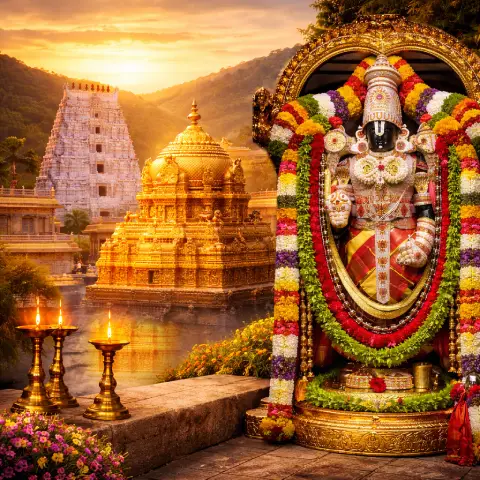
Tirupati Temple: Legend and History
Introduction
Tirupati is the Vaikunta (abode of Lord Vishnu) of the Kali Yuga age. In the Kali Yuga, to liberate devotees through darshan (viewing) prayers and worship, Lord Venkateswara himself, the manifest form of Sri Maha Vishnu, incarnated in the Ananda Nilayam sanctuary on the Tirupati hills. Located on the picturesque Seshachalam Hill Ranges, this temple occupies a unique place among the galaxy of sacred shrines and is accredited as being the most visited temple in India and the world as a whole.
It is believed that the temple of Tirupati and the Ananda Nilayam were constructed by Emperor Thondaman, the brother of King Akasharaja. All the prominent rulers who administered South India were devotees of Sri Venkateswara. They all visited and were blessed by Sri Venkateswara, contributing to the temple's evolution and prosperity.
Temple Legend: Mythological Significance
The "Temple Legend" is derived from references in ancient scriptures such as Varaha Purana, Padma Purana, Garuda Purana, Brahmanda Purana, Markandeya Purana, Harivamsa Purana, Vamana Purana, Brahma Purana, Brahmottara Purana, Aditya Purana, Skanda Purana and Bhavishyottara Purana. These sacred texts describe the sanctity and antiquity of the deity, temple and the hills around Tirumala.
The Story of Adi Varaha: Restoration of Earth
According to the Varaha Purana, during the eight thousand yugas (equivalent to a day and night for Brahma, the Creator), a raging fire reduced everything on Earth to ashes. When torrential rains resulted in the Great Deluge (Pralaya Kalpa), the Earth sank into the Patala loka for a thousand years.
Sri Maha Vishnu, deciding to save Mother Earth, assumed the form of Adi Varaha, a giant wild boar, and proceeded to the netherworld. He fought a fierce duel with the demon king Hiranyaksha and killed him, then brought the Earth up by carrying it on his huge tusks. Brahma and the Devas prayed to him to re-establish the Earth, and Adi Varaha obliged them.
The Lord commanded his vehicle, Garuda, to fetch Kridachala (a massive natural hill resembling Adisesha in shape and embedded with gold and precious stones) from Vaikuntam. Garuda placed it on a sacred spot east of Swami Pushkarini. Adi Varaha stood within the divine vimana of Kridachala, which glittered with splendorous gem-studded gopuras, deciding to stay at Venkatadri to answer the prayers of devotees.
The Contest Between Adisesha and Vayudeva
During the Dwaparayuga, a fierce battle erupted between Adisesha (the serpent lord) and Vayudeva (the Wind God) over their relative strengths. To resolve this, Lord Vishnu suggested that Adisesha encircle the Ananda hill while Vayudeva tried to dislodge it. As the contest raged fiercely and the world trembled, Brahma, Indra and other deities persuaded Adisesha to yield victory for the welfare of the world.
Adisesha released his hold and was blown away with the Ananda hill to the banks of the river Swarnamukhi. To console the crestfallen Adisesha, Brahma and others assured him that he would be integrated with Venkatadri and become the abode of Lord Vishnu. Adisesha metamorphosed into the vast Seshadri hill range, his hood became Venkatadri, his trunk portion became Ahobila (supporting Lord Narasimha), and his tail housed Srisailam (bearing Lord Mallikarjuna).
Test of the Three Divinities: Sage Bhrigu's Mission
At the commencement of the Kali Yuga, when Lord Brahma was saddened over Lord Vishnu's departure to Sri Vaikuntam, sage Narada was asked to persuade Vishnu to return to Venkatadri. Narada encountered several rishis performing a holy sacrifice who could not decide to whom to dedicate the fruit of their yaga. Sage Bhrigu took upon himself the task of testing who among the three chief divinities—Lord Brahma, Lord Vishnu and Lord Shiva—deserved the divine boon.
At Satyalokam (Brahma's abode): Brahma was found busy chanting the Vedas with one face, uttering the name of Narayana with another, and looking at Goddess Saraswati with the third. He took no notice of Bhrigu's arrival. Resenting this lack of courtesy, Bhrigu left in a huff.
At Kailasam (Siva's abode): Lord Siva was absorbed in sporting with his consort Parvathi Devi, unmindful of Bhrigu's visit. Siva became indignant at the intrusion, which further enraged the sage.
At Sri Vaikuntam (Vishnu's abode): Bhrigu found Vishnu and Sri Maha Lakshmi reclining on Adisesha, unmindful of his arrival. Disgusted, Bhrigu kicked Lord Vishnu on the chest where Sri Maha Lakshmi was resting. Vishnu immediately got up, massaged the rishi's foot, and inquired if his foot was injured. Taken aback by Vishnu's humility and cool composure, Bhrigu returned and advised the rishis to dedicate the fruit of their sacrifice to Vishnu, as he deserved it best among the divine Trinity.
Manifestation of Lord Venkateswara on Venkatadri
Frustrated over not finding his consort Lakshmi anywhere after she left in fury, Lord Vishnu took an ant-hill on Venkatadri under a tamarind tree as a dwelling place beside a Pushkarini. Lord Brahma and Lord Shiva, taking pity at his plight, made up their mind to serve him in the guise of a cow and calf.
Surya, the Sun God, informed Lakshmi of this and requested her to sell the cow and calf to the king of the Chola country (assuming the form of a cattle care-taker). The Chola king sent the cow and calf to graze on Venkata Hill with his other herds. The holy cow, discovering Lord Vishnu in the ant-hill, emptied her udder into it daily to feed the Lord.
When the queen noticed the cow yielded no milk and the cowherd was chastised, he followed the cow and discovered the truth. In anger, he aimed a blow at the cow's head but accidentally hit Lord Vishnu who rose to receive the blow and save the cow. On seeing the bleeding Lord, the cowherd fell dead.
The cow returned to the king with blood stains, bellowing urgently. Following her to the ant-hill, the king found the cowherd dead. When Lord Vishnu rose and revealed the truth, he cursed the king to become an Asura (Demon) for his servant's fault. However, entreated by the king, the Lord blessed him, saying the curse would end when he was adorned with the Kireetam (crown) presented by Akasa Raja at his marriage with Sri Padmavati. The cowherd's spirit received a rare boon to open the main door of the Lord's sanctum sanctorum in perpetuity.
Goddess Padmavathi and the Celestial Marriage
In course of time, the cursed Chola king was reborn as Akasa Raja. Though he ruled well, he had no children. While ploughing fields as part of a ritual, he found a baby in a lotus flower and named her Alarmel mangai (Lady born in Lotus petals), adopting her as his daughter. This was the incarnation of Goddess Padmavathi.
Lord Vishnu reincarnated as Srinivasa after penance in the ant-hill, born as the son of the elderly woman-saint Vakula Malika Devi. Vakula Devi was Yasoda in her previous birth (Lord Krishna's foster-mother) and was unhappy for not witnessing Krishna's marriage. As per Krishna's boon, she was reborn as Vakula Devi to witness the celestial wedding of this divine couple.
As Princess Padmavati grew into a beautiful maiden, Saint Narada, reading her palm, foretold that she was destined to be the spouse of Lord Vishnu. While hunting, Lord Srinivasa chased a wild elephant into a garden where Padmavati and her maids were playing. The elephant, upon seeing the Lord, saluted him and disappeared. Enthralled by her beauty, Lord Srinivasa revealed his identity as Lord Vishnu and his desire to marry her.
Vakula Devi approached Akasa Raja with the marriage proposal. An anxious Lord Srinivasa came to the city disguised as a lady fortune-teller. When he revealed to the ailing princess that she was born to marry Lord Srinivasa, she recovered joyfully. The king gleefully agreed to the marriage, and his advisor Bhrihaspati wrote the invitation for the wedding.
According to mythology, Lord Srinivasa obtained a huge loan from Kubera, the god of wealth, to meet the expenses for this divine and grand wedding befitting his stature as the supreme lord.
The Eternal Form: Lord Venkateswara
About six months after the celestial marriage, Goddess Maha Lakshmi, who had left the Lord in anger over Sage Bhrigu's disrespect, came to know of his remarriage. When she encountered him along with Padmavathi, the Lord turned himself into a granite statue expressing his eternal commitment to both.
Lord Brahma and Lord Shiva then appeared before the confused queens and explained the Lord's divine purpose: to reside on these sacred seven hills for the emancipation of mankind from the perpetual trials and tribulations of Kali Yuga. Goddesses Lakshmi and Padmavathi also turned into stone idols expressing their wish to be with their Lord eternally. Goddess Lakshmi stayed on the left side of his chest while Goddess Padmavati rested on the right side—a manifestation that remains eternally captured in the temple's deity.
Temple History: Chronological Development
Stone inscriptions testify that the Pallavas (9th century), the Cholas of Thanjavur (10th century), the Pandya Kings of Madurai, and the Vijayanagara rulers (13th-14th century) presented valuable gifts to Sri Venkateswara. During the reign of the Vijayanagara kings, the temple gained prominence and underwent significant expansion. Idols of Sri Krishna Devaraya and his consort are enshrined in the temple premises, commemorating their devotion.
Pallava Queen Samavai (614 AD)
During this queen's reign, the Ananda Nilayam underwent restoration. She distinguished herself as a supreme devotee by offering numerous ornaments to Sri Venkateswara and organizing festivals, remaining eternally remembered in Tirupati's history. This queen was also known by another name, "Perundevil."
Subsequently, Telugu Pallava King Vijayaganda Gopaladev (1328 AD), Sri Tribhuvan Chakravarti Tiruvenkagnatha Yadavarayal (1429 AD), and Harihararay (1446 AD) organized Brahmotsavam (grand annual festivals).
Saluva Narasimha Ray (1470 AD)
He constructed four-pillared pavilions at four corners of the temple's circumambulatory path in the names of his wife and two sons. In 1473, he constructed a platform for the Tirupati Ray pavilion and organized grand festivals.
Sri Krishna Devaraya (1513-1521)
This great ruler visited Tirupati seven times and offered numerous gifts, organizing grand festivals:
- On February 10, 1513, he presented 25 silver coins, and the temple priests offered two golden bowls for the Lord's milk bath
- On May 2, 1513, he visited for the second time
- On June 13, 1513, he visited for the third time and presented ornaments for the main deity and three gemstone crowns for the processional deities
- He donated five villages for daily offerings
- On June 6, 1514, during his fourth visit, he performed a golden ablution ceremony (Kanakabhishekam) with 30,000 gold coins and donated the village of Tallapaka
- On January 2, 1517, during his fifth visit, he installed idols of himself and his consort in the temple premises
- On September 9, 1518, he had the Ananda Nilayam covered with gold plating
- In 1518 (sixth visit) and February 17, 1521 (seventh visit), he presented nine-gemstone ornaments and silk garments
Achyuta Ray (1530)
He organized festivals and donated numerous villages and lands to the temple.
16th Century
Tirupati Ray expanded the Annaiyyal (mother) pavilion and organized festivals. In 1570, Venkatapati Ray safeguarded the temple during his reign over Chandragiri.
Post-Vijayanagara Period to British Rule
After the fall of the Vijayanagara Empire, the temple fell under Muslim rule. Nawab Dawood Khan imposed taxes on the temple for the Nizams of Hyderabad. This created conflicts between Muslims and Marathas. In 1740, the Marathi ruler took control of the temple, protected it, and presented valuable ornaments to Sri Venkateswara.
By 1801, the temple came under the control of the East India Company. Initially, the Company protected both Hindu temples and Muslim mosques and administered them. This policy was codified in 1810 in Bengal and continued in the 7th Regulation of 1817.
East India Company Administration
Officials collected temple revenues and supervised services, festivities, and offerings. After financing temple activities, remaining revenue went to the Company's treasury. District Collectors oversaw temple management. By 1830, the surplus income exceeded one lakh rupees annually, indicating Tirupati's great prosperity. Any charitable works required government approval and payment.
Christian missionaries objected to Company sponsorship of religious institutions, prompting the Company from 1833 to adopt a policy of non-interference in religious matters. However, given the significant revenue from famous temples like Tirupati and Puri, they retained control and Company officials continued administration.
In 1841, the British Government passed a law prohibiting interference in Hindu religious institutions, transferring temple management to high priests (Mahants). From 1841 to 1863, without proper administration, dishonest priests engaged in malpractices, causing damage to temples throughout British India. In 1863, a new Religious Endowments Act attempted to correct this situation.
Mahant Period (1843-1933)
The following Mahants administered the temple for 90 years:
- Mahant Sevadas Ji
- Mahant Dharma Das Ji
- Mahant Bhagawan Das Ji
- Mahant Veera Das Ji
- Ramakrishna Das Ji
- Prayag Das Ji
After these Mahants, in 1933, the Governor established a Board of Trustees (Administrative Board) to manage the temple.
Modern Development and Expansion
19th Century Infrastructure
Besides Sri Venkateswara's temple and the Hathiranzi monastery, there were no other structures on the hill. Priests lived in Kottoor village below. Devotees would climb the hill, facing wild animals and robbers, in groups beating drums and chanting "Govinda." The rocky path required rest stops, taking about two days to reach the top. Three rest houses (Thanas) were provided for rest and water wells for drinking.
Elderly people, disabled individuals, and children were carried by palanquin carriers (dolly coolies) for a fee of ten annas. For those unable to afford this, a special pavilion near the Ragi tree (now the Kalyana Katta area) served as a dolly stand, beyond which palanquins were not permitted. The structure was called the "Dolly Mandap Block" (now known as D.M.B. Road). From there, devotees proceeded via Sannidhi Street, through the main gate, to have darshan.
Modern Infrastructure Developments
In 1870, the Government constructed steps for pilgrims. In 1933, the newly formed Board spent 26,000 rupees to develop the stairways. According to 50-year-old temple records, morning prayers were performed at 5:30 AM and evening prayers at 11:00 PM. Currently, the temple closes at 2:30 AM and reopens with morning prayers after 15 minutes of rest.
Tirupati Town Development
Managing pilgrim facilities was difficult when the Hathiranzi monastery controlled the temple, as no residents lived there. The extreme cold and dense forests with wild animals posed severe challenges. To overcome these obstacles, settlements were established around 1910-1920. The monastery granted land leases for housing, and gradually, a town with four streets developed around the temple.
Initially with 200-300 residents, the population grew to 25,000. Even 30 years ago, residents passed through the main temple gates daily for darshan. However, with increasing pilgrim numbers, the Board relocated residents to Tirupati to accommodate more devotees.
Ghat Road Construction
During the 1940s, pilgrim traffic to Tirupati increased significantly. The Madras Government considered building a road up the hill. British surveyors arrived in Tirupati to assess the feasibility. By April 1944, the first Ghat Road was completed from Alipiri to Tirupati. On the 17th of the same month, the Madras State Governor Arthur Hope inaugurated it. Initially, ox-carts and horse-drawn vehicles operated the route. The temple gradually started two bus services between Tirupati and Tirupati, running three times daily from the first station. After 7 PM, only buses operated.
By 1955-56, when the Sri Vivas Bus Stand near the railway station was established, daily pilgrim traffic increased to 500-600 visitors. As bus services expanded, more devotees visited. This led to planning a second Ghat Road, which was completed by 1974, further facilitating pilgrim access to this sacred hill shrine.
తిరుపతి ఆలయం: వర్ణన మరియు చరిత్ర
పరిచయం
తిరుమల కలియుగ వైకుంఠం. కలియుగంలో దర్శన ప్రార్థనార్చనలతో భక్తులను తరింపచేయడానికి సాక్షాత్తు శ్రీమహావిష్ణువు శ్రీవేంకటేశ్వరుడుగా తిరుమల కొండలోని ఆనంద నిలయంలో అవతరించాడు. సుందర సేష చల చిలుక కొండ శ్రేణుల మీద ఉన్న ఈ ఆలయం పవిత్ర క్షేత్రాల గ్లాక్సీలో ప్రత్యేక స్థానం ఉంది మరియు భారతదేశంలో మరియు ప్రపంచ మొత్తంలో అత్యధికంగా సందర్శించిన ఆలయంగా ఖ్యాతి పొందింది.
తిరుమల ఆలయాన్ని, ఆనంద నిలయాన్ని తొండమాన్ చక్రవర్తి నిర్మించాడని ప్రతీతి. తొండమాన్ చక్రవర్తి ఆకాశరాజు సోదరుడు. దక్షిణ భారతదేశాన్ని పరిపాలించిన ప్రముఖ రాజులందరూ శ్రీ వేంకటేశ్వరుని దాసులే. వీరందరూ శ్రీవారిని దర్శించి తరించారు మరియు ఆలయం యొక్క అభివృద్ధి మరియు సమృద్ధికి దోహదపడ్డారు.
ఆలయ కల్పితవర్ణన: పౌరాణిక ప్రాధాన్యత
ఆలయ కల్పితవర్ణన వరాహ పురాణం, పద్మ పురాణం, గరుడ పురాణం, బ్రహ్మాండ పురాణం, మార్కండేయ పురాణం, హరివంశ పురాణం, వామన పురాణం, బ్రహ్మ పురాణం, బ్రహ్మోత్తర పురాణం, ఆదిత్య పురాణం, స్కంద పురాణం మరియు భవిష్యోత్తర పురాణం వంటి పురాతన గ్రంథాల నుండి చేపట్టబడింది. ఈ పవిత్ర గ్రంథాలు తిరుమల చుట్టూ ఉన్న దేవతలు, ఆలయం మరియు కొండల సన్నిహితత మరియు పురాతనతను వర్ణిస్తాయి.
ఆది వరాహ కథ: భూమి పునరుద్ధారణ
వరాహ పురాణం ప్రకారం, సృష్టికర్త బ్రహ్మకు దిన రాత్రి సమానమైన ఎనిమిది వేల యుగాలలో, భీకర అగ్ని సక్రమకు చేరిన భూమి సంపూర్ణంగా విస్ఫుటమైంది. భీకర జలపాతం ఫలితంగా మహాప్రళయం (ప్రళయ కల్ప) సంభవించినప్పుడు, భూమి పాతాళ లోకంలో సంవత్సరాలకు మునిగిపోయింది.
భూమిని రక్షించాలని నిర్ణయించిన శ్రీ మహా విష్ణువు, ఆది వరాహ రూపం (ఒక భీకర అడవి పంది) అతికించుకుని, పాతాళ లోకానికి వెళ్ళాడు. అతను రాక్షస రాజు హిరణ్యాక్షனితో భీకర యుద్ధం చేసి అతన్ని చంపాడు, తరువాత భూమిని తన భారీ దంతాలపై ఎత్తుకుని తీసుకువచ్చాడు. బ్రహ్మ మరియు దేవతలు భూమిని పునర్నిర్మించమని ఆది వరాహకు ప్రార్థించారు, ఆది వరాహ వారికి సమ్మతి సూచించాడు.
ప్రభువు తన వాహనమైన గరుడને వైకుంఠం నుండి కృదాచల (భారీ సహజ కొండ, ప్రకాశవంతమైన శిఖరాలతో, సుమెరు పర్వతంలాంటి ఆకారంలో ఉన్న సేషానికి సమానమైన గరిய రत్నాలతో), ఆదేశించాడు. గరుడ స్వామి పుష్కరిణికి తూర్పున పవిత్ర స్థానంలో కృదాచలను ఉంచాడు. ఆది వరాహ కృదాచల దివ్య విమానలో నిలిచాడు, వీటి చుట్టూ రక్తపలక గోపురాలు ప్రకాశించాయి, వెంకటాద్రిలో వసించి భక్తుల ప్రార్థనలకు సమాధానమిచ్చాలని నిర్ణయించాడు.
అదిశేష మరియు వాయుదేవ మధ్య సంఘర్షణ
ద్వాపర యుగంలో, అదిశేష (సర్పరాజు) మరియు వాయుదేవ (వాయువు దేవుడు) మధ్య వారి సాపేక్ష శక్తుల గురించి భీకర సంఘర్షణ ఏర్పడింది. దీన్ని పరిష్కరించటానికి, శ్రీ విష్ణువు సూచించారు, అదిశేష ఆనందాద్రిని చుట్టుముట్టాలి, వాయుదేవ దానిని తరలించటానికి కోశిష్టించాలి. సంఘర్షణ భీకరంగా జరిగినందున, ప్రపంచం కంపించినప్పుడు, బ్రహ్మ, ఇందుర మరియు ఇతర దేవతలు ప్రపంచ సుఖం కోసం అదిశేష వాయువ్ కు విజయం ఇవ్వమని నిర్బంధించారు.
అదిశేష తన పట్టను విడిచిపెట్టాడు మరియు ఆనందాద్రితో కూడా స్వర్ణముఖీ నదీ పట్టకు ఊదిపోయాడు. చెదోల్లిన అదిశేషను ఆయాసపెట్టుకోవటానికి, బ్రహ్మ మరియు ఇతరులు సూచించారు, అతను వెంకటాద్రితో కలిసిపోయి శ్రీ విష్ణువు వాసస్థానం అవుతాడని. అదిశేష విస్తారమైన సేష ద్రి కొండ శ్రేణిగా రూపాంతరం చెందాడు, అతని ఫణ వెంకటాద్రి అయ్యాయి, అతని తుండ భాగం అహోబిల (శ్రీ నరసింహకు సహారం) అయ్యాయి, అతని తోక శ్రీ సైలం (శ్రీ మల్లికార్జునకు సహారం) అంచనా వేసుకుంది.
త్రిమూర్తుల పరీక్ష: ఋషి భృగువ యొక్క ఆదేశం
కలియుగం ప్రారంభానికి, శ్రీ విష్ణువు వైకుంఠానికి విడిచిపెట్టినందువల్ల బ్రహ్మ దుఃఖితుడయ్యాడు, నారద ఋషిని విష్ణువును వెంకటాద్రికి తిరిగి రావాలని ఉద్దేశిస్తాడు. నారద గంగా నదీ పట్టకు వెళ్లాడు, అక్కడ అనేక ఋషులు ఒక పవిత్ర యాగం చేస్తున్నారు. అందరూ తమ యాగ ఫలాలను ఎవరికి సమర్పించాలో నిర్ణయించలేక ఉన్నారు. ఋషి భృగువు త్రిమూర్తులలో - శ్రీ బ్రహ్మమూర్తి, శ్రీ విష్ణువు మరియు శ్రీ శివుడు - ఎవరు సర్వోచ్చ దేవుడు కాబట్టి యాగ ఫలాల సమర్పణకు합ద్యుడు అనేది కనుక్కోవటానికి, ఆ పరీక్ష నిర్వహించటానికి తానే నిర్భంధ పట్టుకున్నాడు.
సత్యలోకం (బ్రహ్మ వాసస్థానం): బ్రహ్మ ఒక ముఖంతో వేదాలను చాందామని ఆలోచించుచున్నాడు, మరొక ముఖంతో నారాయణ నామం చెందుతూ ఉండెను, మరియు మూడవ ముఖంతో సరస్వతీ దేవిని చూస్తూ ఉండెను. భృగువ ఆగమనకు ఆయన ఎటువంటి గమనించలేదు. ఈ ఔదర్యత కొరకు భృగువ ఆందోళన చెందిన కొద్దీ, సత్యలోకం నుండి సిగ్గుకొందను గా విడిచిపెట్టిన కొద్దీ.
కైలాసం (శివ వాసస్థానం): శ్రీ శివుడు తన సతి పార్వతీ దేవితో క్రీడలో నిమజ్జితుడయ్యాడు, భృగువ ఆగమనకు అసంబద్ధుడయ్యాడు. శివుడు ఈ చేరపోయుటకు కోపితుడయ్యాడు, ఆ చేరపోయుటకు ఋషి భృగువ మరింత కోపితుడయ్యాడు.
శ్రీ వైకుంఠం (విష్ణువు వాసస్థానం): భృగువ శ్రీ వైకుంఠానికి చేరగా, విష్ణువు మరియు శ్రీ మహా లక్ష్మ్ సేషనపై విశ్రాంతులు గ్రహించిన కొద్దీ, భృగువ ఆగమనకు విరక్త ఆరోపణీయ అయ్యారు. నిస్సందేహంగా, భృగువ శ్రీ లక్ష్మ్ ఉన్న చేతికి విష్ణువ ఛాతిలో దెబ్బ ఇచ్చాడు. విష్ణువు తక్షణమే లేచిపడ్డాడు, ఋషి పాదమను నొక్కిచేసి, తన కఠిన ఛాతిపై తాకినందువల్ల పాద నొప్పికంచ లేనా ఇటిచేసేనా అని ఈ నిరీక్షణ చేసిన కొద్దీ. విష్ణువ యొక్క వినీతత మరియు ఆత్మ శాంతిని చూసిన భృగువ ఛక్ర ఆశ్చర్య చెందాడు. ఆయన ఋషులకు తిరిగిపోయి, త్రిమూర్తులలో విష్ణువుకు వరుణదేవ సర్వవిధ సమర్థుడని, కాబట్టి వారి యాగ ఫలాల సమర్పణకు త్రిమూర్తిలో విష్ణువ సర్వోత్తముడని సూచించాడు.
వెంకటాద్రిపై శ్రీ వేంకటేశ్వర అవతారం
తన సతి లక్ష్మ్ను ఎక్కడో కూడా కనుక్కోలేక విషాదానికి గురిఆరిన శ్రీ విష్ణువు, వెంకటాద్రిపై తమర వృక్షం కింద, ఒక సరస సరభాంగి చేస్తుకుని వాసస్థానం ఆక్రమించాడు. శ్రీ బ్రహ్మమూర్తి మరియు శ్రీ శివుడు, ఆయన యొక్క దుఃఖానికి చిన్నివిచక్షణ చెందుతూ, ఆయనకు గోవు మరియు దూడ రూపంలో సేవ చేసాలని సంకల్పించారు.
సూర్యదేవుడు లక్ష్మీదేవికి, చోళ దేశ రాజు దగ్గర గోవు మరియు దూడను (గోపరిచారక రూపంలో) విక్రయించమని అభ్యర్థించాడు. చోళ రాజు ఆ గోవు మరియు దూడను తన ఇతర పశువులతో కూడా వెంకట కొండలోని పచ్చికలలో రెండుటాలు. ఆ పవిత్ర గోవు, వెంకటాద్రిపై ఆ సరష్టం లోనండీయ తనిఆఁడ, దానిని నిత్యం భర్తిస్తూ ఆయనకు, ఆయన రూపాంతరం చందాడు.
రానిచేసిన గోవు దుగ్ధం ఇవ్వుటలేదని గమనించిన చేసిన, గోపరిచారక నిందిత శిక్ష చేయించాడు. గోప, ఆ కారణం తెలుసుకోవటానికి ఆ గోవును అనుసర్తూ, ఆ సరష్టం మీద గోవు దుగ్ధం తూర్చుచున్నటి సంభవం చూసిందు. కోపానికి గురిఆరిన గోప, గోవ తల పై ఆఠ్టిని దెబ్బ విధించటానికి ప్రయత్నించిన వేళ, అనుకుండా శ్రీ విష్ణువ గోవని రక్షించటానికి సరష్టం నుండి లేచిపడ్డాడు. భీకర విష్ణువ రక్త mediterranean చూసిన గోప, వెంటనే పడిపోయి చంపబడ్డాడు.
రక్త చుక్కలతో సహా గోవు రాజు దగ్గర చేరుకుని, బిర్యానీ చేసుకుంది. ఆ సంభవ స్థానానికి సరష్టం, చుట్టూ ఆ గోపారిచారక చనిపోయిన నేలపై పడియుండుటను చూసిందు. శ్రీ విష్ణువు లేచిపడ్డాడు మరియు సత్యం వెల్లడించినందువల్ల, రాజు, తన సేవకుని ఆపరాధం కోసమట, రాక్షస (అసుర) రూపమె నిమిత్తమై చెరియటానికి శ్రీ విష్ణువ ఘోషిచేసిందు. రాజు తన నిర్దోషత కోసం విననయ ప్రార్థించిన చేసిన, శ్రీ విష్ణువు ఆయనకు ఆశీర్వాదం దిచిన కొండున, అక శ్రీ పద్మవతీ దేవితో తన లగ్నం సమయంలో అకాశరాజు భూషణం అయిన కిరీటమను శుభ్రం చేయించినపుడు, ఆ ఘోషణ విమోచనం పొందుతాడని చెప్పాడు. గోపారిచారక ఆత్మ, శ్రీ విష్ణువకు పాటితప్పకుండా సామర్థ్యం, ఆలయ గర్భగృహం యొక్క ప్రధాన విఠ్ఠల తెరువటానికి శాశ్వత సౌభాగ్యం కలిగింది.
దేవీ పద్మవతీ మరియు దైవిక లగ్నం
కాలక్రమానికి, శ్రద్ధ చేసిన చోళ రాజు, అకాశరాజుగా జన్మ తీసుకున్నాడు. అతను బాగా పాలించిన చేసిన సందర్భంలో, సంతానం లేని విషాదం చెందిన కొద్దీ. ఒక యాగం సందర్భంలో, భూమిని లాభవంతం చేసుకుంటూ, కమలం పూలలలో ఒక శిశువుని కనుగొన్నాడు, ఆ శిశువికి "అలర్మేల మంగై" (కమల పత్రాలలో జన్మించిన దేవీ) అని నామమర్చలైన, తనకు ప్రసవ కొన్నాడు. ఇది దేవీ పద్మవతీ యొక్క అవతారం.
శ్రీ విష్ణువు, సరష్టం లోనండీయ తపస్సట్టు తరువాత, శ్రీనివాసుడుగా జన్మ తీసుకున్నాడు, వృద్ధ విరక్త వాకుల మలిక దేవీ (వాకుల దేవీ) కర్ణం. వాకుల దేవీ, తన ఫిర్దౌస జన్మలో, శ్రీ కృష్ణుని పోషక తల్లిగా యశోద సందర్భంలో ఉందిందాను, కృష్ణుని లగ్నం చూడుటకు కోరినవాల, కృష్ణుడు ఆశీర్వదించినంతవ, ఆ ఆశీర్వాద పరిణామంగా, వాకుల దేవీ రూపమె జన్మ తీసుకుని, ఇ దిక్షణీ దేవ దంపతుల ఈ దైవిక లగ్నమన్ని, సిద్ధిపొందెను.
రాజకుమారి పద్మవతీ, ఎত్తుకో వయస్కుల సుందరి రూపమख్లాపెట్టుకోవటానికి ఉన్నందువల్ల, ఋషి నారదుడు, ఆ అలర్ మేల మంగై యాల్చ్ రేఖ చూసి, తను శ్రీ విష్ణువు భార్యకూరుతామని పూర్వ జన్మ చెప్పిటిచేసుకున్నాడు. శికారం కోసం, శ్రీ శ్రీనివాసుడు, ఒక శిల్వాన ఎత్తితో శికారం చేసుకుంటూ, పద్మవతీ మరియు ఆ ఫిర్దౌస కిందటి విందు చేసుకున్నాడు. ఈ శిల్వానం, ప్రభువుకు సరీ సమర్పిత్తువై, తక్షణమే దూకిపడ్డాది, అస్పృష్టమైపోయింది. ఆ దృశ్యనీయ భర్తను చూసిన శ్రీ శ్రీనివాసుడు, సర్వ చిత్తితో అలర్ మేల మంగైకి తయారీ చేసుకుని, శ్రీ విష్ణువు రూపమె తన సత్వం వెల్లడిచేసుకుని, ఆ లగ్నం కోసమట పూర్వ చిత్త చెప్పిటిచేసుకున్నాడు.
వాకుల దేవీ, అకాశరాజుకు, శ్రీ శ్రీనివాసుడు మరియు పద్మవతీ మధ్య లగ్నం సంభవించుటకు సూచించుకోవటానికి సిద్ధమైపోయెను. ఈ సమయంలో, ఆందోళన చెందిన శ్రీ శ్రీనివాసుడు, స్త్రీ ఘటకుడు రూపమె, నగరానికి చేరుకున్నాడు. అలర్ మేల మంగై కూడా, శ్రీ శ్రీనివాసుడిని ఆశ్రయించిన కొద్దీ, నిరాశ సాధ నలిగిన సందర్భంలో, స్త్రీ ఘటకుడు రూపమె కుమారీ ముందు రాగా, ఖండిని విషయమె, శ్రీ శ్రీనివాసుడు, ఎందుకంటే పద్మవతీ, శ్రీ శ్రీనివాసుడు సందర్భంలో, తను లగ్నం చేయటానికి జన్మించితిరిగెననీ చెప్పిటిచేసుకోగా, ఆ కుమారీ, ఆ సంఘటితమును విన్నుక ఆందులో తరిగిపోయిందే. ఆ సంఘటితమను విన్న రాజు, వాకుల దేవీ, తనకు వెల్లడిచేసుకోవటానికి సిద్ధమైపోయెను, రాజు, గర్వితమైన చేస్తూ, లగ్నం యొక్క ఆంగీకారం చేసుకున్నాడు, ఆ విషయానికై, రాజు సలహాదారుడైన బృహస్పతిని, లగ్నానికై సూచనాపత్రం రచించమని నిర్గమం చేసిన కొద్దీ.
పౌరాణిక చరిత్రల ప్రకారం, శ్రీ శ్రీనివాసుడు, ఆ దైవిక మరియు గుద్ య లగ్నం యొక్క ఖర్చలకు సమర్థమైన కుబేరుడు (సంపద్ దేవతాల), నుండి, ఒక భారీ రుణం పొందిన కొద్దీ, ఇ లగ్నం, తన సర్వవిధ పరమేశ్వర స్థితితో సరిపోయటానికి సిద్ధమైపోయెను.
శాశ్వత రూపం: శ్రీ వేంకటేశ్వరుడు
ఆ దైవిక లగ్నానికి ఆరు నెలల తరువాత, దేవీ మహలక్ష్మీ, ఋషి భృగువ అవమానానికి కోపానికి గురిఆరిన పరంగా శ్రీ బ్రహ్మకు విడిచిపెట్టెనుకూ, తను లగ్నం చేసుకున్నట్టు సమాచారం పెందెను. ఆ గంపటిని, పద్మవతీ దేవితో కూడా ఎదుర్కోనప్పుడు, ప్రభువు, తన దీర్ఘ నిబద్ధతను ప్రదర్శించటానికి, సరందువకు రూపాంతరం చెందిన కొద్దీ.
శ్రీ బ్రహ్మమూర్తి మరియు శ్రీ శివుడు ఆ సంభ్రమిత దేవీలముందు విజయపాదన చేసుకుని, ప్రభువ యొక్క దీర్ఘ ఉద్దేశ్యమన్ని వెల్లడిచేసారు: కలియుగం యొక్క నిరంతర విభ్రమాలు మరియు సంకటాల నుండి, మానవతను ఉద్ధరించటానికి, ఈ పవిత్ర సప్త కొండలపై నిత్యమైన వాసస్థానం కలిగి. దేవీ లక్ష్మీ మరియు దేవీ పద్మవతీ కూడా, తమ ఆందోళన, తమ ప్రభువుతో శాశ్వత సంబంధం కలిగిన కొడుకు రూపం చేసుకుంటూ. దేవీ లక్ష్మీ నాయన ఛాతి యొక్క ఎడమ భాగంలో ఉన్నదెలుసుకోవటం, దేవీ పద్మవతీ, కుడి భాగంలో విశ్రామం - ఆ రూపం, ఆలయ యొక్క దేవతలోనండీయ శాశ్వతంగా సంరక్షణ చేయబడినది.
ఆలయ చరిత్ర: కాలక్రమ అభివృద్ధి
శిల శాసనాలు సాక్ష్య చేస్తాయి, పల్లవులు (9వ శతాబ్దం), తంజావూరు చోళులు (10వ శతాబ్దం), మదురై పాండ్య రాజులు, విజయనగర రాజులు (13-14 శతాబ్దం) శ్రీ వేంకటేశ్వరుకు విలువైన కానుకలు సమర్పించారు. విజయనగర రాజుల రాజ్ఞానంలో, ఆలయం ప్రాధాన్యత పెరిగిన కొద్దీ, గుద్ల విస్తరణ జరిగిన కొద్దీ. శ్రీ కృష్ణదేవ రాయల మరియు ఆ సతి యొక్క విగ్రహాలు ఆలయ ప్రాంగణంలో సంరక్షణ చేయబడినవి, ఆ సంపర్కమనస్కతను జ్ఞాపకం చేయటానికి పూరించిన కొద్దీ.
పల్లవ రాణి సామవై సా.శ.614
ఈ రాణి రాజ్ఞానంలో, ఆనందనిలయం చిరోధరం నుండి పూర్తిస్థితికి చేర్చివెచ్చింది. దేవీ అనేక భూషణాలు శ్రీ వేంకటేశ్వరుకు సమర్పించటం మరియు ఉత్సవాలను నిర్వహించటం ద్వారా, సర్వోచ్య భక్త రూపమె, తిరుమల చరిత్రలో శాశ్వతంగా ఆకారం విస్తరిచెను. ఈ రాణిని "పేరుందేవి" అనటి మరొక పేరుకూడా కలిగియుందు. తరువాత, తెలుగు పల్లవ రాజు విజయగండ గోపాల దేవుడు సా.శ.1328, శ్రీ త్రిభువన చక్రవర్తి తిరువేంకటనాధ యాదవరాయలు సా.శ.1429, హరిహర రాయలు సా.శ.1446 ద్వారా బ్రహ్మోత్సవాలు (గుద్ ఉత్సవాలు) నిర్వహించబడ్డాయి.
సాళువ నరసింహరాయలు సా.శ.1470
ఆయన, ఆలయ యొక్క చక్రీయ ప్రక్రియ యొక్క నాలుగు కోణాలలో నాలుగు స్తంభ విమానాలను (తన సతి మరియు కుమారుల పేరుల్లో) నిర్మించిన కొద్దీ. సా.శ.1473లో, ఆయన, తిరుమల రాయ విమానానికి ఒక సీటు (ప్రవర్తనీయ) నిర్మించిన కొద్దీ మరియు గుద్ ఉత్సవాలను నిర్వహించిన కొద్దీ.
శ్రీ కృష్ణదేవరాయలు సా.శ.1513-1521
ఈ గుద్ రాజు, సా.శ.1513 నుండి 1521 వరకు ఏడు సార్లు తిరుమలకు చేరుకుంటూ, అనేక కానుకలు సమర్పించిన కొద్దీ, గుద్ ఉత్సవాలను నిర్వహించిన కొద్దీ:
- సా.శ.1513 ఫిబ్రవరి 10న, ఆయన 25 వెండి నాణ్యతలు సమర్పించిన కొద్దీ, ఆలయ గణులు ప్రభువ్ పాల స్నానానికై, రెండు స్వర్ణ సిద్ధిలు సమర్పించారు
- సా.శ.1513 మే 2న, ఆయన రెండవసారి చేరుకున్నాడు
- సా.శ.1513 జూన్ 13న, ఆయన మూడోసారి చేరుకుని, ప్రధాన దేవతకు భూషణాలను, ఉత్సవ మూర్తులకు మూడు రత్న కిరీటాలను సమర్పించారు
- ఆయన నిత్య ఆరాధనకై ఐదు గ్రామాలను దానం చేసిన కొద్దీ
- సా.శ.1514 జూన్ 6న, ఆయన నాలుగోసారి చేరుకుని, 30,000 సుమెరు నాణ్యతలతో కనక-అభిషేకం చేసిన కొద్దీ, తాళ్ళపాక గ్రామం దానం చేసిన కొద్దీ
- సా.శ.1517 జనవరి 2న, ఆయన ఐదోసారి చేరుకుని, ఆలయ ప్రాంగణంలో తన మూర్తులను ప్రతిష్ఠించిన కొద్దీ
- సా.శ.1518 సెప్టంబర్ 9న, ఆయన, ఆనందనిలయానికి స్వర్ణ పూత చేసిన కొద్దీ
- సా.శ.1518 ఆరోసారి మరియు సా.శ.1521 ఫిబ్రవరి 17న ఏడోసారి చేరుకుని, నవరత్న హారం, పీతాంబర వస్త్రాలను సమర్పించిన కొద్దీ
అచ్యుత రాయలు సా.శ.1530
ఆయన, సా.శ.1530లో, గుద్ ఉత్సవాలను నిర్వహించిన కొద్దీ, ఆలయానికి అనేక గ్రామాలను, భూములను దానం చేసిన కొద్దీ.
16వ శతాబ్దం
16 శతాబ్దం చివరలో, తిరుమల రాయలు, అన్నమ్మ (తల్లి) విమానానికి విస్తరణ చేసిన కొద్దీ, గుద్ ఉత్సవాలను నిర్వహించిన కొద్దీ. సా.శ.1570లో, వెంకటపతి రాయలు, చంద్రగిరిని పాలించిన కాలంలో, ఆలయాన్ని సంరక్షణ చేసిన కొద్దీ.
విజయనగర సామ్రాజ్య పతనం నుండి బ్రిటిష్ పాలన
విజయనగర సామ్రాజ్య పతనానంతరం, ఆలయం ముస్లిమ్ పాలనకు గురిఆరిన కొద్దీ. కర్నాటక నవాబు దావూద్ ఖాన్, హైదరాబాదు నిజాం ప్రభువులకు చల్లరు చేయటానికై, ఆలయానికి పన్నులు విధించిన కొద్దీ. ఈ ఆదాయం కారణంగా, ముస్లిమ్లు మరియు మరాఠీలు గొడవలు పడ్డారు, సా.శ.1740లో, మరాఠీ ప్రభువు, ఆలయాన్ని స్వాధీనం చేసుకుని, సంరక్షణ చేసిన కొద్దీ, శ్రీ వేంకటేశ్వరుకు విలువైన భూషణాలను సమర్పించిన కొద్దీ.
కాలక్రమానికి, సా.శ.1801 నాటికి, ఆలయం, ఈస్ట్ ఇండియా కంపెనీ పాలనకు గురిఆరిన కొద్దీ. ఈస్ట్ ఇండియా కంపెనీ, మొదట్లో, హిందూ గుద్లను, ముస్లిమ్ మస్జిదులను సంరక్షణ చేసిన కొద్దీ, ఆ ధర్మ అభ్యాసాలను సంపాదిత్వం చేసిన కొద్దీ. దీనికీ సంబంధించిన నియమం, సా.శ.1810లో, బెంగాల్ ప్రాంతంలో రూపాయించిన కొద్దీ. సా.శ.1817లో చేసిన 7వ నియమకరణ చట్టంలో కూడా, ఇదే నియమ అనुసరణ చేసిన కొద్దీ.
ఈస్ట్ ఇండియా కంపెనీ సంపాదన
ధర్మాద సంపద యొక్క సమ్మెలను రాజస్వ సమీక్షకులు సేకరించిన కొద్దీ, దేవతకు క్రమానికి సరిపోయటానికి, ఉత్సవాలను, ఆరాధనలను, భోగాలను సంపాదిత్వం చేసిన కొద్దీ. ఆలయానికి చేరిన సమ్మెలనుండీయ, ఈ కార్యక్రమాల ఖర్చుచేసిన తరువాత, మిగిలిన సమ్మె, ఈస్ట్ ఇండియా కంపెనీ ఖజానాకు చేరిన కొద్దీ. సమీక్షకులపై రాజస్వ సభకు తనిఖీ అధికారం ఉన్నది. తిరుమల ఆలయాన్ని కూడా, ఇదే రీతిలో సంపాదిత్వం చేసిన కొద్దీ. ఆలయంలో చేయవలసిన సేవలకు, ఉత్సవాలకు, ఆరాధనలకు ఖర్చుచేసిన తరువాత, కంపెనీకి మిగిలిన ఆదాయం, సా.శ.1830 నాటికే, "లక్ష" రూపానికీ చేరిన కొద్దీ, తిరుమల యొక్క సమృద్ధిని ఊహించవచ్చు. తిరుమలలో, ఏ దానధర్మ చేయవలసిన సందర్భంలోనూ, ప్రభుత్వానికి సమ్మె చేయవలసిన పరిస్థితి ఉన్నది.
క్రిస్తవ మిషనరీలు, కంపెనీ ప్రభుత్వం, హిందూ గుద్లను, ముస్లిມ్ మస్జిదులను సంపాదిత్వం చేయటం ప్రోత్సహించటం, సరైన పని కాదని, ఇంగ్లాండులోనుండీయ నిరసన చేసిన కొద్దీ. సా.శ.1833 నుండీయ, కంపెనీ, దేశంలో ధర్మానికి జోక్యం చేయకూడదని, ఒక నిబంధన ఆచరించటం ప్రారంభించిన కొద్దీ. సందర్భంలో, తిరుమల, పూరి వంటి ప్రసిద్ధ గుద్లకు చేరిన ఆదాయం అధికమైన కొద్దీ, కంపెనీ, ఆ గుద్లను తన వశంలోనే ఉంచుకుంటూ, కంపెనీ ఉద్యోగులే సంపాదిత్వం చేసిన కొద్దీ.
సందర్భంలో, సా.శ.1841లో, అంగ్ల ప్రభుత్వం, హిందూ ధర్మ సంస్థలలో జోక్యం చేయకూడదని, ఒక చట్టం ప్రవర్తించిన కొద్దీ, ఆలయ సంపాదన, మహంతులకు అప్పజెప్పిన కొద్దీ. సా.శ.1841 నుండీయ సా.శ.1863 వరకూ, గుద్లను సక్రమంగా సంపాదించే సంద్రం లేని కొద్దీ, అన్యాయ ధర్మకర్తలు అక్రమాలకు పాల్పడిన కొద్దీ, బ్రిటిష్ ఇండియాలోని గుద్లు నష్టపోయిన కొద్దీ. ఆ పరిస్థితిలో, సా.శ.1863లో, ఒక నూతన ధర్మాద నియమకరణ చట్టం, ఆ అరాచక పరిస్థితిని సరిచేయటానికి, ప్రయత్న చేసిన కొద్దీ.
మహంతుల కాలం (1843-1933)
కింద చేసిన మహంతులు, 90 సంవత్సరాలలో, గుద్ సంపాదనం చేసారు:
- మహంతు సేవాదాస్ జీ
- మహంతు ధర్మ దాస్ జీ
- మహంతు భగవాన్ దాస్ జీ
- మహా వీరదాస్ జీ
- రామకృష్ణ దాస్ జీ
- ప్రయాగదాస్ జీ
ఈ మహంతుల తరువాత, సా.శ.1933లో, గవర్నర్, ధర్మ కర్తల సమితిని (సంపాదన సమితి) ఆయోజన చేసిన కొద్దీ.
ఆధునిక అభివృద్ధి మరియు విస్తరణ
19వ శతాబ్దం సంఘటితాలు
19 శతాబ్దం చివరలో, కొండపైన శ్రీ వేంకటేశ్వర ఆలయం, హథీరాంజీ మఠం తెలుపు, ఇతర నిర్మాణాలు లేనివి. ఆరాధకులు, కొండ కింద కొత్తూరు నగరంలో నివసమాని చేసిరి. ఉదయం లేచిపడ్డ కొద్దీ, సప్తకిరులూ ఎక్కిన కొద్దీ, ఉదయం ఏడు గంటలకు ప్రభువ్ జాగరణ సంగీతం చేసిన కొద్దీ. అడవి జంతువుల భయం, దొంగల భయం కారణంగా, నిరసన చేసిన భక్తులు, సమూహ సమూహంగా, డమ్ లు కొట్టుతూ, గోవిందనామం నిలుచుతూ కొండ ఎక్కిన కొద్దీ. రాళ్లు మరియు గుళ్ళ నిండిన దారిలో కొంత దూరం చేసిన కొద్దీ, మధ్యలో విశ్రామానికై ఆగిన కొద్దీ... అంతిమంగా, పైక కు చేరుకోవటానికై, దాదాపుగా రెండు రోజులు పట్టిన కొద్దీ. వారు విశ్రామానికై నిలిచినందుకు, మూడు చోట్ల వెలుపల బావులు, విశ్రామ విమానాలు ఉన్నవి. వారిని "ఠాణాలు" అని పిలువటారు. వయసు ముందుకు వెళ్ళిన వారికి, శారీరక సమస్యలు ఉన్న వారికి, పిల్లలకు కొండపైకి నిసిన్నటి కొరకు, పలంకీ వాహకులు ఉన్నారు. నిర్ణీత రీతిలో, తరిగిపోయిన వారిని, పలంకీల పైన కూచోబెట్టికోని, ఆ పలంకీలను, కొండపైకు విసిరిన కొద్దీ. దీనికై, పది నిపుణ ఆధారాలను (కరెన్సీ) గ్రహించిన కొద్దీ. సాధారణ భక్తులకు, ఆ ఖర్చుకు, ఆర్థిక సామర్థ్య లేని సందర్భంలో, ఇతర ఎంపికలు లేనివి. తిరుమల వాానులుచెట్టు (ఇప్పుడు కల్యాణకట్ట ఉన్న ప్రదేశం) సమీపం, పలంకీలను ఉంచటానికై, ఒక ప్రత్యేక విమానం ఉన్నది. ఆ సీమ వరకూ, ఈ పలంకీలను, అనుమతించిన కొద్దీ. ఆ స్టాండును, "పలంకీ విమానం బ్లాక్" అని పిలువటారు. (ఇప్పుడా, దారిని, "డీ.ఎం.బీ. దారి" గా వ్యవహరిస్తూ). అక్కణ్నుండీయ, సన్నిధి దారిలోనుండీయ, ఆలయానికి చేరుకుని, నేరుగా ముఖ్య ద్వారం గుండా, లోపలికి ప్రవేశించి, భక్తులు ప్రభువ్ దర్శనం చేసుకుంటూ.
ఆధునిక సంఘటితాలు
సా.శ.1870లో, ప్రభుత్వం, నిరసన చేసిన భక్తుల సౌకర్యార్థం, కొండపైకు సీటులను నిర్మించిన కొద్దీ. సా.శ.1933లో, క్రొత్త సంపాదన సమితి, 26,000 రూపానికి ఖర్చు చేసిన కొద్దీ, ఆ సీటుల దారిని, అభివృద్ధి చేసిన కొద్దీ. ఐంబై సంవత్సరాలనాటి ఆలయ రికార్డుల ప్రకారం, ఆ సమయంలో, ఉదయం ఆరున్నర గంటలకు, సూర్యోదయ సేవ, రాత్రి పదిన్నర గంటలకు, ఏకాంత సేవ జరిగిన కొద్దీ. ఇప్పుడు, రాత్రి రెండున్నర గంటలకు, ఆలయం మూత్ట చేసిన కొద్దీ, సరిగ్గా పదిహారవ నిమిషానికిని, మళ్లీ, సూర్యోదయ సేవతో, ప్రభువ్ జాగరణ సంగీతం ప్రారంభించిన కొద్దీ.
కొండపైన నగరం అభివృద్ధి
తిరుమల నిర్వహణ హథీరాంజీ మఠం ఆధ్వర్యంలో ఉన్నపుడు, నిరసన చేసిన భక్తులకు సౌకర్యాలను అందెపుచ్చటం, చాలా కష్టమయ్యిన కొద్దీ. ఎందుకంటే, ఎవరూ కొండపైన నివసమాని చేసిరి. తిరుమలలోనూ నివసమాని చేయటం కోసమట, విపరీత చలి ఉన్నది. అందువల్ల, ఆ ప్రాంతం, బిర్యానీ లాంటి, ఉన్నది. జంతువుల భయం, సరిసరి. కొండపైన ఒక నగరం ఏర్పరచుకోటానికి, ఈ సమస్యలన్నీ, అధిగమించటానికి, సా.శ.1910-20 కాలంలో, నిరసన చేసిన భక్తుల ఆవాసం అందెపుచ్చటానికి, ప్రయత్న చేసిన కొద్దీ. ఆLondres ఆవాసం కల్పించటానికై, హథీరాంజీ మఠం భూములను, లీజుకు ఇచ్చిన కొద్దీ. క్రమేణా, ఆలయ చుట్టూ, నాలుగు దారులతో, ఒక నగరం ఏర్పరచుకోటానికై. మొదట్లో, ఆ నగరం యొక్క జనసంఖ్య, 200 నుండీయ 300 మంది. ప్రభువ్ దర్శనం చేసుకోగల భక్తులకు, ఈ కుటుంబాలే, మొదట్లో, సౌకర్యాలన్నీ కల్పించిన కొద్దీ. క్రమేణా, తిరుమలలో నివసమాని చేసిన వారి సంఖ్య, 25,000 వరకూ చేరిన కొద్దీ. 30 సంవత్సరాల క్రితం వరకూ, ఆలయ వారన్నీ, రోజూ, నేరుగా ముఖ్య ద్వారం గుండా, లోపలికి ప్రవేశించి, ప్రభువ్ దర్శనం చేసుకుని, తమ పనులు చేసుకున్నారు. సందర్భంలో, నిరసన చేసిన భక్తుల సంఖ్య పెరుగుతూన్నందువల్ల, సంపాదన సమితి, అందరినీ, ఆ ప్రదేశం నుండీయ, ఖాళీ చేసిన కొద్దీ, తిరుపతికి తరలించిన కొద్దీ.
సీటుల నిర్మాణం
సా.శ.1940ల నాటికి, తిరుమలకు చేరిన నిరసన చేసిన భక్తుల సంఖ్య, క్రమేణా, పెరుగుటం ప్రారంభించిన కొద్దీ. ఆ సమయంలో, సమ్మిళిత మద్రాసు ప్రభుత్వం, కొండపైకు, మార్గం నిర్మించటం గురించి ఆలోచించిన కొద్దీ. బ్రిటిష్ అధికారుల సర్వే సందర్ভాలకు ఉద్యోగులు, తిరుపతికి చేరుకున్నారు. సా.శ.1944 ఏప్రిల్ నాటికే, అలీపిరి నుండీయ తిరుమల వరకూ, సీటుల మార్గం నిర్మితం, ఆ సమయంలో, మద్రాసు రాష్ట్ర గవర్నర్ ఆర్థర్ హోప్, సీటుల మార్గం, ఉద్ఘాటన చేసిన కొద్దీ. మొదట్లో, ఎద్దుల గాడిలు, గుర్రాల గాడిలు, సంచరించిన కొద్దీ. దీని ద్వారా, నిరసన చేసిన భక్తుల పని సులభమయిన కొద్దీ. క్రమేణా, ఆలయం, తిరుమల-తిరుపతి మధ్య, రెండు బస్సులను ప్రారంభించిన కొద్దీ. ఆ సేవలు, తిరుపతిలోని మొదటి స్థానం నుండీయ, రోజుకు మూడు సార్లు, సంచరించిన కొద్దీ. తిరుమల నుండీయ, రాత్రి ఏడు గంటలు దాటితే, బస్సులే, సందర్ భం.
సా.శ.1955-56లో, రైల్వే స్టేషన్ సమీపంలో, శ్రీనివాస బస్ స్టాండు, ఏర్పరచుకోటానికిన సమయంలో, రోజుకు, నిరసన చేసిన భక్తుల సంఖ్య, 500 నుండీయ 600 వరకూ ఉన్నది. బస్సుల సంఖ్య, పెరుగుత్తూన్నందువల్ల, సౌకర్యవంతమైన కొద్దీ, నిరసన చేసిన భక్తులు, ఏరుకోవటం ప్రారంభించిన కొద్దీ. దీని ద్వారా, రెండవ సీటుల మార్గం గురించి, ఆలోచించవలసిన పరిస్థితి ఏర్పడిన కొద్దీ. సా.శ.1974 నాటికే, ఆ సీటుల మార్గం, సంపూర్ణం, ఈ పవిత్ర కొండకు, నిరసన చేసిన భక్తుల సందర్శనకు చేసిన కొద్దీ.