
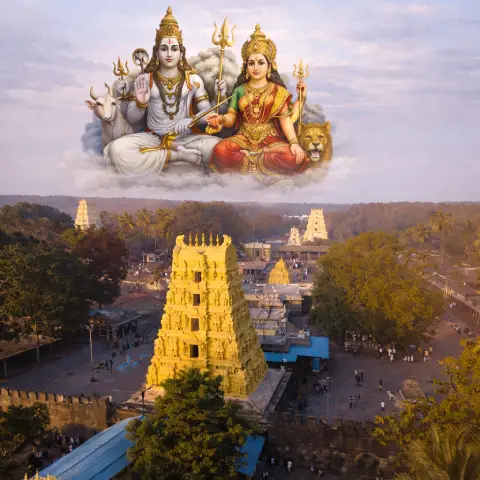
Mallikarjuna Swamy Temple, Srisailam: Legend and History
Introduction
The Mallikarjuna Swamy Temple, also known as Srisailam Temple, is a Hindu shrine dedicated to the deities Shiva and Parvati, located in Srisailam, Andhra Pradesh, India. Of profound significance to both Shaivasthan devotees and Shaktism practitioners, this temple is venerated as one of the twelve Jyotirlingas of Shiva and as one of the fifty-two Shakta pithas, sacred receptacles of the Hindu goddess. The temple has served as a pilgrimage destination for millions of devotees across thousands of years.
Temple Legend: Mythological Significance
According to Hindu mythology, when Shiva and Parvati sought suitable brides for their sons, Shiva arranged for Ganesha to marry Riddhi (intellect) and Siddhi (spiritual power). Upon his return, Kartikeya became enraged and retreated to Mount Krauncha in Palani, adopting the name Kumara brahmachari. When Shiva journeyed to console his son, and the Devas requested that Kartikeya remain nearby, the place where Shiva and Parvati took residence came to be known as Srisailam. According to another legend, the presiding deity in the form of a lingam (iconic representation of Shiva) was traditionally worshipped with jasmine flowers, locally called mallika in Telugu, thus deriving the name Mallikarjuna.
History: Chronological Development
Srisailam holds significant antiquity as a sacred site. Inscriptional evidence from the Satavahana dynasty, South India's first ruling house, confirms the temple's existence from the 2nd century C.E. Satakarni, the third Satavahana king and an ardent devotee of Mallikarjuna Swamy, was known to have adopted the name Mallanna. Early Sanskrit texts from the 3rd century C.E. refer to Srisailam as Chakora Shetagiri. Following the Satavahanas, the Ikshvaku dynasty administered the region and regarded Srisailam as a holy destination. In the 6th century C.E., Kadamba king Mayura Sharma designated it as Sriparvatam. The Badami Chalukya ruler Pulakeshi II, celebrated as the king of temples, constructed extensive shrines and was historically the first Kshatriya to undergo Shiva Diksha (initiation).
Early Medieval Period (735–1100 C.E.)
During 735–755 C.E., Dantidurga of the Rashtrakuta Empire ruled the lands surrounding Sriparvatam. The Kalyana Chalukyaraja Trayalokamalya Deva (980–1058 C.E.) commissioned a gopuram above the sanctum. His grandson in 1069 C.E. donated a village to Srisailam for the maintenance of traveler rest houses and charitable facilities. By the end of the 11th century, Srisailam earned renown as the Maha Shiva Temple and a sanctuary of the Vedas. The Hoysala dynasty collected Crystal Shiva lingams from Patalaganga near the Krishna River and constructed numerous auxiliary shrines. Maharashtrian devotees thereafter termed Srisailam the "Southern Kashi."
Late Medieval Period (12th–16th Centuries)
Prataparudra of the Kakatiya dynasty, accompanied by his consort, undertook Tulabhara seva (ceremonial weighing ritual) and received blessings from Mallikarjuna and Bhramaramba. The Reddy rulers of the 13th century significantly contributed to Srisailam's development. Prolaya Vema Reddy, a devoted worshipper of Shiva, donated land called Raamatheertham and fostered temple expansion. His son Anavema Reddy constructed the Veerasiro Mandapam as a memorial and commissioned steps for pilgrims coming from Telangana. In 1405 C.E., Katyavema Reddy laid grand staircases to Srisailam; Pedakomati Vema Reddy similarly constructed steps leading to Patalaganga.
The Vijayanagara Empire governed Andhra Pradesh during the 14th century. Distinguished rulers including Virooopaksha, Salupa Parvatayya and others donated multiple villages to the temple. Harihara II directed the construction of the principal temple hall on the auspicious occasion of Maha Shivaratri. His wife Vitalamba laid staircases to Patalaganga. Sri Krishnadevaraya elevated Srisailam's status as a separate administrative kingdom and appointed his trusted minister Chandrasekhara as its administrator. Chandrasekhara commissioned mandapas in honor of Krishnadevaraya and his uncle Dhemarasu. Historical accounts attribute the gopurams on the southern, eastern and western sides of the temple to Krishnadevaraya's patronage.
Later Dynasties and Modern Era
Chattrapati Shivaji, the revered icon of Maharashtra and a fervent devotee of Mallikarjuna and Bhramarambika, commissioned the construction of the northern gopuram. During the 18th and 19th centuries, the Chenchu communities (indigenous hill dwellers) played an integral role in temple rituals and worship. Local belief holds that when Mallikarjuna Swamy hunted in the forest, a local maiden fell in love with the deity and was subsequently married to him in the presence of the community. Henceforth, Mallikarjuna Swamy residing in Srisailam is venerated by the locals as Chenchu Mallanna and Chenchu Mallayya, their divine son-in-law.
Architecture and Features
The temple complex spans approximately two hectares and is fortified by tall walls measuring 183 meters (600 feet) by 152 meters (499 feet) with a height of 8.5 meters (28 feet). The complex contains four ornate gopurams (gateway towers) and houses numerous shrines, the foremost being those dedicated to Mallikarjuna and Bhramaramba. The structure faces east. The sanctum housing Mallikarjuna is considered the oldest shrine within the complex, dating to the 7th century. Numerous sculptures grace the precinct, rising in hierarchical tiers.
Principal Halls and Mandapas
The Mukha Mandapa (vestibule hall), the most prominent structure, was constructed during the Vijayanagara period and contains intricately sculpted pillars. The central mandapam features multiple supports with a monumental idol of Nadikeshwara at its center. Within the temple grounds are a Sahasra lingam (one thousand lingas), believed to have been commissioned by Rama, and five additional lingas credited to the Pandavas. A mirror hall in the first enclosure displays images of Nataraja.
Religious Significance
Jyotirlinga Shrine
Mallikarjuna is counted among the twelve Jyotirlingas—the most revered manifestations of Shiva. According to sacred texts, Shiva manifested as an infinite pillar of light to demonstrate supremacy over Brahma and Vishnu. Each Jyotirlinga site bears the name of its presiding deity, representing a distinct manifestation of Shiva. The twelve Jyotirlingas are located at Somnath (Gujarat), Mallikarjuna at Srisailam (Andhra Pradesh), Mahakaleswar (Ujjain), Omkareshwar (Madhya Pradesh), Kedarnath (Uttarakhand), Bhimashankar (Maharashtra), Viswanath (Varanasi), Triambakeshwar (Maharashtra), Baidyanath (Jharkhand), Nagnath (Gujarat), Rameshwar (Tamil Nadu) and Grishneshwar (Maharashtra).
Shakta Pitha
The temple is classified as one of the eighteen Maha Shakta pithas, sacred centers where the goddess resides. Bhramari or Bhramaramba is the presiding feminine deity. These shrines originated from the mythology of Daksha Yaga and Sati's self-immolation, following which Parvati emerged in Sati's place, establishing Shiva as a householder. The Shakta pithas are believed to be holy abodes of Adiparashakti, formed where fragments of Sati Devi's corpse fell as Shiva carried it in mourning. Tradition holds that Sati Devi's upper lip fell at Srisailam.
Paadal Petra Sthalam
This temple is also classified as one of the Paadal Petra Sthalams—sacred sites hymned in ancient devotional poetry. It is believed that darshan (sacred viewing) at this temple grants liberation from the cycle of rebirth.
Sacred Water: Patal Ganga
The Krishna River at Srisailam is locally venerated as Patal Ganga (the Subterranean Ganges). Devotees must descend 852 steps to reach the riverbed. The waters of Patal Ganga are ceremonially used to bathe the Shiva lingam. Adjacent to the main temple stands the Shikhareshwaram shrine, where additional darshan is sought.
Connectivity and Access
Srisailam is located approximately 180 kilometers from Kurnool district headquarters and 213 kilometers from Hyderabad. Pilgrims traveling by rail may disembark at Markapur or Tarlupadu railway stations, each situated 2 to 2.5 hours by road from the temple. The Kacheguda–Guntur railway line passes through Giddalur railway station, located 139 kilometers from the shrine. The nearest major railway stations are Markapur (85 kilometers) and Kurnool/Nandyal (180 kilometers). Road travel via bus or private taxi from Hyderabad is the most convenient option.
మల్లికార్జున స్వామి ఆలయం, శ్రీసైలం: పౌరాణిక కథలు మరియు చరిత్ర
పరిచయం
మల్లికార్జున స్వామి ఆలయం, దీనిని శ్రీసైలం ఆలయం అని కూడా పిలుస్తారు, ఆంధ్రప్రదేశ్ యొక్క శ్రీసైలంలో ఉన్న శివ మరియు పార్వతికి అంకితం చేయబడిన హిందూ ఆలయం. శైవ మరియు శక్తి సంప్రదాయల ఆరాధకులకు ఇది తీవ్ర ప్రాధాన్యతను కలిగి ఉంది. ఈ ఆలయం శివుని పన్నెండు జ్యోతిర్లింగాల్లో ఒకటిగా మరియు హిందూ దేవతకు చెందిన యాభై రెండు శక్త పీఠాలలో ఒకటిగా భూషితమైనది. ఈ ఆలయం వేలుకోట్ల ఆరాధకుల కోసం వేలాదిసంవత్సరాలుగా తీర్థయాత్ర స్థలంగా పనిచేసుకుంటూ ఉంది.
ఆలయ పురాణం: పౌరాణిక ప్రాధాన్యత
హిందూ పౌరాణికతలో, శివ మరియు పార్వతి తమ కుమారుల కోసం సరిపోతున సందర్భం కోసం ఆలోచిస్తుండగా, శివ గణేశకు రిధ్ది (జ్ఞానం) మరియు సిధ్ది (ఆధ్యాత్మిక శక్తి)ల వివాహాన్ని ఏర్పాటు చేశాడు. తిరిగి వచ్చిన కార్తికేయ కోపంగా ఉండిపోయి, కుమార బ్రహ్మచారిగా పాలనిలో క్రౌంచ పర్వతంపై ఏకాంతంగా ఉండటానికి వెళ్లిపోయాడు. శివ తన కుమారుడిని శాంతపరచటానికి చేరుకున్నప్పుడు, దేవతలు కార్తికేయ సమీపంలో ఉండాలని విన్నపించారు. శివ మరియు పార్వతి నివసించిన ఆ స్థలం శ్రీసైలం అని పిలువబడటం మొదలైంది. మరో పురాణ గ్రంథము ప్రకారం, శివుని రూపంలో లింగం ఆచారం చేయబడటానికి జాస్మిన్ పువ్వుల ఉపయోగం జరిగింది. తెలుగులో జాస్మిన్ను మల్లిక అని పిలుస్తారు, దీనిని కారణంగా మల్లికార్జున అనే పేరు ఏర్పడింది.
చరిత్ర: కాలక్రమ ఆధారిత అభివృద్ధి
శ్రీసైలం ఒక పవిత్ర స్థలంగా గొప్ప పురాతన ప్రాధాన్యతను కలిగి ఉంది. శతవాహన రాజవంశం—దక్షిణ భారతకు చెందిన మొదటి అధికార గృహం—నుండి చాటిబాటు సంకేతాలు ఈ ఆలయం రెండవ శతాబ్దం నుండి ఉనికిలో ఉందని నిర్ధారిస్తాయి. సతకర్ణి, మూడవ శతవాహన రాజు, మల్లికార్జున స్వామిగా తీవ్ర ఆరాధకుడిగా ఉండిన్, మల్లన్నా అనే పేరు తీసుకుని ప్రఖ్యాతులార్జించాడు. మూడవ శతాబ్దం నుండిన సంస్కృత గ్రంథాలు శ్రీసైలంను చక్కర శేతగిరి అని సూచిస్తాయి. శతవాహనల పిదప, ఇక్ష్వాకు రాజవంశం ఆ ప్రాంతానికి పరిపాలన చేసింది మరియు శ్రీసైలంను ఒక పవిత్ర ఆలయం గా భావించింది. ఆరవ శతాబ్దంలో, కదంబ రాజు మయూర శర్మ దీనిని శ్రీపర్వతం అని పేరు పెట్టాడు. బదామీ చాళుక్య పాలకుడైన పులకేశి రెండవ, ఆలయాలకు రాజు అని పిలువబడటం వంటి విస్తృత శ్రీ ఆలయాలను నిర్మించాడు మరియు ఐతిహాసికంగా శివ దీక్ష(సంకీర్ణ) తీసుకోవటానికి మొదటి క్షత్రియుడిగా ఉండాడు.
ప్రారంభ మధ్యయుగ కాలం (735–1100 C.E.)
735–755 నుండీ, రాష్ట్రకూట సామ్రాజ్యం నుండిన దంతిదుర్గ శ్రీపర్వతం చుట్టూన్న భూములపై పరిపాలన చేశాడు. కళ్యాణ చాళుక్యరాజు త్రయలోకమల్ల దేవ (980–1058) గర్భాలయానికి ఎత్తుపై గోపురం సమర్పించాడు. అతని ప్రపౌత్ర 1069లో శ్రీసైలంకు దానయోగ్యత కోసం ఒక గ్రామాన్ని సమర్పించాడు, ఇది ప్రయాణికుల విశ్రాంతి గృహాలు మరియు దాతృ సంస్థలను కాపాడటానికి ఉపయోగించబడింది. పదకొండవ శతాబ్దం చివరార్థం నుండీ, శ్రీసైలం మహా శివ ఆలయం మరియు వేదాల స్థానం గా ఖ్యాతిని సంపాదించుకుంది. హోయసల రాజవంశం పటాలగంగ దగ్గర శ్రీకృష్ణ నదిపై క్రిస్టల్ శివలింగాలను సేకరించి, అనేక సహాయక ఆలయాలను నిర్మించారు. దీని చేత మహారాష్ట్ర ఆరాధకులు శ్రీసైలంను "దక్షిణ కాశీ" అని పిలుస్తారు.
ఆధునిక మధ్యయుగ కాలం (12–16వ శతాబ్దాలు)
కాకతీయ రాజవంశం నుండిన ప్రతాపరుద్ర, తన భార్య సమేతమూ, తులాభారసేవ (ఆ సమయ సమర్థక రేఖీయ) చేసెదు మరియు మల్లికార్జున మరియు భ్రామరాంబ నుండీ ఆశీర్వాదాలను పొందెదు. పదమూడవ శతాబ్దం ఆర్జిత్ నిర్దేశకులు శ్రీసైలం యొక్క అభివృద్ధికి గణనీయ సహకారం చేశారు. శివ భక్త ప్రోలయ వేమ రెడ్డి, రామతీర్థం అనే గ్రామాన్ని సమర్పించాడు మరియు ఆలయ సంస్కరణలను ప్రోత్సహించాడు. అతని కుమారుడు అనవేమ రెడ్డి తెలంగాణ నుండీ వచ్చిన ఆరాధకుల కోసం సోపానాలను నిర్మించాడు. అతను వీరసిరో మండపం అనే శాలను పూర్వజ పూర్తిస్వరూపంగా నిర్మించాడు. 1405లో, కత్యవేమ రెడ్డి శ్రీశైలానికి సోపానాలను నిర్మించాడు; పెదకోమటి వేమ రెడ్డి ఇదే విధంగా పటాలగంగకు సోపానాలను నిర్మించాడు.
పద్నాలుగవ శతాబ్దంలో విజయనగర సామ్రాజ్యం ఆంధ్రప్రదేశ్పై పరిపాలన చేసింది. విరూపాక్ష, సాలుప పర్వతయ్య మరియు ఇతర విశిష్ట పాలకులు ఆలయానికి బహుళ గ్రామాలను సమర్పించారు. హరిహర రెండవ భార్య విటలంబ పటాలగంగకు సోపానాలను నిర్మించారు. మహా శివరాత్రి శుభ సందర్భంలో, హరిహర రెండవ ప్రధాన ఆలయ శాల నిర్మాణ కో-నిర్దేశించాడు. శ్రీ కృష్ణదేవరాయ శ్రీసైలంను ఒక పృథక్ రాజ్యంగా ఎత్తుపెట్టాడు మరియు తన విశ్వస్త మంత్రి చంద్రశేఖరను దీని నిర్వాహకుడిగా నియమించాడు. చంద్రశేఖర కృష్ణదేవరాయ మరియు అతని దీదీ ధేమరసు గౌరవార్థం మండపాలను సమర్పించాడు. చారిత్ర్య ఆధారంగా, ఆలయం యొక్క దక్షిణ, తూర్పు మరియు పశ్చిమ గోపురాలు కృష్ణదేవరాయ ప్రోత్సాహానికి సంబంధించినవి.
తరువాతి రాజవంశాలు మరియు సమకాలీన కాలం
మహారాష్ట్ర ప్రతీక చట్రపతి శివాజీ, మల్లికార్జున మరియు భ్రామరాంబిక యొక్క ఉద్ఘీర్ణ ఆరాధకుడిగా, ఉత్తర గోపురం నిర్మాణానికి ఆదేశం అందించాడు. పదిహెనిమిదవ మరియు పందొమ్మిదవ శతాబ్దాలలో, చెంచు సమాజాలు (వంశీయ కొండ నివాసులు) ఆలయ రిటువల్లు మరియు విధానాలలో సమగ్ర పాత్ర కోసం నిర్వహించారు. స్థానిక విశ్వాసం ప్రకారం, మల్లికార్జున స్వామి అడవిలో వేటాడేటప్పుడు, స్థానిక యువతి దేవతపై ప్రేమ పూర్ణంగా ఆధిపత్యం చేసుకుని, సమాజం గేలక్ష్యంలో దేవతకు పెళ్లి చేయబడింది. ఇందువలన, శ్రీసైలంలో నివసించేందు మల్లికార్జున స్వామి చెంచు సమాజం ద్వారా చెంచు మల్లన్న మరియు చెంచు మల్లయ్య గా కుటుంబ సన్-ఇన్-లా "తిరుపతి" వంటిగా ఆరాధనీయుడిగా ఉండిన్.
శిల్పకళ మరియు ఆచరణలు
ఆలయ సంకీర్ణ సుమారు రెండు హెక్టార్ల విస్తీర్ణాన్ని కలిగి ఉంది మరియు అది 183 మీటర్లు (600 అడుగులు) × 152 మీటర్లు (499 అడుగులు) కొలతలు కలిగిన ఎత్తైన గోడలతో రక్షించబడినది, ఎత్తు 8.5 మీటర్లు (28 అడుగులు). సంకీర్ణం నాలుగు అలంకारిత గోపురాలను (ద్వారమండపాలు) కలిగి ఉంది మరియు అసంఖ్య దేవాలయాలను ఆశ్రయిస్తుంది, మల్లికార్జున మరియు భ్రామరాంబకు అనుకూలమైన దేవాలయాలు ప్రముఖమైనవి. నిర్మాణం తూర్పువైపు ఎదుమూకుంటూ ఉంది. శివను ఆశ్రయించిన పవిత్ర గృహం సంకీర్ణంలో ఆతిపురాతనమైన ఆలయంగా పరిగణించబడుతుంది, ఏడవ శతాబ్దానికి నిర్ధారణ చేయబడింది. ఎన్నో శిల్ప వస్తువులు సంకీర్ణంలో కాలక్రమానికి కిందటి తరుణ నుండీ ఎకువైనభిన్నమైనవిగా ఉన్నాయి.
ప్రధాన శాలలు మరియు మండపాలు
ముఖ మండపం (ముఖ్యశాల), విజయనగర కాలంలో నిర్మితమైన ప్రముఖమైన నిర్మాణం, సూక్ష్మ శిల్పాలుగా నిర్మితమైన స్తంభాలను కలిగి ఉంది. కేంద్ర మండపం క్రిందకు సమర్థించిన నడికేశ్వర ఐతిహ్యపూర్ణ విగ్రహాన్ని ఎక్కువ స్థానీయ భూములపై ప్రదర్శిస్తుంది. ఆలయ భూమిలో ఒక సహస్ర లింగం (వెయ్య లింగాలు) ఉన్నాయి, రామ ద్వారా సమర్థించినవిగా నమ్మబడతాయి, మరియు పాండవుల ద్వారా సమర్థించినవిగా నమ్మబడిన ఐదు అదనపు లింగాలు. మొదటి చుట్టుకొలపలో ఒక అద్దం శాల నటరాజ చిత్రాలను ప్రదర్శిస్తుంది.
ఆధ్యాత్మిక ప్రాధాన్యత
జ్యోతిర్లింగ దేవాలయం
మల్లికార్జున శివుని పన్నెండు జ్యోతిర్లింగాల—శివుని అత్యంత సంభ్రమణీయ సంభూతీకరణల—్లో లెక్క చేయబడింది. పవిత్ర గ్రంథాల ప్రకారం, శివ బ్రహ్మ మరియు విష్ణువ ఉపరితనంపై ఆధిపత్యం ప్రదర్శించటానికి, అనంతమైన కాంతి స్తంభంగా సంభూతమైంది. ప్రతითెక్క జ్యోతిర్లింగ స్థలం దీని నివాస దేవతకు పేరు కలిగిఉంది, శివnumero యొక్క వేరినన్న సంభూతీకరణను సూచిస్తుంది. పన్నెండు జ్యోతిర్లింగాలు సోమనాథ (గుజరాత్), మల్లికార్జున శ్రీసైలంలో (ఆంధ్రప్రదేశ్), మహాకాలేశ్వర (ఉజ్జైన్), ఓంకారేశ్వర (మధ్యప్రదేశ్), కేదార్నాథ్ (ఉత్తరాఖండ్), భీమశంకర్ (మహారాష్ట్ర), విశ్వనాథ (వారాణసి), త్రింబకేశ్వర (మహారాష్ట్ర), బైద్యనాథ (ఝారఖండ్), నాగ్నాథ్ (గుజరాత్), రామేశ్వర (తమిళనాడు) మరియు గ్రిష్నేశ్వర్ (మహారాష్ట్ర) ఉన్నాయి.
శక్త పీఠ
ఈ ఆలయం పన్నెండు మహా శక్త పీఠాలలో ఒకటిగా వర్గీకృతమైనది—దేవతకు ఆశ్రయం చేసిన పవిత్ర స్థలాలు. భ్రామరీ లేదా భ్రామరాంబ ఆ కుటుంబానికి నివాసం చేసిన దేవతలు. ఈ ఆలయాలు దక్ష పూజ మరియు సతీ దేవి యొక్క ఆత్మదహన చిత్రకథ నుండీ ఉద్భవించాయి, దీని ఫలితంగా పార్వతి సతీ యొక్క స్థానంలో ఉద్భవించి, శివను ఒక కుటుంబపు వాడిగా స్థాపించారు. శక్త పీఠాలు అదిపరాశక్తి యొక్క పవిత్ర ఆశ్రయాలుగా నమ్మబడతాయి, సతీ దేవి చేసిన శరీర భాగాలు తిరుగుముడుతున్నప్పుడు శివ శోకంగా దానిని తీసుకొని సంచరించేటప్పుడు పడిన చోట ఏర్పడినవి. ఐతిహ్యం ప్రకారం, సతీ దేవి యొక్క ఎగువ పెదవి శ్రీసైలంలో పడిందని నమ్మబడుతుంది.
పాడల్ పేట్ర స్థలం
ఈ ఆలయం చాటుని సన్నిహితమైన పాదల్ పేత్ర స్థలాలలో ఒకటిగా కూడా వర్గీకృతమైనది—పురాతన భక్తి కవిత్వంలో చరిత్ర గీత చేయబడిన పవిత్ర నిమిషాలు. ఈ ఆలయంలో దర్శనం (పవిత్ర దృశ్యం) పునర్జన్మ మార్గం నుండి విముక్తిని ప్రదిస్తుందని నమ్మబడుతుంది.
పవిత్ర జలాకార: పటాల గంగ
శ్రీసైలంలో శ్రీకృష్ణ నదిని స్థానికంగా పటాల గంగ (భూగర్భ గంగ) గా సంభూతుడిగా చేసారు. ఆరాధకులు నదీతీరానికి చేరుకోవటానికి 852 సోపానాలను దిగుతారు. పటాల గంగ జలాలను శివ లింగాన్ని లేపటానికి అనుమోదితంగా ఉపయోగిస్తారు. ప్రధాన ఆలయానికి సమీపంలో శిఖరేశ్వరం దేవాలయం ఆయోజనం ఉంది, ఇక్కడ అదనపు దర్శనం కోసం కోరిబడుతుంది.
శ్రీశైలానికి చేరడానికి మార్గాలు
శ్రీసైలం కూర్నూల్ జిల్లా సదరు నుండీ సుమారు 180 కిలోమీటర్ల దూరంలో మరియు హైదరాబాద్ నుండీ 213 కిలోమీటర్ల దూరంలో ఉంది. రైలులో ప్రయాణం చేసే ఆరాధకులు మార్కపూర్ అથవా తర్లుపాడు రైలు స్టేషన్లలో దిగవచ్చు, ఈ రెండు స్టేషన్లు ఆలయం నుండీ సుమారు 2 నుండీ 2.5 గంటల రోడ్ దూరంలో ఉన్నాయి. కచెగూడ–గుంటూర్ రైలు మార్గం గిద్దలూర్ రైలు స్టేషన్ ద్వారా వెళుతుంది, ఇది ఆలయం నుండీ 139 కిలోమీటర్ల దూరంలో ఉంది. సమీపానికి ప్రధాన రైలు స్టేషన్లు మార్కపూర్ (85 కిలోమీటర్లు) మరియు కూర్నూల్/నందియాల్ (180 కిలోమీటర్లు) ఉన్నాయి. హైదరాబాద్ నుండీ బస్సు లేదా ఖాతగీ టాక్సీ ద్వారా రోడ్ ప్రయాణం చాలా సౌకర్యవంతమైన యోక్తం.