Sri Kurmanatha Swamy Temple, Srikurmam – Overview
Introduction
Sri Kurmanatha Swamy Temple at Srikurmam in Srikakulam district is one of the most unusual and historically significant Vaishnava temples of Andhra Pradesh. The principal deity is Lord Vishnu worshipped in his Kurma Avatar, the tortoise incarnation of Vishnu.
Unlike most Vishnu temples where the deity is represented in human form, Srikurmam preserves the worship of Vishnu in his distinctive tortoise manifestation. The temple is therefore regarded as a unique Kurma Kshetra and has a special place in Vaishnava pilgrimage traditions.
The temple stands in the Srikurmam village near the Nagavali River and is surrounded by an ancient sacred landscape associated with several tirthas, Shiva shrines and traditional pilgrimage routes.
The Srikakulam district administration describes Srikurmam as an ancient and famous Vishnu temple and notes that it is the only temple in the country where Vishnu is worshipped in the Kurma form. The Government of India's tourism portal similarly describes the temple as a rare and distinctive centre of Kurma worship. ([srikakulam.ap.gov.in](https://srikakulam.ap.gov.in/religious-tourism/?utm_source=chatgpt.com))
Lord Kurmanatha Swamy
The presiding deity of Srikurmam is Sri Kurmanatha Swamy, the Kurma incarnation of Lord Vishnu.
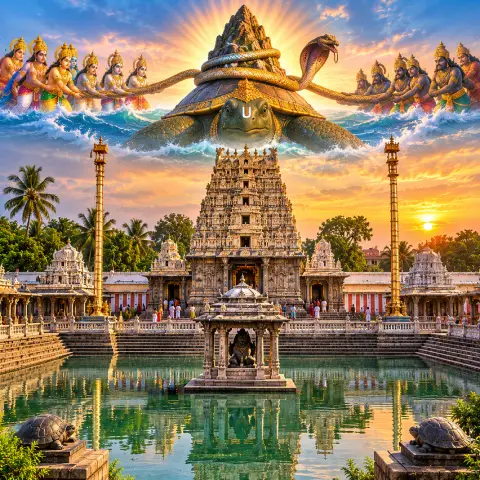
Kurma is the second incarnation in the traditional Dashavatara sequence of Lord Vishnu. In this form, Vishnu assumed the shape of a gigantic tortoise to support Mount Mandara during the churning of the cosmic ocean.
At Srikurmam, this incarnation is not merely represented as part of a Dashavatara sculpture. The entire temple is dedicated to the worship of Vishnu in his Kurma form, making the shrine exceptionally distinctive.
The Sacred Kurma Form
The main deity is carved from dark stone but appears yellowish because sandalwood paste is regularly applied to the sacred image.
The Kurmanatha representation is approximately 2.5 feet in length and consists of three principal stone sections. The western-facing portion represents the head, the central section represents the body of the tortoise and the rear portion is traditionally associated with the tail or the Sudarshana Chakra.
The unusual form of the deity is one of the most important features that distinguishes Srikurmam from conventional Vishnu temples.
Temple information describes the deity as Swayambhu, or self-manifested, and the shrine is traditionally regarded as the unique sacred centre of Kurma worship.
Meaning of Srikurmam
The name Srikurmam is derived from the association of the sacred village with Sri Kurmanatha, the Kurma form of Lord Vishnu.
The entire region is traditionally regarded as a sacred Kurma Kshetra. The surrounding landscape contains several tirthas and Shiva temples, forming a wider pilgrimage area around the main shrine.
Legend of King Swetha Chakravarti
One of the principal legends associated with Srikurmam concerns King Swetha Chakravarti.
According to the traditional Sthala Purana, Swetha Chakravarti was suffering from illness and undertook intense penance seeking the grace of Lord Vishnu.
Rishi Narada is said to have guided the king in his spiritual quest. Pleased with his devotion, Lord Vishnu appeared before him in the Kurma form.
The tradition further states that the sacred Swetha Pushkarini was created through the power of Vishnu's Sudarshana Chakra. After the king received the Lord's grace, Vishnu manifested at Srikurmam as Kurmanatha.
According to the traditional account, Brahma himself performed the consecration and established the worship of the deity with sacred yantras.
This narrative belongs to the religious Sthala Purana of Srikurmam and is presented as sacred tradition rather than independently verified historical evidence.
Swetha Pushkarini
Swetha Pushkarini is the principal sacred temple tank associated with Srikurmam.
According to temple tradition, the tank was created by Lord Vishnu's Sudarshana Chakra. The waters of the Pushkarini are considered sacred, and pilgrims traditionally take a holy bath before or during their visit to the temple.
The tank is also known as Sudha Kundam in local religious tradition.
At the centre of the tank stands a small structure known as the Narasimha Mandapam, adding another important element to the sacred landscape of Srikurmam.
The white sand associated with the tank is traditionally known as Gopi Chandanam and is considered sacred by devotees.
Kurmanayaki Devi
Alongside Kurmanatha Swamy, the temple complex also has a shrine dedicated to Kurmanayaki.
The Goddess is associated with the divine feminine aspect of the sacred kshetra. An image of Andal is also worshipped in the shrine.
The presence of Kurmanayaki and Andal adds an important Sri Vaishnava dimension to the religious traditions of Srikurmam.
Association with Sri Ramanujacharya
Srikurmam has an important place in the history of Vaishnava tradition in Andhra Pradesh.
Local and temple traditions state that the shrine was originally associated with Shaiva worship and was known by the name Kurmeswara. According to the traditional account, Sri Ramanujacharya, the celebrated Vaishnava philosopher and exponent of Sri Vaishnavism, visited Srikurmam and established Vaishnava worship here.
The Srikakulam district administration also records the traditional account that the temple was subsequently converted to a Vaishnava centre through the influence of Ramanujacharya.
This account is part of the temple's religious history and should be distinguished from independently established archaeological chronology.
Association with Balarama
Another important tradition connects Srikurmam with Balarama, the elder brother of Sri Krishna.
According to local tradition, Balarama visited the shrine during his pilgrimage through southern India. He is believed to have declared Srikurmam a unique Kurma Kshetra and ordained that another identical Kurma shrine should not be established elsewhere.
The tradition further connects Balarama with the creation or development of the Nagavali River in the surrounding region.
These stories form part of the sacred traditions of Srikurmam.
Historical Background
Srikurmam has a long historical association with the eastern coastal region of Andhra Pradesh.
The temple contains inscriptions belonging to different periods, providing evidence of the continued importance of the shrine over several centuries.
The Srikakulam District Survey Report notes inscriptions ranging from approximately the 11th century to the 19th century CE. These records provide valuable information about the political, religious and social history of the region.
The temple's architectural development reflects contributions from different ruling traditions, including the Eastern Ganga and later Gajapati-related periods.
The Government of India's tourism portal describes the temple as having developed under the Eastern Ganga dynasty and later receiving patronage from the Suryavanshi Gajapatis.
Temple Architecture
Srikurmam is particularly notable for its distinctive temple architecture.
The design of the gopuram differs from the more familiar forms commonly seen in large South Indian Vaishnava temples.
One of the temple's most unusual architectural features is the presence of two Dhwaja Stambhas, one on the eastern side and another on the western side.
The upper portion of the sanctum is designed in the form of an Ashtadala Padmam, or eight-petalled lotus.
The temple also has large mandapas and intricately carved pillars displaying mythological scenes, decorative motifs and religious imagery.
Two Dhwaja Stambhas
The presence of two Dhwaja Stambhas is one of the most recognisable features of Srikurmam.
One stands on the eastern side and another on the western side of the temple. This arrangement is unusual for a Vaishnava temple and contributes to the distinctive identity of the shrine.
For devotees and visitors interested in temple architecture, the twin Dhwaja Stambhas are an important feature to observe during a visit.
Ashtadala Padma Sanctum
The upper portion of the sanctum sanctorum is traditionally designed in the form of an eight-petalled lotus, known as Ashtadala Padmam.
This lotus-shaped architectural element gives the temple a distinctive visual character and reflects the symbolic use of geometric forms in traditional Indian temple architecture.
Direct Entry into the Sanctum
Srikurmam also has an unusual worship practice in which devotees are traditionally permitted to enter the sanctum sanctorum for darshan and prayer.
This differs from the arrangement found in many large Vaishnava temples, where devotees normally view the principal deity from outside the inner sanctum.
The practice forms part of the distinctive pilgrimage experience of Srikurmam.
The 108 Stone Pillars
The temple contains a remarkable collection of 108 single-stone pillars.
According to temple information, the pillars are individually carved and no two pillars are exactly alike. Several carry inscriptions connected with the royal and religious history of the region.
The pillars combine structural function with artistic expression and are among the important architectural attractions of the temple.
Other Deities in the Temple
The Srikurmam complex contains several other sacred images and shrines associated with different Vaishnava and Shaiva traditions.
- Govindaraja Swamy with Sridevi and Bhudevi.
- Sri Rama, Sita and Lakshmana.
- Kurmanayaki Devi.
- Andal.
- Hatakeswara.
- Karpureswara.
- Koteswara.
- Sundareswara.
- Pathala Siddheswara.
The coexistence of these shrines reflects the layered religious history of Srikurmam.
Govindaraja Swamy and Utsava Murtis
The temple preserves utsava images of Govindaraja Swamy along with Sridevi and Bhudevi.
Temple tradition states that these images were discovered in the Swetha Pushkarini during the 12th century.
Images of Rama, Sita and Lakshmana are also worshipped and are traditionally associated with Naraharitirtha.
These sacred images continue to form an important part of the temple's daily worship and festival traditions.
Tortoise Conservation Centre
One of the unusual attractions of Srikurmam is its tortoise conservation centre.
The temple premises provide a protected environment for Indian star tortoises found in the surrounding region.
Devotees have traditionally brought tortoises found in nearby agricultural fields to the temple. The conservation initiative helps protect these animals while also reflecting the sacred association between the temple and the Kurma form of Lord Vishnu.
Temple information records that a large number of star tortoises have been maintained within the conservation centre, and devotees traditionally feed them leaves as an offering associated with the deity.
Krishna Murals
The temple contains a collection of traditional mural paintings depicting episodes associated with Lord Krishna.
These paintings add an artistic dimension to the temple complex and provide another example of the visual storytelling tradition found in historic Indian temples.
Pancha Linga Kshetras
The wider sacred landscape of Srikurmam is traditionally described as being surrounded by five Shiva Kshetras.
These temples form part of the religious geography associated with the Srikurma Kshetra and demonstrate the coexistence of Vaishnava and Shaiva traditions in the region.
The five surrounding Shiva shrines are traditionally associated with the eastern, western, northern and southern boundaries of the sacred region, with another Shiva shrine located near the main Srikurmam temple.
Ashta Tirthas
The sacred geography of Srikurmam also includes a group of eight traditional Tirthas.
- Narada Tirtham
- Sudha Kundam
- Chakra Tirtham
- Madhava Tirtham
- Kautilya Tirtham
- Vakra Tirtham
- Narasimha Tirtham
- Mahodadhi
These sacred water bodies form part of the broader Srikurma Kshetra pilgrimage tradition.
Religious Significance
Srikurmam holds an exceptional position in Vaishnava pilgrimage because Lord Vishnu is worshipped here in his Kurma incarnation.
The shrine is also significant because it preserves traditions associated with both Vaishnavism and Shaivism.
For devotees, the temple represents Lord Vishnu as the supporting and sustaining force symbolised by the tortoise incarnation. The Kurma form recalls Vishnu's role during the churning of the cosmic ocean and his protection of the Devas and the sacred order.
Kurma Avatar and Samudra Manthan
According to Hindu tradition, the Devas and Asuras joined together to churn the cosmic ocean in search of Amrita, the nectar of immortality.
Mount Mandara was used as the churning rod, but it began to sink into the cosmic ocean because it had no stable foundation.
Lord Vishnu then assumed the enormous form of a tortoise and supported Mount Mandara upon his back.
This manifestation is known as the Kurma Avatar.
Srikurmam is especially sacred because this otherwise rare form of Vishnu is the principal deity of the temple rather than merely one episode represented in a Dashavatara sculpture.
Shaiva and Vaishnava Traditions
Srikurmam has an unusual religious history in which Vaishnava and Shaiva traditions have existed side by side.
Traditional accounts state that the shrine was once associated with Shiva worship and was known as Kurmeswara. Later, through the influence attributed to Sri Ramanujacharya, the temple became an important centre of Vaishnava worship.
Even today, the wider sacred landscape contains Shiva shrines, while the principal deity remains Sri Kurmanatha Swamy.
This layered history gives Srikurmam a particularly distinctive religious character.
Daily Worship
The temple follows an established daily ritual schedule consisting of morning worship, Abhishekam, Archana, Naivedyam, Darshan and evening rituals.
Unlike many Vishnu temples, daily Abhishekam is performed to the principal deity at Srikurmam, reflecting the distinctive ritual tradition of this shrine.
Devotees can participate in certain Arjitha Sevas according to the temple's prevailing schedule and arrangements.
Major Festivals
- Dolotsavam – the principal annual celebration of Srikurmam, generally observed for three days around Phalguna Purnima and associated with the Holi season.
- Annual Kalyanotsavam – the ceremonial divine wedding celebration of the presiding deity, traditionally observed on Vaisakha Shuddha Ekadashi.
- Kurma Jayanthi – commemorates the appearance of Lord Vishnu in his Kurma incarnation and is traditionally observed on Jyeshtha Bahula Dwadasi.
- Vaikuntha Ekadashi – an important Vaishnava festival marked by special worship and devotional observances.
- Mukkoti Ekadashi – a significant Ekadashi celebration associated with special Vaishnava worship.
The temple's traditional festival calendar includes Dolotsavam, Kalyanotsavam, Kurma Jayanthi and important Ekadashi observances. Festival dates may change each year according to the Hindu calendar.
Dolotsavam
Dolotsavam is the most prominent annual festival associated with Srikurmam.
The celebration is traditionally conducted over three days around Phalguna Purnima. The festival coincides with the season of Holi and includes special worship, processions, music, devotional activities and offerings.
The festival attracts devotees from Srikakulam and surrounding regions and forms an important part of the cultural identity of the temple.
Kurma Jayanthi
Kurma Jayanthi commemorates the manifestation of Lord Vishnu as Kurma.
Because Srikurmam is specifically dedicated to the Kurma form of Vishnu, the occasion has special significance here. Devotees participate in special prayers and worship seeking the blessings of Sri Kurmanatha Swamy.
Vaikuntha Ekadashi
Vaikuntha Ekadashi is an important festival for Vaishnava devotees.
The temple is specially decorated and devotees participate in prayers, worship and darshan. The day is traditionally considered highly auspicious for devotees seeking spiritual merit and the blessings of Lord Vishnu.
Temple Timings and Sevas
Temple information currently lists early-morning Abhishekam from approximately 4:30 AM to 6:00 AM, followed by the main morning worship and darshan period.
General darshan is listed from approximately 6:00 AM to 7:45 PM, with brief interruptions for ritual services. The exact schedule can vary during festivals and special occasions.
Devotees planning a visit should confirm the latest schedule with the temple administration before travelling.
Location and Accessibility
Srikurmam is located in Srikakulam district of Andhra Pradesh, approximately 14–15 kilometres from Srikakulam town.
The nearest major railway station is Srikakulam Road at Amadalavalasa. The temple can be reached by road from Srikakulam and nearby towns.
Visakhapatnam is approximately 110–115 kilometres away by road, making Srikurmam a practical pilgrimage destination when visiting the major temples and tourist attractions of northern coastal Andhra Pradesh.
Spiritual Experience
A visit to Srikurmam combines devotion, mythology, heritage and nature.
Devotees can worship Lord Vishnu in his rare Kurma form, visit the sacred Swetha Pushkarini, observe the distinctive temple architecture and explore the ancient inscriptions and sculptural traditions.
The presence of the tortoise conservation centre provides another unusual connection between the living natural world and the sacred identity of the temple.
Unique Features of Srikurmam Temple
- Rare Kurma Worship – Lord Vishnu is worshipped as the tortoise incarnation.
- Swayambhu Tradition – the principal deity is traditionally regarded as self-manifested.
- Two Dhwaja Stambhas – one on the east and another on the west.
- Ashtadala Padmam – the upper part of the sanctum has an eight-petalled lotus design.
- Swetha Pushkarini – the principal sacred temple tank.
- 108 Stone Pillars – individually carved pillars with historical and artistic significance.
- Tortoise Conservation Centre – a distinctive facility connected with the Kurma identity of the temple.
- Shaiva-Vaishnava Heritage – the temple preserves traditions associated with both religious streams.
- Ancient Inscriptions – inscriptions spanning several centuries provide valuable historical information.
- Traditional Sacred Geography – the wider Srikurma Kshetra is associated with Pancha Linga Kshetras and Ashta Tirthas.
Why Visit Sri Kurmanatha Swamy Temple?
- To receive darshan of Lord Vishnu in the rare Kurma Avatar.
- To visit one of India's most distinctive Vishnu temples.
- To experience the sacred Swetha Pushkarini.
- To observe the unusual twin Dhwaja Stambhas.
- To appreciate the Ashtadala Padma design of the sanctum.
- To see the historic stone pillars, sculptures and inscriptions.
- To visit the temple's tortoise conservation centre.
- To participate in Dolotsavam, Kurma Jayanthi and Vaikuntha Ekadashi celebrations.
- To explore the unique Shaiva and Vaishnava traditions associated with Srikurmam.
- To experience an important ancient pilgrimage centre of northern coastal Andhra Pradesh.
శ్రీ కూర్మనాథ స్వామి దేవాలయం, శ్రీకూర్మం – అవలోకనం
పరిచయం
శ్రీకాకుళం జిల్లాలోని శ్రీకూర్మం గ్రామంలో ఉన్న శ్రీ కూర్మనాథ స్వామి దేవాలయం ఆంధ్రప్రదేశ్లోని అత్యంత విశిష్టమైన మరియు చారిత్రక ప్రాధాన్యత కలిగిన వైష్ణవ పుణ్యక్షేత్రాలలో ఒకటి. ఇక్కడ ప్రధాన దైవంగా శ్రీమహావిష్ణువు యొక్క కూర్మావతారం ఆరాధించబడుతుంది.
సాధారణంగా వైష్ణవ ఆలయాలలో శ్రీమహావిష్ణువు మానవ రూపంలో దర్శనమిస్తారు. అయితే శ్రీకూర్మంలో విష్ణువు తాబేలు రూపమైన కూర్మ స్వరూపంలో కొలువుదీరడం ఈ క్షేత్రానికి అత్యంత ప్రత్యేకతను అందిస్తుంది.
నాగావళి నదికి సమీపంలో ఉన్న ఈ ఆలయం పురాతన పవిత్ర ప్రాంతం మధ్యలో ఉంది. చుట్టుపక్కల అనేక తీర్థాలు, శైవ ఆలయాలు మరియు సంప్రదాయ తీర్థయాత్రా ప్రదేశాలు ఉండటం వల్ల శ్రీకూర్మం ఒక విస్తృతమైన పుణ్యక్షేత్రంగా భావించబడుతుంది.
శ్రీకాకుళం జిల్లా ప్రభుత్వ వనరులు శ్రీకూర్మాన్ని ప్రాచీనమైన ప్రసిద్ధ విష్ణు ఆలయంగా మరియు దేశంలో కూర్మావతారంలో విష్ణువు ఆరాధించబడే ప్రత్యేక క్షేత్రంగా పేర్కొంటున్నాయి. భారత ప్రభుత్వ పర్యాటక వనరులు కూడా శ్రీకూర్మం యొక్క ఈ అరుదైన కూర్మారాధనను ప్రత్యేకంగా వివరిస్తున్నాయి. ([srikakulam.ap.gov.in](https://srikakulam.ap.gov.in/religious-tourism/?utm_source=chatgpt.com))
శ్రీ కూర్మనాథ స్వామి
శ్రీకూర్మం ఆలయంలో ప్రధాన దైవం శ్రీ కూర్మనాథ స్వామి. ఇక్కడ శ్రీమహావిష్ణువు కూర్మావతారంలో ఆరాధించబడతారు.
కూర్ముడు శ్రీమహావిష్ణువు యొక్క దశావతారాలలో రెండవ అవతారంగా సంప్రదాయంగా పేర్కొనబడతాడు. దేవతలు మరియు రాక్షసులు అమృతం కోసం క్షీరసాగరాన్ని మథించిన సమయంలో మందర పర్వతానికి ఆధారంగా నిలిచేందుకు విష్ణువు మహాకూర్మ రూపాన్ని ధరించాడని పురాణ సంప్రదాయం.
శ్రీకూర్మంలో ఈ అవతారం కేవలం దశావతారాల శిల్పంలో ఒక రూపంగా ఉండదు. మొత్తం ఆలయమే కూర్మ స్వరూపమైన శ్రీమహావిష్ణువు ఆరాధనకు అంకితం చేయబడింది.
కూర్మ స్వరూపం
ప్రధాన స్వామివారి విగ్రహం నల్లటి రాతితో తయారు చేయబడిందని ఆలయ సంప్రదాయ సమాచారం చెబుతుంది. నిత్యం చందనాన్ని పూయడం వల్ల అది పసుపు వర్ణంలో కనిపిస్తుంది.
కూర్మనాథ స్వామివారి పవిత్ర రూపం సుమారు 2.5 అడుగుల పొడవు కలిగి ఉంటుంది. ఈ రూపం మూడు ప్రధాన రాతి భాగాలుగా నిర్మించబడింది.
పడమర వైపు ఉన్న భాగం తాబేలు తలను సూచిస్తుంది. మధ్య భాగం కూర్మ శరీరాన్ని సూచిస్తుంది. వెనుక భాగం తాబేలు తోక లేదా సుదర్శన చక్రానికి ప్రతీకగా సంప్రదాయంగా భావించబడుతుంది.
ఈ అసాధారణమైన దైవ స్వరూపమే శ్రీకూర్మాన్ని సాధారణ విష్ణు ఆలయాల నుంచి ప్రత్యేకంగా నిలబెట్టే ముఖ్యమైన అంశం.
శ్రీకూర్మం అనే పేరు
శ్రీకూర్మం అనే పేరు ఈ పవిత్ర ప్రాంతంలో కొలువైన శ్రీ కూర్మనాథ స్వామివారితో అనుసంధానించబడింది.
ఈ ప్రాంతాన్ని సంప్రదాయంగా పవిత్రమైన కూర్మ క్షేత్రంగా భావిస్తారు. చుట్టుపక్కల ఉన్న అనేక తీర్థాలు మరియు శైవ క్షేత్రాలు ఈ ప్రాంతాన్ని విస్తృతమైన పవిత్ర తీర్థయాత్రా ప్రాంతంగా నిలబెడుతున్నాయి.
శ్వేత చక్రవర్తి స్థలపురాణం
శ్రీకూర్మానికి సంబంధించిన ప్రధాన స్థలపురాణాలలో శ్వేత చక్రవర్తి కథ ఒకటి.
సంప్రదాయ కథనం ప్రకారం శ్వేత చక్రవర్తి అనారోగ్యంతో బాధపడుతూ శ్రీమహావిష్ణువు అనుగ్రహం కోసం తీవ్రమైన తపస్సు చేశాడు.
ఋషి నారదుడు రాజుకు ఆధ్యాత్మిక మార్గదర్శనం చేశాడని స్థలపురాణం చెబుతుంది. రాజు భక్తికి సంతృప్తి చెందిన శ్రీమహావిష్ణువు కూర్మ రూపంలో ప్రత్యక్షమయ్యాడని విశ్వాసం.
విష్ణువు సుదర్శన చక్ర శక్తితో శ్వేత పుష్కరిణి ఏర్పడిందని సంప్రదాయ కథనం చెబుతుంది. అనంతరం విష్ణువు శ్రీకూర్మంలో కూర్మనాథుడిగా వెలిశాడని భక్తుల విశ్వాసం.
బ్రహ్మదేవుడు స్వయంగా ఈ దైవ స్వరూపానికి ప్రతిష్ఠా కార్యక్రమాలు నిర్వహించి పవిత్ర యంత్రాలతో ఆరాధనను స్థాపించాడని స్థలపురాణం వివరిస్తుంది.
ఇది శ్రీకూర్మ స్థలపురాణానికి సంబంధించిన ధార్మిక సంప్రదాయం. దీనిని స్వతంత్రంగా నిర్ధారించబడిన చారిత్రక సంఘటనగా కాకుండా పవిత్ర విశ్వాసంగా చూడాలి.
శ్వేత పుష్కరిణి
శ్వేత పుష్కరిణి శ్రీకూర్మం ఆలయానికి సంబంధించిన ప్రధాన పవిత్ర తీర్థం.
సంప్రదాయం ప్రకారం శ్రీమహావిష్ణువు సుదర్శన చక్రం ద్వారా ఈ పవిత్ర కొలను ఏర్పడిందని భక్తుల విశ్వాసం.
భక్తులు ఆలయ దర్శనానికి ముందు లేదా యాత్రలో భాగంగా ఈ పవిత్ర జలాల్లో స్నానం చేయడం సంప్రదాయంగా ఉంది.
శ్వేత పుష్కరిణిని సంప్రదాయంగా సుధా కుండం అనే పేరుతో కూడా పిలుస్తారు.
కొలను మధ్యలో నరసింహ మండపం అనే చిన్న నిర్మాణం ఉంది. ఇది శ్రీకూర్మం పవిత్ర ప్రాంతంలోని మరో విశిష్ట అంశం.
పుష్కరిణి అడుగున కనిపించే తెల్లని ఇసుకను సంప్రదాయంగా గోపీ చందనంగా పిలుస్తారు.
కూర్మనాయకి అమ్మవారు
కూర్మనాథ స్వామివారితో పాటు ఆలయ సముదాయంలో కూర్మనాయకి అమ్మవారి సన్నిధి కూడా ఉంది.
ఈ అమ్మవారి సన్నిధి క్షేత్రంలోని దైవిక స్త్రీ స్వరూపానికి ప్రతీకగా భావించబడుతుంది. ఇక్కడ ఆండాళ్ అమ్మవారిని కూడా ఆరాధిస్తారు.
కూర్మనాయకి మరియు ఆండాళ్ ఆరాధన శ్రీకూర్మం ఆలయానికి శ్రీ వైష్ణవ సంప్రదాయంలో మరింత ప్రత్యేకమైన స్థానాన్ని కల్పిస్తుంది.
శ్రీ రామానుజాచార్యులతో అనుబంధం
ఆంధ్రప్రదేశ్లో వైష్ణవ సంప్రదాయ చరిత్రలో శ్రీకూర్మానికి ప్రత్యేకమైన స్థానం ఉంది.
స్థానిక మరియు ఆలయ సంప్రదాయాల ప్రకారం ఈ క్షేత్రం మొదట శైవ ఆరాధనతో అనుసంధానమై కూర్మేశ్వర క్షేత్రంగా పిలువబడేదని చెబుతారు.
తరువాత శ్రీ వైష్ణవ తత్వవేత్త మరియు భక్తి సంప్రదాయానికి ప్రముఖ ఆచార్యుడైన శ్రీ రామానుజాచార్యులు శ్రీకూర్మాన్ని దర్శించి ఇక్కడ వైష్ణవ ఆరాధనను స్థాపించారని సంప్రదాయ కథనం.
శ్రీకాకుళం జిల్లా ప్రభుత్వ వనరులు కూడా రామానుజాచార్యుల ప్రభావంతో ఈ ఆలయం వైష్ణవ క్షేత్రంగా మారిందనే సంప్రదాయాన్ని పేర్కొంటున్నాయి.
ఇది ఆలయ ధార్మిక చరిత్రలోని సంప్రదాయ కథనం. పురావస్తు ఆధారాలతో నిర్ధారించబడిన ఖచ్చితమైన కాలక్రమంగా దీనిని పరిగణించకూడదు.
బలరామునితో అనుబంధం
శ్రీకూర్మం క్షేత్రానికి బలరాముడు, శ్రీకృష్ణుని అన్నయ్యతో కూడా ఒక ముఖ్యమైన సంప్రదాయ అనుబంధం ఉంది.
సంప్రదాయ కథనం ప్రకారం దక్షిణ భారత తీర్థయాత్ర సమయంలో బలరాముడు శ్రీకూర్మాన్ని దర్శించాడు.
శ్రీకూర్మమే ప్రత్యేకమైన కూర్మ క్షేత్రంగా ఉండాలని, మరెక్కడా ఇదే విధమైన కూర్మ క్షేత్రం నిర్మించకూడదని ఆయన ఆదేశించాడని స్థానిక విశ్వాసం.
నాగావళి నది ఏర్పాటుతో కూడా బలరాముని అనుబంధించే సంప్రదాయ కథనం ఉంది.
చారిత్రక నేపథ్యం
శ్రీకూర్మం ఆంధ్రప్రదేశ్ తూర్పు తీర ప్రాంతంలోని ప్రాచీన చారిత్రక క్షేత్రాలలో ఒకటి.
ఆలయ గోడలు, స్తంభాలు మరియు ఇతర నిర్మాణ భాగాలపై వివిధ కాలాలకు చెందిన శాసనాలు ఉన్నాయి.
శ్రీకాకుళం జిల్లా సర్వే నివేదిక ప్రకారం ఆలయంలో సుమారు 11వ శతాబ్దం నుంచి 19వ శతాబ్దం వరకు విస్తరించిన కాలానికి సంబంధించిన శాసనాలు కనిపిస్తాయి.
ఈ శాసనాలు ప్రాంతీయ రాజకీయ చరిత్ర, ధార్మిక కార్యకలాపాలు, రాజవంశాలు మరియు ఆలయ అభివృద్ధి గురించి విలువైన సమాచారాన్ని అందిస్తాయి.
ఆలయ నిర్మాణ వికాసంలో తూర్పు గంగులు మరియు తరువాతి గజపతి పాలకుల ప్రభావం ఉన్నట్లు పర్యాటక చారిత్రక వనరులు పేర్కొంటున్నాయి.
ఆలయ నిర్మాణ శైలి
శ్రీకూర్మం ఆలయం ప్రత్యేకమైన వాస్తు నిర్మాణానికి ప్రసిద్ధి చెందింది.
ఇక్కడి గోపుర నిర్మాణం ఇతర ప్రముఖ దక్షిణ భారత వైష్ణవ ఆలయాలలో కనిపించే సాధారణ గోపుర శైలికి భిన్నంగా ఉంటుంది.
ఆలయంలోని అత్యంత అరుదైన నిర్మాణ లక్షణాలలో రెండు ధ్వజస్తంభాలు ఒకటి. ఒకటి తూర్పు వైపున, మరొకటి పడమర వైపున ఉంటాయి.
గర్భగృహం పైభాగం అష్టదళ పద్మం, అంటే ఎనిమిది రేకుల తామర ఆకారంలో నిర్మించబడింది.
ఆలయంలో విశాలమైన మండపాలు, అందంగా చెక్కిన స్తంభాలు, పురాణ కథలను ప్రతిబింబించే శిల్పాలు మరియు అలంకార ఆకృతులు ఉన్నాయి.
రెండు ధ్వజస్తంభాలు
శ్రీకూర్మం ఆలయంలోని అత్యంత గుర్తించదగిన విశేషాలలో రెండు ధ్వజస్తంభాలు ముఖ్యమైనవి.
ఒక ధ్వజస్తంభం తూర్పు వైపున ఉండగా, మరొకటి పడమర వైపున ఉంటుంది.
వైష్ణవ ఆలయంలో ఇలాంటి రెండు ధ్వజస్తంభాల వ్యవస్థ అరుదైనదిగా భావించబడుతుంది. ఇది శ్రీకూర్మం ఆలయానికి ప్రత్యేకమైన నిర్మాణ గుర్తింపును అందిస్తుంది.
అష్టదళ పద్మాకార గర్భగృహం
గర్భగృహం పైభాగం అష్టదళ పద్మం ఆకారంలో ఉండటం శ్రీకూర్మం ఆలయ వాస్తు విశేషాలలో ఒకటి.
ఎనిమిది రేకుల తామర ఆకారం భారతీయ దేవాలయ వాస్తుశిల్పంలో కనిపించే పవిత్ర రేఖాగణిత మరియు ప్రతీకాత్మక రూపకల్పనకు ఉదాహరణగా భావించవచ్చు.
గర్భగృహంలోకి భక్తుల ప్రవేశం
శ్రీకూర్మం ఆలయంలో భక్తులకు గర్భగృహంలోకి ప్రవేశించి స్వామివారిని దర్శించుకునే ప్రత్యేక సంప్రదాయం ఉంది.
పెద్ద వైష్ణవ ఆలయాలలో సాధారణంగా భక్తులు గర్భగృహం వెలుపల నుంచి స్వామివారిని దర్శించుకుంటారు. శ్రీకూర్మంలోని ఈ ప్రత్యేక విధానం భక్తులకు భిన్నమైన తీర్థయాత్ర అనుభవాన్ని అందిస్తుంది.
108 ఏకశిలా స్తంభాలు
ఆలయంలో 108 ఏకశిలా స్తంభాలు ఉన్నాయని ఆలయ సంప్రదాయ సమాచారం చెబుతుంది.
ఈ స్తంభాలు ఒక్కొక్కటి ప్రత్యేకమైన శిల్పకళతో రూపొందించబడ్డాయి. రెండు స్తంభాలు ఒకే విధంగా ఉండవని సంప్రదాయ సమాచారం పేర్కొంటుంది.
కొన్ని స్తంభాలపై ఈ ప్రాంతాన్ని పాలించిన రాజవంశాలు మరియు చారిత్రక సందర్భాలకు సంబంధించిన శాసనాలు కూడా ఉన్నాయి.
ఆలయంలోని ఇతర దేవతలు
శ్రీకూర్మం ఆలయ సముదాయంలో అనేక ఇతర దేవతల సన్నిధులు కూడా ఉన్నాయి.
- గోవిందరాజ స్వామి – శ్రీదేవి, భూదేవి సమేతంగా.
- శ్రీరాముడు, సీత మరియు లక్ష్మణుడు.
- కూర్మనాయకి అమ్మవారు.
- ఆండాళ్ అమ్మవారు.
- హాటకేశ్వరుడు.
- కర్పూరేశ్వరుడు.
- కోటేశ్వరుడు.
- సుందరేశ్వరుడు.
- పాతాళ సిద్ధేశ్వరుడు.
ఈ వివిధ దేవతల సన్నిధులు శ్రీకూర్మం ఆలయ చరిత్రలోని బహుళ ధార్మిక సంప్రదాయాలను ప్రతిబింబిస్తాయి.
గోవిందరాజ స్వామి మరియు ఉత్సవ విగ్రహాలు
ఆలయంలో గోవిందరాజ స్వామి వారితో పాటు శ్రీదేవి, భూదేవి ఉత్సవ విగ్రహాలు ఉన్నాయి.
ఈ ఉత్సవ విగ్రహాలు 12వ శతాబ్దంలో శ్వేత పుష్కరిణిలో లభించాయని ఆలయ సంప్రదాయం చెబుతుంది.
శ్రీరాముడు, సీత మరియు లక్ష్మణుల ఉత్సవ విగ్రహాలు కూడా ఆరాధించబడుతున్నాయి. వీటిని సంప్రదాయంగా నరహరి తీర్థులతో అనుసంధానిస్తారు.
ఈ దైవ స్వరూపాలు నిత్యపూజలు మరియు ఉత్సవాల్లో ముఖ్యమైన పాత్రను పోషిస్తాయి.
తాబేలు సంరక్షణ కేంద్రం
శ్రీకూర్మం ఆలయానికి సంబంధించిన అత్యంత విశిష్టమైన ఆకర్షణలలో తాబేళ్ల సంరక్షణ కేంద్రం ఒకటి.
పరిసర ప్రాంతాల్లో కనిపించే భారతీయ స్టార్ తాబేళ్లను రక్షించడానికి ఆలయ ప్రాంగణంలో సురక్షితమైన వాతావరణం ఏర్పాటు చేయబడింది.
సమీపంలోని వ్యవసాయ పొలాల్లో కనిపించే తాబేళ్లను భక్తులు ఆలయానికి అప్పగించే సంప్రదాయం కూడా ఉంది.
కూర్మావతారంతో ఆలయానికి ఉన్న సంబంధాన్ని ప్రకృతి సంరక్షణతో అనుసంధానించే ఈ కేంద్రం శ్రీకూర్మం ఆలయానికి మరో ప్రత్యేకతను అందిస్తుంది.
ఆలయ సమాచార ప్రకారం ఈ కేంద్రంలో పెద్ద సంఖ్యలో స్టార్ తాబేళ్లను సంరక్షించారు. భక్తులు వాటికి ఆకులు ఆహారంగా సమర్పించడం కూడా ఒక స్థానిక సంప్రదాయం.
కృష్ణుని గోడచిత్రాలు
ఆలయంలో శ్రీకృష్ణునికి సంబంధించిన పురాణ ఘట్టాలను ప్రతిబింబించే సంప్రదాయ గోడచిత్రాలు ఉన్నాయి.
ఈ చిత్రాలు ఆలయానికి ఆధ్యాత్మిక ప్రాధాన్యతతో పాటు కళాత్మక విలువను కూడా అందిస్తాయి. పురాణ కథలను చిత్రరూపంలో వివరించే భారతీయ దేవాలయ కళా సంప్రదాయానికి ఇవి మంచి ఉదాహరణలు.
పంచలింగ క్షేత్రాలు
శ్రీకూర్మం చుట్టుపక్కల పవిత్ర ప్రాంతం సంప్రదాయంగా ఐదు శైవ క్షేత్రాలతో అనుసంధానించబడింది.
ఈ శైవ ఆలయాలు శ్రీకూర్మ క్షేత్రం యొక్క పవిత్ర భౌగోళిక పరిధిలో భాగంగా భావించబడతాయి. వైష్ణవ ప్రధాన క్షేత్రం చుట్టూ శైవ క్షేత్రాలు ఉండటం ఈ ప్రాంతంలోని శైవ-వైష్ణవ సంప్రదాయాల సహజీవనాన్ని సూచిస్తుంది.
అష్ట తీర్థాలు
శ్రీకూర్మ క్షేత్ర పవిత్ర భౌగోళిక పరిధిలో సంప్రదాయంగా ఎనిమిది తీర్థాలు ఉన్నట్లు పేర్కొంటారు.
- నారద తీర్థం
- సుధా కుండం
- చక్ర తీర్థం
- మాధవ తీర్థం
- కౌటిల్య తీర్థం
- వక్ర తీర్థం
- నరసింహ తీర్థం
- మహోదధి
ఈ తీర్థాలు శ్రీకూర్మ క్షేత్రం యొక్క విస్తృతమైన పవిత్ర సంప్రదాయంలో ముఖ్యమైన స్థానాన్ని కలిగి ఉన్నాయి.
ఆధ్యాత్మిక ప్రాముఖ్యత
శ్రీమహావిష్ణువు కూర్మావతారంలో ఆరాధించబడటం వల్ల శ్రీకూర్మానికి వైష్ణవ తీర్థయాత్రలో అత్యంత ప్రత్యేకమైన స్థానం ఉంది.
శైవ మరియు వైష్ణవ సంప్రదాయాలు రెండింటితో అనుబంధం ఉండటం ఈ క్షేత్రానికి మరో ప్రత్యేకత.
కూర్మ స్వరూపం ద్వారా శ్రీమహావిష్ణువు ప్రపంచాన్ని నిలబెట్టే మరియు రక్షించే శక్తికి ప్రతీకగా భక్తులు భావిస్తారు. క్షీరసాగర మథనంలో దేవతలకు మరియు ధర్మానికి విష్ణువు అందించిన రక్షణను కూర్మావతారం సూచిస్తుంది.
కూర్మావతారం మరియు క్షీరసాగర మథనం
హిందూ పురాణ సంప్రదాయం ప్రకారం దేవతలు మరియు రాక్షసులు అమృతాన్ని పొందేందుకు క్షీరసాగరాన్ని మథించాలని నిర్ణయించారు.
మందర పర్వతాన్ని మథన దండంగా ఉపయోగించారు. అయితే పర్వతానికి సరైన ఆధారం లేకపోవడంతో అది సముద్రంలోకి దిగజారడం ప్రారంభించింది.
అప్పుడు శ్రీమహావిష్ణువు మహాకూర్మ రూపాన్ని ధరించి తన వీపుపై మందర పర్వతాన్ని మోశాడని పురాణం చెబుతుంది.
ఈ దైవిక రూపాన్నే కూర్మావతారం అని పిలుస్తారు.
ఇతర ఆలయాలలో కూర్మ రూపం దశావతారాలలో ఒక భాగంగా మాత్రమే కనిపించవచ్చు. కానీ శ్రీకూర్మంలో మొత్తం ఆలయ ఆరాధనే కూర్మావతారానికి అంకితం కావడం దీని అత్యంత ప్రధానమైన ప్రత్యేకత.
శైవ మరియు వైష్ణవ సంప్రదాయాలు
శ్రీకూర్మానికి శైవ మరియు వైష్ణవ సంప్రదాయాల సమ్మేళనంతో కూడిన ప్రత్యేకమైన ధార్మిక చరిత్ర ఉంది.
సంప్రదాయ కథనం ప్రకారం ఈ ఆలయం ఒకప్పుడు శివారాధనతో అనుసంధానమై కూర్మేశ్వర క్షేత్రంగా ప్రసిద్ధి చెందింది.
తరువాత శ్రీ రామానుజాచార్యుల ప్రభావంతో ఇక్కడ వైష్ణవ ఆరాధన ప్రధానంగా అభివృద్ధి చెందిందని సంప్రదాయం చెబుతుంది.
ఇప్పటికీ శ్రీకూర్మం చుట్టుపక్కల అనేక శైవ సన్నిధులు ఉండగా, ప్రధాన ఆలయంలో శ్రీ కూర్మనాథ స్వామివారు ప్రధాన దైవంగా కొలువుదీరారు.
నిత్య పూజలు
ఆలయంలో ప్రతిరోజూ ఉదయం పూజలు, అభిషేకం, అర్చన, నైవేద్యం, దర్శనం మరియు సాయంత్రపు పూజా కార్యక్రమాలు నిర్వహిస్తారు.
చాలా వైష్ణవ ఆలయాలతో పోలిస్తే శ్రీకూర్మంలో ప్రధాన దైవానికి ప్రతిరోజూ అభిషేకం నిర్వహించడం ఒక ప్రత్యేకమైన పూజా సంప్రదాయం.
ఆలయ నిబంధనల ప్రకారం భక్తులు కొన్ని అర్జిత సేవల్లో కూడా పాల్గొనే అవకాశం ఉంటుంది.
ప్రధాన ఉత్సవాలు
- డోలోత్సవం – శ్రీకూర్మం ఆలయంలో జరిగే ప్రధాన వార్షిక ఉత్సవం. సాధారణంగా ఫాల్గుణ పౌర్ణమి సమయంలో మూడు రోజుల పాటు నిర్వహిస్తారు.
- వార్షిక కల్యాణోత్సవం – స్వామివారి దివ్య కల్యాణాన్ని వైశాఖ శుద్ధ ఏకాదశి రోజున సంప్రదాయంగా నిర్వహిస్తారు.
- కూర్మ జయంతి – శ్రీమహావిష్ణువు కూర్మావతారాన్ని స్మరించుకునే పర్వదినం. సంప్రదాయంగా జ్యేష్ఠ బహుళ ద్వాదశి రోజున నిర్వహిస్తారు.
- వైకుంఠ ఏకాదశి – వైష్ణవ భక్తులకు అత్యంత పవిత్రమైన పర్వదినం. ప్రత్యేక పూజలు మరియు దర్శన కార్యక్రమాలు జరుగుతాయి.
- ముక్కోటి ఏకాదశి – ప్రత్యేక వైష్ణవ ఆరాధనతో నిర్వహించే ముఖ్యమైన ఏకాదశి పర్వదినం.
డోలోత్సవం, కల్యాణోత్సవం, కూర్మ జయంతి మరియు ముఖ్యమైన ఏకాదశి ఉత్సవాలు శ్రీకూర్మం ఆలయ వార్షిక పూజా క్యాలెండర్లో ముఖ్యమైనవి. ఉత్సవాల ఖచ్చితమైన తేదీలు ప్రతి సంవత్సరం హిందూ పంచాంగాన్ని అనుసరించి మారుతాయి.
డోలోత్సవం
డోలోత్సవం శ్రీకూర్మం ఆలయంలో జరిగే అత్యంత ప్రముఖ వార్షిక ఉత్సవం.
ఫాల్గుణ పౌర్ణమి సమయంలో సాధారణంగా మూడు రోజుల పాటు ఈ ఉత్సవాన్ని నిర్వహిస్తారు. హోలీ పండుగ కాలంతో అనుసంధానమై ఉండే ఈ ఉత్సవంలో ప్రత్యేక పూజలు, ఊరేగింపులు, భక్తి సంగీతం మరియు ఇతర ధార్మిక కార్యక్రమాలు నిర్వహిస్తారు.
శ్రీకాకుళం మరియు పరిసర ప్రాంతాల నుంచి పెద్ద సంఖ్యలో భక్తులు ఈ ఉత్సవానికి తరలివస్తారు.
కూర్మ జయంతి
కూర్మ జయంతి శ్రీమహావిష్ణువు కూర్మావతారాన్ని స్మరించుకునే పవిత్ర పర్వదినం.
శ్రీకూర్మం ఆలయం ప్రత్యేకంగా కూర్మావతార ఆరాధనకు అంకితం కావడంతో ఈ పర్వదినానికి ఇక్కడ మరింత ప్రత్యేకమైన ప్రాధాన్యత ఉంది.
భక్తులు ప్రత్యేక పూజలు మరియు ప్రార్థనలు నిర్వహించి శ్రీ కూర్మనాథ స్వామివారి అనుగ్రహాన్ని కోరుకుంటారు.
వైకుంఠ ఏకాదశి
వైకుంఠ ఏకాదశి వైష్ణవ సంప్రదాయంలో అత్యంత పవిత్రమైన పర్వదినాలలో ఒకటి.
ఈ సందర్భంగా ఆలయాన్ని ప్రత్యేకంగా అలంకరించి, ప్రత్యేక పూజలు, దర్శనం మరియు భక్తి కార్యక్రమాలు నిర్వహిస్తారు.
ఆధ్యాత్మిక పురోగతి మరియు శ్రీమహావిష్ణువు అనుగ్రహం కోసం ఈ రోజున భక్తులు ప్రత్యేక భక్తిశ్రద్ధలతో పూజలు చేస్తారు.
ఆలయ దర్శన సమయాలు మరియు సేవలు
ఆలయానికి సంబంధించిన ప్రస్తుత సమాచారం ప్రకారం ఉదయం సుమారు 4:30 AM నుంచి 6:00 AM వరకు అభిషేకం నిర్వహించబడుతుంది.
సాధారణ దర్శనం సుమారు 6:00 AM నుంచి 7:45 PM వరకు ఉంటుందని ఆలయ సమాచారం పేర్కొంటుంది. పూజా కార్యక్రమాల సమయంలో స్వల్ప విరామాలు ఉండవచ్చు.
ఉత్సవాలు మరియు ప్రత్యేక సేవల రోజుల్లో సమయాల్లో మార్పులు ఉండే అవకాశం ఉంది. అందువల్ల ప్రయాణానికి ముందు ఆలయ నిర్వహణను సంప్రదించి తాజా సమయాలను నిర్ధారించుకోవడం మంచిది.
ప్రదేశం మరియు రాకపోకలు
శ్రీకూర్మం ఆంధ్రప్రదేశ్లోని శ్రీకాకుళం జిల్లాలో ఉంది. ఇది శ్రీకాకుళం పట్టణానికి సుమారు 14 నుంచి 15 కిలోమీటర్ల దూరంలో ఉంది.
సమీపంలోని ప్రధాన రైల్వే స్టేషన్ శ్రీకాకుళం రోడ్, అమదాలవలస. అక్కడి నుంచి రోడ్డు మార్గంలో శ్రీకూర్మం ఆలయానికి చేరుకోవచ్చు.
విశాఖపట్నం నగరం ఆలయానికి సుమారు 110 నుంచి 115 కిలోమీటర్ల దూరంలో ఉంది. ఉత్తర తీర ఆంధ్రప్రదేశ్లోని ఇతర పుణ్యక్షేత్రాలను సందర్శించే యాత్రికులకు శ్రీకూర్మం ఒక ముఖ్యమైన గమ్యస్థానంగా ఉంటుంది.
ఆధ్యాత్మిక అనుభవం
శ్రీకూర్మం యాత్ర భక్తి, పురాణం, చరిత్ర, వాస్తుశిల్పం మరియు ప్రకృతిని ఒకే అనుభవంలో కలిపే ప్రత్యేకమైన తీర్థయాత్ర.
భక్తులు అరుదైన కూర్మావతారంలో శ్రీమహావిష్ణువును దర్శించడంతో పాటు శ్వేత పుష్కరిణిని సందర్శించవచ్చు. ఆలయంలోని ప్రత్యేక నిర్మాణాలు, పురాతన శాసనాలు మరియు శిల్పకళను కూడా చూడవచ్చు.
కూర్మ స్వరూపానికి అనుసంధానమైన తాబేళ్ల సంరక్షణ కేంద్రం ఈ క్షేత్రంలోని ఆధ్యాత్మికత మరియు ప్రకృతి సంరక్షణ మధ్య ఉన్న ప్రత్యేక సంబంధాన్ని చూపిస్తుంది.
శ్రీకూర్మం ఆలయ ప్రత్యేకతలు
- అరుదైన కూర్మారాధన – శ్రీమహావిష్ణువు తాబేలు రూపమైన కూర్మావతారంలో ఆరాధించబడతారు.
- స్వయంభూ సంప్రదాయం – ప్రధాన దైవాన్ని స్వయంగా వెలసిన దైవ స్వరూపంగా భక్తులు భావిస్తారు.
- రెండు ధ్వజస్తంభాలు – తూర్పు మరియు పడమర వైపులా ఒక్కొక్కటి ఉంటాయి.
- అష్టదళ పద్మం – గర్భగృహం పైభాగం ఎనిమిది రేకుల తామర ఆకారంలో ఉంటుంది.
- శ్వేత పుష్కరిణి – ఆలయానికి సంబంధించిన ప్రధాన పవిత్ర తీర్థం.
- 108 ఏకశిలా స్తంభాలు – ప్రత్యేకమైన శిల్పకళ మరియు చారిత్రక ప్రాధాన్యత కలిగిన స్తంభాలు.
- తాబేళ్ల సంరక్షణ కేంద్రం – కూర్మావతారంతో ఆలయానికి ఉన్న సంబంధాన్ని ప్రకృతి సంరక్షణతో అనుసంధానించే ప్రత్యేక కేంద్రం.
- శైవ-వైష్ణవ వారసత్వం – రెండు ధార్మిక సంప్రదాయాలతో అనుబంధం ఉన్న క్షేత్రం.
- పురాతన శాసనాలు – అనేక శతాబ్దాలకు చెందిన చారిత్రక శాసనాలు.
- విస్తృత పవిత్ర భౌగోళిక పరిధి – పంచలింగ క్షేత్రాలు మరియు అష్ట తీర్థాలతో అనుసంధానం.
శ్రీ కూర్మనాథ స్వామి దేవాలయాన్ని ఎందుకు దర్శించాలి?
- శ్రీమహావిష్ణువు అరుదైన కూర్మావతార స్వరూపాన్ని దర్శించడానికి.
- భారతదేశంలోని ప్రత్యేకమైన విష్ణు పుణ్యక్షేత్రాలలో ఒకదాన్ని సందర్శించడానికి.
- పవిత్రమైన శ్వేత పుష్కరిణిని దర్శించడానికి.
- అరుదైన రెండు ధ్వజస్తంభాలను చూడడానికి.
- అష్టదళ పద్మాకార గర్భగృహ నిర్మాణాన్ని చూడడానికి.
- పురాతన స్తంభాలు, శిల్పాలు మరియు చారిత్రక శాసనాలను పరిశీలించడానికి.
- ఆలయంలోని తాబేళ్ల సంరక్షణ కేంద్రాన్ని సందర్శించడానికి.
- డోలోత్సవం, కూర్మ జయంతి మరియు వైకుంఠ ఏకాదశి ఉత్సవాల్లో పాల్గొనడానికి.
- శైవ మరియు వైష్ణవ సంప్రదాయాల ప్రత్యేక సమ్మేళనాన్ని అనుభవించడానికి.
- ఉత్తర తీర ఆంధ్రప్రదేశ్లోని ప్రాచీనమైన మరియు విశిష్టమైన పుణ్యక్షేత్రాన్ని దర్శించడానికి.