
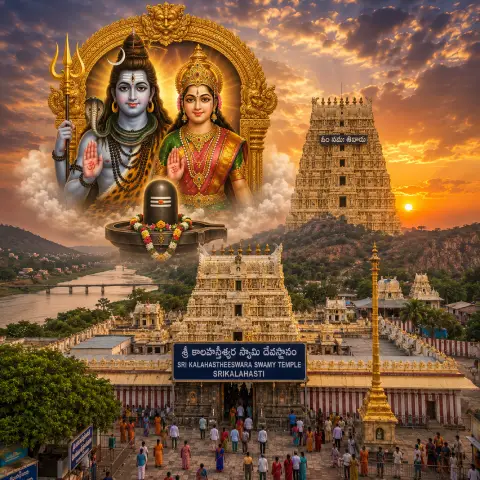
Sri Kalahasteeswara Swamy Temple, Srikalahasti – Overview
Introduction
Located on the banks of the Swarnamukhi River in Srikalahasti, Tirupati district of Andhra Pradesh, Sri Kalahasteeswara Swamy Temple is one of the most revered Shaiva temples in South India. Lord Shiva is worshipped here as Sri Kalahasteeswara, while Goddess Parvati is revered as Sri Gnanaprasunambika Devi. The temple is especially significant as one of the Pancha Bhoota Sthalas, the five sacred Shiva temples associated with the five elements of nature. Srikalahasti represents Vayu, the element of air.
The temple is also traditionally known as Dakshina Kailasam, meaning the Kailasam of the South. Its spiritual importance is closely associated with the Vayu Lingam, the legends of the spider, serpent and elephant, the extraordinary devotion of Bhakta Kannappa, and traditional worship connected with Rahu and Ketu.
The temple occupies a remarkable setting beside the Swarnamukhi River and between the surrounding sacred hills. Its architecture, inscriptions, sculptures, gopurams and long association with Chola and Vijayanagara patronage make it an important religious as well as historical monument of Andhra Pradesh.
Legend
According to the traditional Sthala Purana, the name Srikalahasti is associated with three creatures that worshipped Lord Shiva with complete devotion: a spider, a serpent and an elephant. The spider, known as Sri, worshipped Shiva by creating a protective web around the Lingam. The serpent, known as Kala, offered precious gems and ornaments to the Lord. The elephant, known as Hasti, worshipped Shiva by bringing water from the nearby river and performing abhishekam.
The three forms of worship were different and eventually came into conflict. The elephant's daily offerings of water disturbed the serpent's precious offerings, while the serpent's offerings were removed by the elephant. The traditional story culminates in a confrontation between the two devotees. Shiva, recognizing the absolute devotion of all three, blessed them and granted them liberation.
The names Sri, Kala and Hasti are traditionally combined to form Srikalahasti. The legend therefore presents the temple as a place where devotion is valued beyond the form or method through which worship is offered.
Representations associated with the spider, elephant tusks and serpent are traditionally connected with the Lingam and serve as reminders of these legendary acts of devotion.
The Legend of the Vayu Lingam
Srikalahasti is traditionally regarded as the Vayu Sthala of the Pancha Bhoota Sthalas. According to temple tradition, Lord Shiva manifested here as the element of air and is worshipped as the Vayu Lingam. The other four Pancha Bhoota temples are traditionally associated with earth, water, fire and space.
The Vayu Lingam is regarded as a self-manifested form of Shiva and is treated as distinct from an ordinary stone representation. A traditional feature associated with the sanctum is the continuous movement of the flame of a lamp even when there is no apparent breeze. Devotees regard this as a symbolic indication of the presence of Vayu, the air element.
Because of this association, Srikalahasti occupies a unique position among Shiva temples and is an important pilgrimage destination for devotees seeking spiritual purification, inner peace and the blessings of Lord Shiva.
The Legend of Bhakta Kannappa
One of the most celebrated devotional traditions of Srikalahasti is the story of Bhakta Kannappa. According to tradition, Kannappa was a hunter and an intense devotee of Lord Shiva. His worship was simple and spontaneous, without dependence on formal ritual procedures.
Kannappa is said to have noticed blood flowing from the eyes of the Shiva Lingam. Believing that the Lord was suffering, he offered one of his own eyes to stop the bleeding. When the other eye of the Lingam also appeared to bleed, Kannappa prepared to offer his second eye as well.
Before he could complete the act, Lord Shiva appeared before him, stopped him and revealed his divine presence. Shiva is traditionally believed to have restored Kannappa's eyes and granted him liberation. The story is celebrated as an example of absolute devotion in which love for the deity transcends formal ritual.
A shrine associated with Bhakta Kannappa is located near the main temple on the hill traditionally associated with him. The temple administration recognizes the Bhakta Kannappa shrine as an important associated sacred site.
Other Traditional Legends
Srikalahasti is associated with several other Shaiva traditions. One important account concerns Goddess Parvati, who is worshipped here as Gnanaprasunambika. According to temple tradition, Parvati performed severe penance at Srikalahasti and received divine grace from Lord Shiva. She is therefore revered here as Gnanaprasunambika, the embodiment of divine knowledge and spiritual wisdom.
Traditional accounts also associate Srikalahasti with several deities, sages and celestial beings who are believed to have performed penance or worshipped Lord Shiva at this sacred site. These traditions contribute to the temple's reputation as a powerful centre of Shaiva spirituality.
History
Srikalahasti has a long religious history extending back many centuries. Ancient Tamil devotional traditions associate the sacred site with the Shaiva Nayanmars, including Appar, Sundarar and Tirugnana Sambandar, whose devotional hymns helped spread the importance of Shaiva pilgrimage in South India.
The surviving temple structure developed over different historical periods. Inscriptions associated with the temple provide evidence of Chola-period patronage, with important inscriptions dating to the medieval period. The Cholas made substantial contributions to the development and maintenance of the temple, and later rulers continued to expand and renovate the complex.
The temple subsequently received significant patronage during the Vijayanagara period. Sri Krishnadevaraya is particularly associated with the construction of the magnificent Rajagopuram and other additions to the temple complex. The Vijayanagara contribution is visible in the scale of the architecture, stone workmanship and ornamental details of the temple.
The temple's historical development therefore reflects several centuries of religious activity and architectural patronage rather than a single period of construction. Chola inscriptions and Vijayanagara-era additions together form an important part of the temple's architectural history.
The Temple Complex
Sri Kalahasteeswara Swamy Temple is built beside the Swarnamukhi River and against the natural contours of the surrounding hills. The temple plan is therefore distinctive, with the surrounding landscape forming an integral part of its architectural setting.
The temple is characterized by large prakaras, mandapas, sculpted pillars, subsidiary shrines and monumental gopurams. The principal temple faces west, and the surrounding hills traditionally associated with the temple include Durgambika Hill, Kannappa Hill and Kumaraswamy Hill.
The enormous Rajagopuram is one of the most recognizable features of Srikalahasti. The temple's official historical account attributes the construction of the major gopuram to Sri Krishnadevaraya in 1516. The tower rises approximately 120 feet and forms a striking landmark at the entrance to the temple.
The architectural character of the temple reflects the Dravidian tradition, with richly carved stone pillars, sculptural panels, ornamental elements and large ceremonial spaces. The combination of natural rock formations and built architecture gives Srikalahasti a distinctive appearance.
Presiding Deities
The principal deity is Lord Sri Kalahasteeswara, the manifestation of Lord Shiva associated with the Vayu element. The Lingam is revered as the Vayu Lingam and occupies the central position in the temple's spiritual tradition.
Goddess Parvati is worshipped as Sri Gnanaprasunambika Devi. The name Gnanaprasunambika is associated with divine knowledge and spiritual wisdom. The shrine of the Goddess forms an important part of the temple's religious tradition.
Rahu and Ketu Worship
Srikalahasti is widely known as an important centre for traditional Rahu-Ketu worship. Devotees visit the temple to perform Rahu-Ketu Puja and other traditional rituals associated with planetary afflictions, commonly referred to as Rahu-Ketu Dosha or Sarpa Dosha in Hindu astrological tradition.
These rituals are performed as acts of religious faith and are traditionally believed by devotees to provide relief from perceived planetary difficulties and obstacles. The temple's association with Rahu and Ketu has made it a major pilgrimage destination for devotees seeking such traditional remedies.
Rahu-Ketu worship should be understood as part of Hindu religious and astrological tradition rather than as a scientifically established remedy for medical, financial or other worldly problems.
Ritual Practice
Daily worship at Sri Kalahasteeswara Swamy Temple follows established Shaiva temple traditions. Regular services include suprabhata, abhishekam, archana, alankaram, naivedyam and evening worship. Special sevas and rituals are performed according to the temple's prescribed schedule.
Abhishekam is an important form of worship offered to Lord Kalahasteeswara. Devotees may also participate in archana and other authorized sevas. The temple conducts special worship on Mondays, Pradosha days, Shivaratri and other auspicious occasions associated with Lord Shiva.
Rahu-Ketu Puja is one of the temple's distinctive devotional practices and attracts pilgrims from different parts of India. Special arrangements are made by the temple administration for devotees participating in these rituals.
Festivals
- Maha Shivaratri – one of the most important celebrations at Srikalahasti. Devotees gather in large numbers for special worship, night-long observances and darshan of Lord Kalahasteeswara.
- Sivarathri Brahmotsavam – a major annual festival associated with Maha Shivaratri. The celebrations include special rituals, processions and important events such as Nandi Seva, Lingodbhavam, Rathotsavam, Teppotsavam and the Kalyanotsavam of Sri Swami and Ammavaru.
- Rathotsavam – the ceremonial chariot procession is an important part of the major annual celebrations, with the festival deities taken in procession for devotees.
- Teppotsavam – the float festival forms part of the temple's major annual celebrations and is associated with devotional processions and special worship.
- Kalyanotsavam – the ceremonial wedding celebration of Lord Kalahasteeswara and Goddess Gnanaprasunambika is conducted as part of the annual festival tradition.
- Karthika Deepotsavam – the sacred month of Kartika is observed with special lamp-lighting and Shiva worship in accordance with regional Shaiva traditions.
- Pradosha – Pradosha worship is observed on the prescribed lunar days and is considered especially auspicious for devotees of Lord Shiva.
- Aadi Krithika – the associated Subrahmanya Swamy temple in Srikalahasti observes Aadi Krithika celebrations with special rituals and processions.
Religious Significance
Srikalahasti occupies a unique position among the Pancha Bhoota Sthalas because it represents Vayu, the element of air. The five sacred elemental manifestations of Shiva are traditionally associated with Kanchipuram for earth, Tiruvanaikaval for water, Arunachalam for fire, Srikalahasti for air and Chidambaram for space.
The Vayu Lingam is therefore central to the spiritual identity of the temple. Devotees regard the shrine as a place where the invisible and ever-moving force of air is symbolically connected with the presence of Lord Shiva.
The temple is also revered as Dakshina Kailasam, or the Kailasam of the South. This traditional title expresses the belief that Srikalahasti represents a sacred southern abode of Lord Shiva.
The legends of the spider, serpent, elephant and Kannappa further strengthen the temple's devotional significance. Together, these stories emphasize that sincere devotion, rather than social status or formal method of worship, is central to attaining the grace of Lord Shiva.
Historical and Cultural Importance
Srikalahasti represents an important intersection of religion, history, architecture and devotional culture in South India. Its association with the Cholas and Vijayanagara rulers is preserved in the temple's inscriptions and architecture.
The temple is also closely associated with the Tamil and Telugu Shaiva devotional traditions. The site has been praised in devotional literature, while the Telugu literary work Sri Kalahasti Satakam preserves important traditions connected with the sacred town and the temple.
The temple also has a connection with the Carnatic music tradition. Muthuswami Dikshitar, one of the celebrated composers of South Indian classical music, composed the kriti “Sri Kalahasteesa” in praise of the deity.
The surrounding sacred landscape includes several associated temples and shrines, including the Bhakta Kannappa Temple, Sri Bharadwajeswara Swamy Temple, Sri Gangamma Temple, Sri Kanaka Durgamma Temple, Sri Kumara Swamy Temple and other religious sites administered or associated with the Srikalahasti temple tradition.
Associated Sacred Sites
- Bhakta Kannappa Temple – associated with the celebrated devotee Kannappa and his supreme devotion to Lord Shiva.
- Pathala Ganapathi – an underground shrine associated with Lord Ganesha within the temple complex.
- Sri Bharadwajeswara Swamy Temple – a nearby Shiva shrine associated with Sage Bharadwaja.
- Sri Gangamma Temple – a nearby shrine dedicated to Goddess Gangamma.
- Sri Kanaka Durgamma Temple – an important associated Devi shrine.
- Sri Kumara Swamy Temple – a shrine dedicated to Lord Subrahmanya, with Aadi Krithika as an important annual celebration.
- Sri Sahasralingeswara Swamy Temple – a sacred Shiva temple associated with the Veyilingala Kona area.
Why Visit Sri Kalahasteeswara Swamy Temple?
- To receive darshan of Lord Kalahasteeswara, the Vayu form of Lord Shiva.
- To experience one of the five sacred Pancha Bhoota Sthalas.
- To understand the spiritual tradition of the Vayu Lingam.
- To worship Goddess Gnanaprasunambika Devi.
- To learn about the inspiring devotion of Bhakta Kannappa.
- To experience the traditional Sri-Kala-Hasti legend associated with the spider, serpent and elephant.
- To participate in traditional Rahu-Ketu worship.
- To admire the temple's large gopurams, carved pillars and Dravidian architectural heritage.
- To experience the sacred setting of the Swarnamukhi River and surrounding hills.
- To witness major Shaiva celebrations such as Maha Shivaratri and Sivarathri Brahmotsavam.
శ్రీ కాళహస్తీశ్వర స్వామి దేవాలయం, శ్రీకాళహస్తి – అవలోకనం
పరిచయం
ఆంధ్రప్రదేశ్లోని తిరుపతి జిల్లాలో శ్రీకాళహస్తి పట్టణంలో సువర్ణముఖి నది తీరంలో కొలువై ఉన్న శ్రీ కాళహస్తీశ్వర స్వామి దేవాలయం దక్షిణ భారతదేశంలోని ప్రముఖ శైవ పుణ్యక్షేత్రాలలో ఒకటి. ఇక్కడ పరమేశ్వరుడు శ్రీ కాళహస్తీశ్వర స్వామిగా, పార్వతీదేవి శ్రీ జ్ఞానప్రసూనాంబికా దేవిగా ఆరాధించబడుతున్నారు. ప్రకృతిలోని ఐదు మూలతత్త్వాలకు ప్రతీకగా భావించే పంచభూత స్థలాలలో ఈ క్షేత్రం వాయు తత్త్వానికి ప్రతినిధిగా ప్రసిద్ధి చెందింది.
ఈ క్షేత్రాన్ని సంప్రదాయంగా దక్షిణ కైలాసంగా, అంటే దక్షిణ భారతదేశంలోని కైలాసంగా పిలుస్తారు. వాయులింగం, శ్రీ సాలెపురుగు, కాల సర్పం, హస్తి ఏనుగు కథ, భక్త కన్నప్ప యొక్క అనన్య భక్తి మరియు రాహు-కేతు పూజా సంప్రదాయాలు శ్రీకాళహస్తి ఆధ్యాత్మిక ప్రాముఖ్యతలో ముఖ్యమైన భాగాలు.
సువర్ణముఖి నది తీరంలో మరియు చుట్టూ ఉన్న పవిత్ర కొండల మధ్య ఆలయం ఉన్న తీరు ప్రత్యేకమైనది. ఆలయంలోని గోపురాలు, శిల్పాలు, శాసనాలు, మండపాలు మరియు చోళులు, విజయనగర పాలకుల కాలంలో లభించిన ఆదరణ శ్రీకాళహస్తిని ఆధ్యాత్మిక కేంద్రంగానే కాకుండా చారిత్రక మరియు నిర్మాణ వారసత్వ క్షేత్రంగా కూడా నిలబెడుతున్నాయి.
స్థలపురాణం
సంప్రదాయ స్థలపురాణం ప్రకారం శ్రీకాళహస్తి అనే పేరు మూడు జీవరాశుల భక్తితో అనుసంధానించబడింది. ఒక సాలెపురుగు, ఒక సర్పం మరియు ఒక ఏనుగు పరమేశ్వరుడిని అత్యంత భక్తిశ్రద్ధలతో ఆరాధించాయని పురాణగాథ చెబుతుంది. సాలెపురుగు శివలింగాన్ని తన వలతో కప్పి రక్షిస్తూ పూజించేది. కాల అనే సర్పం విలువైన రత్నాలను సమర్పించేది. హస్తి అనే ఏనుగు సమీపంలోని నది నుంచి నీటిని తెచ్చి శివలింగానికి అభిషేకం చేసేది.
ముగ్గురి పూజా విధానాలు వేర్వేరుగా ఉండటంతో చివరకు వారి మధ్య విరోధం ఏర్పడిందని పురాణగాథ చెబుతుంది. ఏనుగు ప్రతిరోజూ చేసే జలాభిషేకం సర్పం సమర్పించిన రత్నాలను తొలగించేది. సర్పం మళ్లీ రత్నాలను సమర్పించేది. చివరకు ఇద్దరి మధ్య ఘర్షణ జరిగింది. తమ భక్తిలో ఇద్దరూ ప్రాణాలను సైతం అర్పించడంతో, శివుడు వారి భక్తికి సంతోషించి వారికి మోక్షాన్ని ప్రసాదించాడని స్థలపురాణం చెబుతుంది.
సంప్రదాయం ప్రకారం శ్రీ, కాల మరియు హస్తి అనే పేర్లు కలిసి శ్రీకాళహస్తి అనే పేరు ఏర్పడింది. ఈ పురాణగాథ ద్వారా పూజా విధానం కంటే భక్తి యొక్క నిజాయితీకి శివుడు ప్రాధాన్యత ఇస్తాడనే సందేశాన్ని భక్తులు గ్రహిస్తారు.
శివలింగానికి సంబంధించిన సాలెపురుగు, ఏనుగు దంతాలు మరియు సర్ప రూపాల ప్రస్తావన ఈ భక్తి కథలను గుర్తుచేసే పవిత్ర చిహ్నాలుగా సంప్రదాయంలో నిలిచాయి.
వాయులింగ మహిమ
పంచభూత స్థలాలలో శ్రీకాళహస్తిని వాయు స్థలంగా భావిస్తారు. స్థలపురాణ సంప్రదాయం ప్రకారం పరమేశ్వరుడు ఇక్కడ వాయు తత్త్వంగా ప్రతిష్ఠితుడై వాయులింగ రూపంలో ఆరాధించబడుతున్నాడు. పంచభూత స్థలాలలో మిగిలిన నాలుగు క్షేత్రాలు భూమి, జలం, అగ్ని మరియు ఆకాశ తత్త్వాలకు ప్రతీకలుగా సంప్రదాయంగా భావించబడతాయి.
వాయులింగాన్ని స్వయంభూ స్వరూపంగా భక్తులు భావిస్తారు. గర్భగృహంలో వెలిగే దీపజ్యోతి చుట్టూ స్పష్టమైన గాలి ప్రవాహం కనిపించకపోయినా దీపం నిరంతరం కదులుతూ ఉండటం వాయు తత్త్వానికి ప్రతీకగా భక్తులు భావిస్తారు.
ఈ ప్రత్యేకత కారణంగా శ్రీకాళహస్తి ఇతర శైవ క్షేత్రాల కంటే విశిష్టమైన స్థానాన్ని కలిగి ఉంది. ఆధ్యాత్మిక ప్రశాంతత, శివానుగ్రహం మరియు అంతరంగ శుద్ధి కోసం భక్తులు ఈ క్షేత్రాన్ని దర్శిస్తారు.
భక్త కన్నప్ప కథ
శ్రీకాళహస్తితో అనుసంధానమైన అత్యంత ప్రసిద్ధ భక్తి గాథలలో భక్త కన్నప్ప కథ ఒకటి. సంప్రదాయం ప్రకారం కన్నప్ప ఒక వేటగాడు. ఆయనకు శివునిపై అపారమైన మరియు సహజసిద్ధమైన భక్తి ఉండేది. సంప్రదాయ పూజా విధానాల కంటే తన హృదయంలోని స్వచ్ఛమైన భక్తితో శివుడిని ఆరాధించేవాడు.
ఒక సందర్భంలో శివలింగం నుంచి రక్తం కారుతున్నట్లు కన్నప్ప గమనించాడని పురాణగాథ చెబుతుంది. స్వామివారికి బాధ కలుగుతోందని భావించి తన ఒక కన్నును సమర్పించాడు. తరువాత శివలింగంలోని మరో కన్ను నుంచి కూడా రక్తం కారుతున్నట్లు కనిపించడంతో తన రెండవ కన్నును కూడా సమర్పించేందుకు సిద్ధపడ్డాడు.
రెండవ కన్నును సమర్పించేలోపే పరమేశ్వరుడు ప్రత్యక్షమై కన్నప్పను ఆపి తన దివ్యరూపాన్ని చూపించాడని సంప్రదాయం చెబుతుంది. శివుడు కన్నప్పకు తిరిగి దృష్టిని ప్రసాదించి మోక్షాన్ని అనుగ్రహించాడని భక్తుల విశ్వాసం.
కన్నప్ప భక్తి సంప్రదాయంలో ఆయనకు సంబంధించిన ఒక ప్రత్యేక ఆలయం ప్రధాన క్షేత్రానికి సమీపంలోని కొండపై ఉంది. శ్రీకాళహస్తి దేవస్థానం కూడా భక్త కన్నప్ప ఆలయాన్ని ముఖ్యమైన అనుబంధ పవిత్ర స్థలంగా గుర్తిస్తుంది.
ఇతర పురాణ గాథలు
శ్రీకాళహస్తి అనేక శైవ పురాణ సంప్రదాయాలతో అనుసంధానమై ఉంది. వాటిలో పార్వతీదేవికి సంబంధించిన కథ ముఖ్యమైనది. ఇక్కడ పార్వతీదేవిని జ్ఞానప్రసూనాంబికా దేవిగా ఆరాధిస్తారు. సంప్రదాయం ప్రకారం పార్వతీదేవి శ్రీకాళహస్తిలో ఘోర తపస్సు చేసి పరమేశ్వరుని అనుగ్రహాన్ని పొందింది. అందువల్ల ఆమెను జ్ఞానం మరియు ఆధ్యాత్మిక వివేకానికి ప్రతీకగా ఆరాధిస్తారు.
ఇతర సంప్రదాయ కథల్లో దేవతలు, ఋషులు మరియు అనేక దివ్య వ్యక్తులు శ్రీకాళహస్తిలో తపస్సు చేసి లేదా శివారాధన చేసి అనుగ్రహాన్ని పొందినట్లు చెప్పబడుతుంది. ఈ కథలు శ్రీకాళహస్తిని శైవ ఆధ్యాత్మిక సాధనకు ప్రముఖ క్షేత్రంగా నిలబెట్టాయి.
చరిత్ర
శ్రీకాళహస్తికి అనేక శతాబ్దాలుగా కొనసాగుతున్న సుదీర్ఘ ధార్మిక చరిత్ర ఉంది. ప్రాచీన తమిళ శైవ భక్తి సంప్రదాయాల్లో అప్పర్, సుందరర్ మరియు తిరుజ్ఞానసంబందర్ వంటి శైవ నాయన్మార్లు ఈ పవిత్ర క్షేత్రాన్ని సందర్శించినట్లు సంప్రదాయ ఆధారాలు పేర్కొంటాయి. వారి భక్తి గీతాలు దక్షిణ భారతదేశంలో శైవ తీర్థయాత్రా సంప్రదాయాన్ని విస్తరించడంలో ముఖ్యమైన పాత్ర పోషించాయి.
ప్రస్తుతం కనిపించే ఆలయ నిర్మాణం అనేక చారిత్రక దశల్లో అభివృద్ధి చెందింది. ఆలయంలోని శాసనాలు చోళుల కాలం నాటి ఆదరణకు ఆధారాలను అందిస్తున్నాయి. చోళ రాజులు ఆలయ నిర్మాణం, నిర్వహణ మరియు అభివృద్ధికి విశేషంగా సహకరించారు. తరువాతి పాలకులు కూడా ఆలయాన్ని విస్తరించి పునరుద్ధరించారు.
విజయనగర సామ్రాజ్య కాలంలో ఆలయానికి మరింత విస్తృతమైన రాజాదరణ లభించింది. శ్రీకృష్ణదేవరాయలతో ఆలయానికి ప్రత్యేకమైన సంబంధం ఉంది. ఆలయ చారిత్రక సమాచారం ప్రకారం ఆయన 1516లో అద్భుతమైన రాజగోపురం నిర్మాణానికి సహకరించారు. విజయనగర కాలపు నిర్మాణ శైలి, రాతి పనితనం మరియు శిల్ప అలంకరణలు ఆలయ సముదాయంలో స్పష్టంగా కనిపిస్తాయి.
అందువల్ల శ్రీకాళహస్తి ఆలయ చరిత్ర ఒకే రాజు లేదా ఒకే కాలానికి పరిమితం కాదు. చోళుల కాలపు శాసనాలు, తదుపరి రాజవంశాల ఆదరణ మరియు విజయనగర కాలపు విస్తరణలు కలిసి ఆలయ నిర్మాణ మరియు ధార్మిక చరిత్రను రూపొందించాయి.
ఆలయ సముదాయం
శ్రీ కాళహస్తీశ్వర స్వామి దేవాలయం సువర్ణముఖి నది పక్కన, చుట్టూ ఉన్న కొండల సహజ ఆకృతులకు అనుగుణంగా నిర్మించబడింది. అందువల్ల ఆలయ నిర్మాణ ప్రణాళిక ఇతర సాధారణ ఆలయాల కంటే విశిష్టంగా కనిపిస్తుంది.
ఆలయంలో అనేక ప్రాకారాలు, మండపాలు, శిల్పాలతో కూడిన స్తంభాలు, ఉపాలయాలు మరియు భారీ గోపురాలు ఉన్నాయి. ప్రధాన ఆలయం పడమర దిశను చూసే విధంగా ఉంది. ఆలయం చుట్టూ దుర్గాంబిక కొండ, కన్నప్ప కొండ మరియు కుమారస్వామి కొండ వంటి పవిత్ర కొండలు సంప్రదాయంగా గుర్తించబడుతున్నాయి.
శ్రీకాళహస్తి రాజగోపురం ఆలయానికి అత్యంత ప్రసిద్ధ నిర్మాణ లక్షణాలలో ఒకటి. ఆలయ చారిత్రక సమాచారం ప్రకారం శ్రీకృష్ణదేవరాయలు 1516లో ఈ మహత్తర గోపుర నిర్మాణానికి సహకరించారు. ఈ గోపురం సుమారు 120 అడుగుల ఎత్తు కలిగి ఆలయ ప్రవేశానికి విశిష్టమైన గుర్తింపును అందిస్తుంది.
ఆలయ నిర్మాణంలో ద్రావిడ శైలి స్పష్టంగా కనిపిస్తుంది. రాతి స్తంభాలపై సున్నితమైన శిల్పాలు, శిల్పపటాలు, అలంకారాలు మరియు విశాలమైన మండపాలు ఆలయ కళాత్మక వైభవాన్ని ప్రతిబింబిస్తాయి. సహజ కొండలు మరియు ఆలయ నిర్మాణాలు కలిసిన తీరు శ్రీకాళహస్తికి ప్రత్యేకమైన రూపాన్ని అందిస్తుంది.
ప్రధాన దేవతలు
ఆలయంలో ప్రధాన దేవత శ్రీ కాళహస్తీశ్వర స్వామి. ఆయనను వాయు తత్త్వానికి ప్రతీకగా భావించే వాయులింగ స్వరూపంలో ఆరాధిస్తారు. వాయులింగం శ్రీకాళహస్తి క్షేత్రం యొక్క ఆధ్యాత్మిక గుర్తింపులో కేంద్రస్థానాన్ని కలిగి ఉంది.
పార్వతీదేవిని శ్రీ జ్ఞానప్రసూనాంబికా దేవిగా ఆరాధిస్తారు. జ్ఞానప్రసూనాంబికా అనే పేరు దైవిక జ్ఞానం మరియు ఆధ్యాత్మిక వివేకంతో అనుసంధానించబడింది. అమ్మవారి సన్నిధి ఆలయ ధార్మిక సంప్రదాయంలో ముఖ్యమైన భాగం.
రాహు – కేతు పూజ
శ్రీకాళహస్తి ఆలయం సంప్రదాయ రాహు-కేతు ఆరాధనకు ప్రసిద్ధి చెందింది. హిందూ జ్యోతిష్య సంప్రదాయంలో రాహు-కేతు దోషం లేదా సర్పదోషం అని పిలువబడే గ్రహ సంబంధిత సమస్యల నివారణ కోసం భక్తులు ఇక్కడ రాహు-కేతు పూజ వంటి ప్రత్యేక పూజలను నిర్వహిస్తారు.
ఈ పూజలు భక్తి మరియు ధార్మిక విశ్వాసాల ఆధారంగా నిర్వహించబడతాయి. భక్తుల సంప్రదాయ విశ్వాసం ప్రకారం ఇటువంటి పూజలు గ్రహ సంబంధిత అడ్డంకులు మరియు ఇబ్బందుల నుంచి ఉపశమనాన్ని కలిగిస్తాయని నమ్ముతారు. ఈ కారణంగా శ్రీకాళహస్తి రాహు-కేతు పూజలకు ప్రముఖ తీర్థయాత్రా కేంద్రంగా మారింది.
రాహు-కేతు పూజను హిందూ ధార్మిక మరియు జ్యోతిష్య సంప్రదాయంలో భాగంగా చూడాలి. దీనిని వైద్య, ఆర్థిక లేదా ఇతర ప్రాపంచిక సమస్యలకు శాస్త్రీయంగా నిరూపించబడిన పరిష్కారంగా పరిగణించకూడదు.
పూజా విధానాలు
శ్రీ కాళహస్తీశ్వర స్వామి దేవాలయంలో శైవ ఆలయ సంప్రదాయాలకు అనుగుణంగా నిత్య పూజలు నిర్వహిస్తారు. సుప్రభాతం, అభిషేకం, అర్చన, అలంకారం, నైవేద్యం మరియు సాయంత్రపు పూజలు నిత్య ధార్మిక కార్యక్రమాలలో భాగంగా ఉంటాయి.
అమరేశ్వర స్వామివారి వలెనే ఇక్కడ కూడా అభిషేకానికి ప్రత్యేక ప్రాధాన్యత ఉంది. భక్తులు ఆలయ నియమాలకు అనుగుణంగా అర్చన మరియు ఇతర అనుమతించబడిన సేవల్లో పాల్గొనవచ్చు. సోమవారాలు, ప్రదోష దినాలు, శివరాత్రి మరియు ఇతర శైవ పర్వదినాల్లో ప్రత్యేక పూజలు నిర్వహిస్తారు.
రాహు-కేతు పూజ శ్రీకాళహస్తి ఆలయానికి ప్రత్యేకమైన భక్తి ఆచారాలలో ఒకటి. ఈ పూజల్లో పాల్గొనే భక్తుల కోసం దేవస్థానం ప్రత్యేక ఏర్పాట్లు చేస్తుంది.
ఉత్సవాలు
- మహాశివరాత్రి – శ్రీకాళహస్తిలో జరిగే అత్యంత ముఖ్యమైన వార్షిక శైవ పర్వదినాలలో ఒకటి. ఈ సందర్భంగా పెద్ద సంఖ్యలో భక్తులు ప్రత్యేక పూజలు, రాత్రి జాగరణ, అభిషేకాలు మరియు స్వామివారి దర్శనంలో పాల్గొంటారు.
- శివరాత్రి బ్రహ్మోత్సవాలు – మహాశివరాత్రితో అనుసంధానమైన ప్రధాన వార్షిక ఉత్సవం. ప్రత్యేక పూజలు, ఊరేగింపులు, నంది సేవ, లింగోద్భవం, రథోత్సవం, తెప్పోత్సవం మరియు స్వామివారు-అమ్మవారి కల్యాణోత్సవం వంటి కార్యక్రమాలు ఈ ఉత్సవాల్లో ముఖ్యమైన భాగాలు.
- రథోత్సవం – ప్రధాన వార్షిక ఉత్సవాల్లో స్వామివారి ఉత్సవమూర్తులను రథంపై ఊరేగించే ఈ కార్యక్రమం భక్తులకు ప్రధాన ఆకర్షణగా ఉంటుంది.
- తెప్పోత్సవం – ఆలయ ప్రధాన వార్షిక ఉత్సవాల్లో భాగంగా జరిగే పవిత్ర జలవిహార కార్యక్రమం. ప్రత్యేక పూజలు మరియు ఉత్సవమూర్తుల సేవలు ఇందులో భాగంగా ఉంటాయి.
- కల్యాణోత్సవం – శ్రీ కాళహస్తీశ్వర స్వామి మరియు శ్రీ జ్ఞానప్రసూనాంబికా దేవి వారి దివ్య కల్యాణాన్ని ఉత్సవ సంప్రదాయంలో భాగంగా నిర్వహిస్తారు.
- కార్తీక దీపోత్సవం – కార్తీక మాసంలో దీపారాధన మరియు శివారాధనకు ప్రత్యేక ప్రాధాన్యత ఉంటుంది. ఈ సందర్భంగా ఆలయ పరిసరాల్లో భక్తి కార్యక్రమాలు నిర్వహించబడతాయి.
- ప్రదోషం – నిర్ణీత తిథుల్లో ప్రదోష పూజలు నిర్వహించబడతాయి. శివారాధనకు ఈ సమయాన్ని అత్యంత పవిత్రంగా భావిస్తారు.
- ఆది కృత్తిక – శ్రీకాళహస్తిలోని అనుబంధ కుమారస్వామి ఆలయంలో ఆది కృత్తికను ప్రత్యేక ఉత్సవంగా నిర్వహిస్తారు. ఈ సందర్భంగా ప్రత్యేక పూజలు మరియు ఊరేగింపులు జరుగుతాయి.
ఆధ్యాత్మిక ప్రాముఖ్యత
పంచభూత స్థలాలలో వాయు తత్త్వానికి ప్రతీకగా నిలిచే శ్రీకాళహస్తికి ప్రత్యేకమైన ఆధ్యాత్మిక ప్రాధాన్యత ఉంది. పంచభూత స్థలాల సంప్రదాయ విభజనలో కాంచీపురం భూమి, తిరువానైకావల్ జలం, అరుణాచలం అగ్ని, శ్రీకాళహస్తి వాయువు మరియు చిదంబరం ఆకాశ తత్త్వాలకు ప్రతీకలుగా భావించబడతాయి.
వాయులింగం శ్రీకాళహస్తి ఆధ్యాత్మిక గుర్తింపులో ప్రధానమైనది. కనిపించని మరియు నిరంతరం కదిలే వాయు శక్తిని పరమేశ్వరుని సాన్నిధ్యంతో అనుసంధానించే పవిత్ర భావన ఈ క్షేత్ర సంప్రదాయంలో కనిపిస్తుంది.
శ్రీకాళహస్తిని దక్షిణ కైలాసంగా కూడా పిలుస్తారు. ఈ పేరు శ్రీకాళహస్తిని దక్షిణ భారతదేశంలోని పవిత్ర శైవ కైలాస క్షేత్రంగా భావించే భక్తి సంప్రదాయాన్ని ప్రతిబింబిస్తుంది.
సాలెపురుగు, సర్పం, ఏనుగు మరియు భక్త కన్నప్ప కథలు ఈ క్షేత్ర భక్తి ప్రాముఖ్యతను మరింత పెంచాయి. ఈ కథలన్నీ కులం, స్థాయి లేదా పూజా విధానం కంటే నిజమైన భక్తి మరియు సంపూర్ణ శరణాగతికి శివుడు ప్రాధాన్యత ఇస్తాడనే సందేశాన్ని అందిస్తాయి.
చారిత్రక మరియు సాంస్కృతిక ప్రాముఖ్యత
శ్రీకాళహస్తి దక్షిణ భారతదేశంలోని ధార్మికత, చరిత్ర, నిర్మాణ కళ మరియు భక్తి సాహిత్య సంప్రదాయాల కలయికకు ఒక ముఖ్యమైన ఉదాహరణ. చోళులు మరియు విజయనగర పాలకుల కాలంలో ఆలయానికి లభించిన ఆదరణ శాసనాలు మరియు నిర్మాణాల్లో ప్రతిబింబిస్తుంది.
తమిళ మరియు తెలుగు శైవ భక్తి సంప్రదాయాలతో కూడా శ్రీకాళహస్తికి సన్నిహిత సంబంధం ఉంది. అనేక భక్తి సంప్రదాయాల్లో ఈ క్షేత్రం ప్రస్తావించబడింది. తెలుగు సాహిత్యంలో శ్రీకాళహస్తీశ్వర శతకం ఈ పవిత్ర పట్టణం మరియు ఆలయానికి సంబంధించిన భక్తి సంప్రదాయాలను ప్రతిబింబిస్తుంది.
కర్ణాటక సంగీత సంప్రదాయంతో కూడా శ్రీకాళహస్తికి సంబంధం ఉంది. దక్షిణ భారతీయ శాస్త్రీయ సంగీతంలోని ప్రముఖ వాగ్గేయకారుడు ముత్తుస్వామి దీక్షితులు స్వామివారి మహిమను కీర్తిస్తూ “శ్రీ కాళహస్తీశ” అనే కృతిని రచించారు.
ప్రధాన ఆలయానికి అనుబంధంగా భక్త కన్నప్ప ఆలయం, శ్రీ భరద్వాజేశ్వర స్వామి ఆలయం, శ్రీ గంగమ్మ ఆలయం, శ్రీ కనకదుర్గమ్మ ఆలయం, శ్రీ కుమారస్వామి ఆలయం మరియు ఇతర పవిత్ర స్థలాలు శ్రీకాళహస్తి ధార్మిక పరిసరాలను మరింత విస్తరించాయి.
అనుబంధ పవిత్ర క్షేత్రాలు
- శ్రీ భక్త కన్నప్ప ఆలయం – పరమేశ్వరునిపై సంపూర్ణ భక్తిని ప్రదర్శించిన భక్త కన్నప్పకు సంబంధించిన పవిత్ర ఆలయం.
- పాతాళ గణపతి – ప్రధాన ఆలయ సముదాయంలోని భూగర్భంలో ఉన్న గణపతి సన్నిధి.
- శ్రీ భరద్వాజేశ్వర స్వామి ఆలయం – మహర్షి భరద్వాజునితో అనుసంధానమైన సమీప శివాలయం.
- శ్రీ గంగమ్మ ఆలయం – గంగమ్మ అమ్మవారికి అంకితమైన సమీప పవిత్ర ఆలయం.
- శ్రీ కనకదుర్గమ్మ ఆలయం – అమ్మవారి ఆరాధనకు సంబంధించిన ముఖ్యమైన అనుబంధ క్షేత్రం.
- శ్రీ కుమారస్వామి ఆలయం – సుబ్రహ్మణ్య స్వామికి అంకితమైన ఆలయం. ఆది కృత్తిక ప్రధాన వార్షిక ఉత్సవాలలో ఒకటి.
- శ్రీ సహస్రలింగేశ్వర స్వామి ఆలయం – వేయిలింగాల కోన ప్రాంతంతో అనుసంధానమైన పవిత్ర శివ క్షేత్రం.
శ్రీ కాళహస్తీశ్వర స్వామి దేవాలయాన్ని ఎందుకు దర్శించాలి?
- వాయు తత్త్వానికి ప్రతీకగా ఆరాధించబడే శ్రీ కాళహస్తీశ్వర స్వామివారి దర్శనం కోసం.
- పంచభూత స్థలాలలో ఒకటైన వాయు స్థలాన్ని దర్శించడానికి.
- వాయులింగానికి సంబంధించిన ప్రత్యేకమైన ఆధ్యాత్మిక సంప్రదాయాన్ని అనుభవించడానికి.
- శ్రీ జ్ఞానప్రసూనాంబికా దేవిని ఆరాధించడానికి.
- భక్త కన్నప్ప యొక్క అపూర్వమైన భక్తి గాథను తెలుసుకోవడానికి.
- సాలెపురుగు, సర్పం మరియు ఏనుగు భక్తి కథతో అనుసంధానమైన శ్రీ-కాల-హస్తి స్థలపురాణాన్ని తెలుసుకోవడానికి.
- సంప్రదాయ రాహు-కేతు పూజల్లో పాల్గొనడానికి.
- భారీ గోపురాలు, శిల్పాలతో కూడిన స్తంభాలు మరియు ద్రావిడ ఆలయ నిర్మాణ కళను దర్శించడానికి.
- సువర్ణముఖి నది మరియు చుట్టుపక్కల పవిత్ర కొండల సహజ వాతావరణాన్ని అనుభవించడానికి.
- మహాశివరాత్రి మరియు శివరాత్రి బ్రహ్మోత్సవాలు వంటి ప్రధాన శైవ ఉత్సవాలను దర్శించడానికి.