
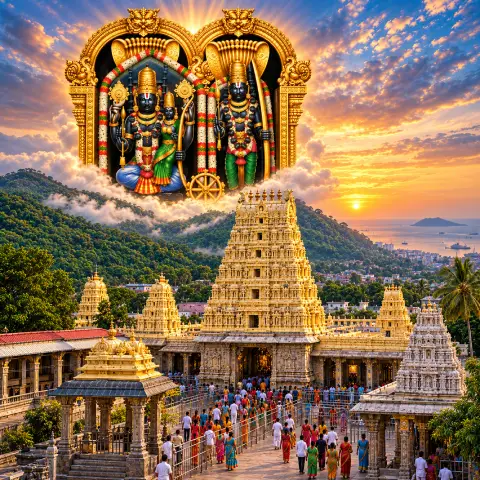
Sri Varaha Lakshmi Narasimha Swamy Temple, Simhachalam – Overview
Introduction
Sri Varaha Lakshmi Narasimha Swamy Temple, popularly known as Simhachalam Temple, is one of the most revered Vaishnava temples of Andhra Pradesh. It is situated on the scenic Simhachalam Hill near Visakhapatnam and is dedicated to Lord Vishnu in his distinctive Varaha-Narasimha form.
The temple is particularly famous for its unusual principal deity, which combines features associated with the Varaha and Narasimha avatars of Lord Vishnu. This rare manifestation gives Simhachalam a unique position among Narasimha temples in India.
The temple stands approximately 244 metres above sea level on the Simhachalam hill range. Surrounded by greenery and overlooking the Visakhapatnam region, the temple combines religious importance, historic heritage and remarkable stone architecture.
The name Simhachalam is traditionally understood as meaning the "Lion Hill", reflecting the association of the hill with Lord Narasimha, the man-lion incarnation of Vishnu.
Presiding Deity
The principal deity is worshipped as Sri Varaha Lakshmi Narasimha Swamy.
The deity represents a distinctive combination of the Varaha and Narasimha manifestations of Lord Vishnu. In the traditional description of the original icon, the deity has a boar-like head, a human torso and features associated with Narasimha.
The original stone image is relatively small and is traditionally kept covered with a thick layer of sandalwood paste for most of the year. Because of the sandalwood covering, the deity takes on a form resembling a Shiva Lingam.
The practice of covering the deity with sandalwood is one of the most recognisable religious traditions of Simhachalam.
The Unique Varaha-Narasimha Form
According to the temple's Sthala Purana, Lord Vishnu manifested himself at Simhachalam in a form combining the characteristics of Varaha and Narasimha.
Varaha is the boar incarnation of Vishnu associated with the rescue of the Earth, while Narasimha is the man-lion incarnation who appeared to protect Prahlada and destroy Hiranyakashipu.
The Simhachalam deity therefore symbolically brings together the protective power of these two celebrated manifestations of Lord Vishnu.
The original icon is traditionally described as standing in a tribhanga posture. Images of Sri Devi and Bhu Devi are associated with the principal deity.
Legend of Prahlada
The sacred traditions of Simhachalam are closely connected with Prahlada, the great devotee of Lord Vishnu.
According to the Sthala Purana, Prahlada was persecuted by his father Hiranyakashipu because of his unwavering devotion to Vishnu. After Narasimha appeared and destroyed Hiranyakashipu, Prahlada continued to worship the Lord.
The traditional account states that Prahlada wished to worship the Lord in a form that combined the divine manifestations of Varaha and Narasimha. Lord Vishnu therefore manifested as Varaha-Narasimha at Simhachalam.
Prahlada is said to have established an early shrine at the sacred hill and worshipped the deity with devotion.
This account belongs to the religious Sthala Purana of Simhachalam and is preserved as sacred tradition.
Legend of Pururava and Urvashi
Another important legend explains the rediscovery of the principal deity.
According to the traditional story, the shrine established by Prahlada eventually became neglected and the deity was covered by earth.
In a later period, King Pururava of the Lunar dynasty and Urvashi are said to have arrived at Simhachalam. Through divine guidance, Pururava discovered the buried image of Varaha-Narasimha.
Pururava attempted to restore the deity and perform the proper worship. However, he could not uncover the feet of the image.
A divine message is traditionally said to have instructed him not to disturb the form further and to keep the deity covered with sandalwood paste, allowing the original form to be revealed only on one auspicious day each year.
This tradition is associated with the origin of the annual Chandanotsavam and the special Nijaroopa Darshan of the deity.
Chandanotsavam and the Sandalwood Tradition
The most distinctive ritual tradition of Simhachalam is the continuous covering of the principal deity with sandalwood paste.
For most of the year, devotees see the deity beneath the sandalwood covering. The paste is ceremonially removed once a year on Akshaya Tritiya.
This annual occasion is known as Chandanotsavam or Chandanayatra and attracts large numbers of devotees.
After the sandalwood covering is removed and the prescribed rituals are completed, devotees receive darshan of the original form of Varaha-Narasimha. The period of this special darshan is traditionally limited to the festival day.
The sandalwood covering is subsequently restored according to the temple's ritual tradition.
Nijaroopa Darshan
Nijaroopa Darshan is one of the most eagerly awaited religious experiences at Simhachalam.
On Akshaya Tritiya, the old sandalwood paste is removed from the principal deity, allowing devotees to see the original stone form of Sri Varaha Lakshmi Narasimha Swamy.
This opportunity occurs only once each year and therefore attracts pilgrims from Andhra Pradesh and neighbouring states.
The annual revelation of the deity's original form is one of the principal reasons for the extraordinary popularity of Chandanotsavam.
History
The exact date of the temple's original construction is not certain. However, inscriptions found at Simhachalam provide evidence of the temple's importance from the medieval period.
One of the earliest known inscriptions is dated to 1098–1099 CE and belongs to the reign of Chola ruler Kulottunga I.
Another inscription records the contribution of a queen associated with the Velanadu chief Gonka III during the 12th century.
Later rulers of the Eastern Ganga dynasty played an important role in the development of the present temple structure. King Narasimha I is traditionally associated with major structural additions including the central shrine, Mukhamandapa, Natya Mandapa and surrounding structures.
The temple subsequently received patronage from several regional powers, reflecting the continuing political and religious importance of Simhachalam.
The inscriptions preserved at the temple make it an important source for understanding the religious, social and political history of medieval Andhra and the neighbouring Kalinga region.
Sri Krishnadevaraya and Simhachalam
The famous Vijayanagara emperor Sri Krishnadevaraya visited Simhachalam and made significant offerings to the temple.
Inscriptions associated with his visits record his donations and religious patronage.
His connection with Simhachalam reflects the importance of the temple even during the Vijayanagara period and demonstrates the continued support received from powerful rulers.
Temple Architecture
Simhachalam Temple is celebrated for its highly detailed stone architecture and elaborate sculptural decoration.
The temple displays a combination of architectural influences associated with the Kalinga and Dravidian traditions, reflecting the historical connections between coastal Andhra and the Kalinga region.
The principal shrine is constructed largely from dark stone. Its architectural composition includes the sanctum, portico, mandapas and enclosed verandahs.
Walls, pillars and gateways contain elaborate carvings of floral designs, mythological scenes, divine figures and motifs associated with Vaishnava tradition.
Rajagopuram and Temple Entrances
The temple complex is enclosed within substantial prakara walls and is accessed through prominent gateways.
The western side is particularly important because the main temple faces west, which is unusual when compared with the east-facing orientation common among many Hindu temples.
The main gateway is marked by a tall Rajagopuram, while the surrounding structures create the appearance of a fortified sacred complex.
The combination of high gateways, massive stone walls, sculptured pillars and mandapas gives Simhachalam the appearance of both a temple and a historic stone fortress.
West-Facing Temple
One of the notable architectural characteristics of Simhachalam Temple is its west-facing orientation.
Traditional temple symbolism associates the west-facing orientation with victory. The unusual orientation has therefore become one of the distinctive architectural features of the shrine.
The temple's location on a hill and its strong stone construction further enhance its monumental character.
Kalyana Mandapa
The temple contains a magnificent Kalyana Mandapa used for important ceremonial events, particularly the divine wedding celebrations.
The mandapa is supported by 96 intricately carved black-stone pillars arranged in sixteen rows of six pillars each.
The pillars display detailed sculptures and decorative motifs and are among the finest examples of the temple's stone craftsmanship.
The Kalyana Mandapa provides an important setting for the ritual and cultural traditions of Simhachalam.
Natya Mandapa
A separate Natya Mandapa forms another important architectural component of the temple complex.
The mandapa is associated with ceremonial and cultural activities and demonstrates the importance of music, dance and ritual performance in traditional temple culture.
The richly carved stone elements of the mandapa contribute to the artistic character of Simhachalam.
Kappam Stambham
One of the most famous features inside the temple is the Kappam Stambham, also known as the Kappa Stambham.
According to devotional belief, the pillar possesses special spiritual and healing powers. Devotees traditionally touch or embrace the pillar while offering prayers and seeking the fulfilment of their wishes.
The Kappam Stambham has therefore become an important part of the devotional experience at Simhachalam.
Stone Chariot
The temple complex also contains a remarkable stone chariot with stone wheels and sculpted stone horses.
The chariot demonstrates the high level of craftsmanship employed by the sculptors who worked on the temple and forms one of the memorable visual features of the complex.
Gangadhara
Gangadhara is an important sacred water source associated with Simhachalam Hill.
It is regarded as one of the sacred water bodies connected with the temple and is traditionally associated with ritual purification.
The presence of Gangadhara, together with the temple's elevated location and surrounding greenery, contributes to the sacred landscape of Simhachalam.
Swami Pushkarini
Swami Pushkarini is another sacred water body associated with the Simhachalam temple tradition.
The temple's sacred tanks and water sources have historically played an important role in ritual activities and pilgrimage practices.
Sri Devi and Bhu Devi
The principal deity is traditionally associated with Sri Devi and Bhu Devi, the divine consorts representing prosperity and the Earth.
The presence of these forms alongside Varaha-Narasimha reinforces the temple's Vaishnava identity and its connection with the broader theology of Lord Vishnu.
Religious Significance
Simhachalam is regarded as one of the most important Narasimha pilgrimage centres of Andhra Pradesh.
The temple's principal deity is particularly significant because the shrine preserves the worship of the rare Varaha-Narasimha manifestation of Lord Vishnu.
The temple is also renowned for the belief that the fierce aspect of Narasimha is cooled and pacified through the continuous application of sandalwood paste.
The annual removal of the sandalwood covering provides devotees with the rare opportunity to receive darshan of the deity's original form.
Vaishnava Heritage
Simhachalam has a strong connection with the Vaishnava religious tradition.
The temple's rituals, sacred literature, iconography and festival traditions reflect the influence of established Vaishnava Agama practices.
The shrine also preserves traditions associated with important Vaishnava teachers and devotional scholars who contributed to the religious culture of the region.
Annual Festivals
- Chandanotsavam / Chandanayatra – the most important annual festival, celebrated on Akshaya Tritiya. The sandalwood covering of the principal deity is ceremonially removed and the original form is revealed to devotees.
- Varaha Lakshmi Narasimha Kalyanotsavam – the ceremonial divine wedding of the presiding deity, generally celebrated during March-April.
- Narasimha Jayanti – commemorates the manifestation of Lord Narasimha and is observed with special worship and devotional activities.
- Visakha Pournami – an important celebration associated with the temple and the sacred traditions of the Simhachalam region.
- Giripradakshina – devotees undertake a circumambulation of Simhachalam Hill as an act of devotion and spiritual discipline.
- Navaratrotsavam – special worship and celebrations are conducted during the Navaratri period.
- Kamadahana – a traditional observance associated with the temple's annual ritual calendar.
Chandanotsavam
Chandanotsavam is the most famous festival of Simhachalam Temple.
It is celebrated on Akshaya Tritiya, the third lunar day of the bright fortnight of Vaisakha.
On this day, the sandalwood paste covering the principal deity is ceremonially removed. Special rituals and Abhishekam are performed before devotees are permitted to receive darshan of the original deity.
The event is popularly associated with Nijaroopa Darshan, because devotees can see the actual stone form of Varaha-Narasimha without the usual sandalwood covering.
After the special darshan period, sandalwood paste is again applied to the deity according to the temple tradition.
Giripradakshina
Giripradakshina is the sacred circumambulation of Simhachalam Hill.
Large numbers of devotees undertake the long walk around the hill as an expression of devotion to Lord Varaha Lakshmi Narasimha Swamy.
The pilgrimage is traditionally regarded as an act of spiritual discipline, prayer and surrender to the deity.
It is especially associated with the full-moon period of Ashadha and attracts thousands of devotees.
Kalyanotsavam
The annual Kalyanotsavam celebrates the divine marriage of Sri Varaha Lakshmi Narasimha Swamy.
The ceremony is conducted in the Kalyana Mandapa amid traditional rituals, devotional music and offerings.
The festival represents the divine union of the Lord and Goddess and is an important occasion in the annual temple calendar.
Temple Timings
The general visiting schedule published by Andhra Pradesh Tourism lists the temple as open approximately from 7:00 AM to 4:00 PM and again from 6:00 PM to 9:00 PM.
Timings may change during festivals, special sevas, Chandanotsavam and other important temple occasions.
Devotees planning a visit should verify the latest darshan and seva timings with the temple administration before travelling.
Location and Accessibility
Simhachalam Temple is situated on Simhachalam Hill in Visakhapatnam district of Andhra Pradesh.
The temple is approximately 16 kilometres from Visakhapatnam city and is connected by both road and rail.
The nearest major railway station is Visakhapatnam Railway Station. Simhachalam also has a railway station serving the hill temple region.
The nearest airport is Visakhapatnam International Airport, providing convenient access for pilgrims travelling from other parts of India.
Natural Surroundings
Simhachalam Hill is surrounded by greenery and forms a scenic backdrop to the temple.
The approach to the hill passes through areas containing pineapple, mango, jackfruit and other vegetation.
The elevated location provides broad views of the surrounding landscape and Visakhapatnam region, making the pilgrimage both a spiritual and scenic experience.
Historical and Cultural Importance
Simhachalam is not only a major pilgrimage destination but also an important heritage site.
The temple's inscriptions, stone architecture, sculptures, mandapas and ritual traditions preserve information about centuries of religious and political history.
The influence of Chola, Eastern Ganga, Gajapati and Vijayanagara periods can be traced through the temple's historical records and architectural development.
Unique Features of Simhachalam Temple
- Rare Varaha-Narasimha form – the principal deity represents a distinctive combination associated with Varaha and Narasimha.
- Sandalwood-covered deity – the principal image remains covered with sandalwood paste for most of the year.
- Annual Nijaroopa Darshan – the original form of the deity is revealed on Akshaya Tritiya.
- Chandanotsavam – the temple's most famous annual festival.
- 96-pillared Kalyana Mandapa – an important example of elaborate stone craftsmanship.
- Kappam Stambham – a sacred pillar associated with devotional beliefs about healing and wish fulfilment.
- Stone Chariot – a carved stone chariot with stone wheels and horses.
- West-facing shrine – an unusual architectural orientation.
- Ancient inscriptions – records from multiple historical periods provide evidence of the temple's long heritage.
- Hilltop pilgrimage – the temple forms the spiritual centre of Simhachalam Hill and is associated with the sacred Giripradakshina tradition.
Why Visit Simhachalam Temple?
- To receive darshan of the rare Varaha Lakshmi Narasimha form of Lord Vishnu.
- To experience the unique sandalwood worship tradition.
- To witness Chandanotsavam and the annual Nijaroopa Darshan.
- To admire the intricate stone carvings and historic architecture.
- To see the 96-pillared Kalyana Mandapa.
- To offer prayers at the famous Kappam Stambham.
- To experience the sacred atmosphere of Simhachalam Hill.
- To participate in Giripradakshina and other important temple festivals.
- To explore an important centre of Vaishnava heritage in coastal Andhra Pradesh.
- To experience one of Visakhapatnam's most important spiritual and cultural landmarks.
శ్రీ వరాహ లక్ష్మీ నరసింహ స్వామి దేవాలయం, సింహాచలం – అవలోకనం
పరిచయం
విశాఖపట్నం సమీపంలోని సింహాచల కొండపై ఉన్న శ్రీ వరాహ లక్ష్మీ నరసింహ స్వామి దేవాలయం ఆంధ్రప్రదేశ్లోని ప్రముఖ వైష్ణవ పుణ్యక్షేత్రాలలో ఒకటి. సాధారణంగా ఈ ఆలయాన్ని సింహాచలం ఆలయం అని పిలుస్తారు.
ఇక్కడ శ్రీమహావిష్ణువు యొక్క అత్యంత అరుదైన వరాహ-నరసింహ స్వరూపం ప్రధాన దైవంగా ఆరాధించబడుతుంది. వరాహ మరియు నరసింహ అవతారాలకు సంబంధించిన లక్షణాలను కలిగి ఉన్న ఈ దైవ స్వరూపం సింహాచలం క్షేత్రానికి ప్రత్యేకమైన గుర్తింపును అందిస్తుంది.
సముద్ర మట్టానికి సుమారు 244 మీటర్ల ఎత్తులో ఉన్న సింహాచల కొండ ప్రకృతి సౌందర్యంతో నిండి ఉంటుంది. ఆలయానికి చుట్టూ పచ్చని కొండలు మరియు విశాఖపట్నం పరిసర ప్రాంతాల దృశ్యాలు కనిపిస్తాయి.
సింహాచలం అనే పేరును సంప్రదాయంగా "సింహపు కొండ" అనే అర్థంతో అనుసంధానిస్తారు. ఇది సింహముఖం కలిగిన నరసింహ స్వామివారితో ఉన్న క్షేత్ర సంబంధాన్ని సూచిస్తుంది.
ప్రధాన దైవం
ఆలయంలో ప్రధానంగా శ్రీ వరాహ లక్ష్మీ నరసింహ స్వామివారు ఆరాధించబడతారు.
ఈ దైవ స్వరూపం శ్రీమహావిష్ణువు యొక్క వరాహ మరియు నరసింహ అవతారాల సమ్మిళిత స్వరూపంగా సంప్రదాయంగా భావించబడుతుంది.
పవిత్రమైన మూలవిరాట్ స్వరూపం చిన్న పరిమాణంలో ఉండి, సంవత్సరంలో ఎక్కువ కాలం మందమైన చందనపు పూతతో కప్పబడి ఉంటుంది. చందనపు పూత కారణంగా స్వామివారి రూపం శివలింగాన్ని పోలినట్లు కనిపిస్తుంది.
స్వామివారికి చందనం పూయడం సింహాచలం ఆలయంలోని అత్యంత విశిష్టమైన ఆచారాలలో ఒకటి.
అరుదైన వరాహ-నరసింహ స్వరూపం
సింహాచలం స్థలపురాణ సంప్రదాయం ప్రకారం శ్రీమహావిష్ణువు ఇక్కడ వరాహ మరియు నరసింహ లక్షణాలను కలిగిన ప్రత్యేక స్వరూపంలో వెలిశారు.
వరాహుడు భూదేవిని రక్షించిన శ్రీమహావిష్ణువు అవతారంగా, నరసింహుడు ప్రహ్లాదుని రక్షించి హిరణ్యకశిపుడిని సంహరించిన అవతారంగా పురాణ సంప్రదాయంలో ప్రసిద్ధి చెందారు.
ఈ రెండు అవతారాల రక్షణ శక్తులను ఒకే దైవ స్వరూపంలో ప్రతిబింబించే క్షేత్రంగా సింహాచలం ప్రత్యేక ప్రాధాన్యతను కలిగి ఉంది.
మూల విగ్రహాన్ని సంప్రదాయంగా త్రిభంగ భంగిమలో ఉన్నట్లు వర్ణిస్తారు. స్వామివారితో పాటు శ్రీదేవి, భూదేవి స్వరూపాలు కూడా అనుబంధించబడ్డాయి.
ప్రహ్లాదుని స్థలపురాణం
సింహాచలం క్షేత్ర స్థలపురాణం ప్రహ్లాదునితో సన్నిహితంగా అనుసంధానించబడింది.
శ్రీమహావిష్ణువుపై అచంచలమైన భక్తి కలిగిన ప్రహ్లాదుడిని అతని తండ్రి హిరణ్యకశిపుడు అనేక విధాలుగా హింసించాడని పురాణ కథనం.
చివరకు ప్రహ్లాదుని రక్షించడానికి నరసింహ స్వరూపంలో శ్రీమహావిష్ణువు ప్రత్యక్షమై హిరణ్యకశిపుడిని సంహరించాడని విశ్వాసం.
తరువాత ప్రహ్లాదుడు స్వామివారిని భక్తితో ఆరాధిస్తూ వరాహ మరియు నరసింహ స్వరూపాల సమ్మిళిత రూపాన్ని దర్శించాలనుకున్నాడని సింహాచలం స్థలపురాణం చెబుతుంది.
అతని భక్తికి ప్రసన్నమైన శ్రీమహావిష్ణువు సింహాచలంలో వరాహ-నరసింహ స్వరూపంలో వెలిశారని సంప్రదాయ విశ్వాసం.
ప్రహ్లాదుడు ఇక్కడ ఒక ప్రాథమిక ఆలయాన్ని నిర్మించి స్వామివారిని ఆరాధించాడని స్థలపురాణం వివరిస్తుంది.
పురూరవుడు మరియు ఊర్వశి కథ
సింహాచలం ఆలయంతో అనుసంధానమైన మరో ప్రధాన పురాణ కథనం పురూరవ మహారాజు మరియు ఊర్వశి తో సంబంధం కలిగి ఉంది.
ప్రహ్లాదుడు నిర్మించిన పురాతన ఆలయం కాలక్రమంలో నిర్లక్ష్యానికి గురై, స్వామివారి విగ్రహం మట్టితో కప్పబడి పోయిందని స్థలపురాణ సంప్రదాయం చెబుతుంది.
తరువాత చంద్రవంశానికి చెందిన పురూరవుడు ఊర్వశితో కలిసి సింహాచలానికి వచ్చినప్పుడు దైవ సంకేతం ద్వారా భూమిలో దాగి ఉన్న వరాహ-నరసింహ విగ్రహాన్ని గుర్తించాడని కథనం.
పురూరవుడు విగ్రహాన్ని వెలికితీసి పునఃప్రతిష్ఠ చేయడానికి ప్రయత్నించాడు. అయితే స్వామివారి పాదాలను పూర్తిగా వెలికితీయలేకపోయాడు.
అప్పుడు దైవవాణి ద్వారా విగ్రహాన్ని ఇకపై తవ్వకుండా చందనంతో కప్పి ఆరాధించాలని, సంవత్సరంలో ఒక ప్రత్యేకమైన రోజున మాత్రమే అసలు స్వరూపాన్ని దర్శించుకునే విధంగా ఉంచాలని ఆదేశించబడిందని సంప్రదాయ కథనం.
ఈ సంప్రదాయమే తరువాత చందనోత్సవం మరియు నిజరూప దర్శనంకు ఆధ్యాత్మిక నేపథ్యంగా భావించబడుతుంది.
చందనోత్సవం మరియు చందన సంప్రదాయం
సింహాచలం ఆలయంలో అత్యంత ప్రసిద్ధి చెందిన ఆచారం స్వామివారి మూలవిరాట్ను చందనంతో కప్పి ఉంచడం.
సంవత్సరంలో ఎక్కువ కాలం స్వామివారు మందమైన చందనపు పూతతో కప్పబడి ఉంటారు. ఈ పూతను సంవత్సరానికి ఒకసారి అక్షయ తృతీయ రోజున ప్రత్యేకంగా తొలగిస్తారు.
ఈ పవిత్ర కార్యక్రమాన్ని చందనోత్సవం లేదా చందన యాత్ర అని పిలుస్తారు. ఈ రోజున వేలాది మంది భక్తులు స్వామివారి ప్రత్యేక దర్శనం కోసం సింహాచలానికి చేరుకుంటారు.
పాత చందనపు పూతను తొలగించి, ప్రత్యేక పూజలు మరియు అభిషేకాలు నిర్వహించిన తరువాత భక్తులకు స్వామివారి అసలు రాతి స్వరూపం దర్శనమిస్తుంది.
తరువాత ఆలయ ఆచారాల ప్రకారం స్వామివారికి మళ్లీ చందనపు పూతను అలంకరిస్తారు.
నిజరూప దర్శనం
నిజరూప దర్శనం సింహాచలం ఆలయంలో భక్తులు ఎంతో ఆసక్తిగా ఎదురుచూసే పవిత్రమైన దర్శన కార్యక్రమం.
అక్షయ తృతీయ రోజున స్వామివారి మూలవిరాట్పై ఉన్న చందనపు పూతను తొలగిస్తారు. దీంతో భక్తులకు శ్రీ వరాహ లక్ష్మీ నరసింహ స్వామివారి అసలు రాతి స్వరూపాన్ని దర్శించే అవకాశం లభిస్తుంది.
ఈ ప్రత్యేక దర్శనం సంవత్సరంలో ఒక్కసారి మాత్రమే లభించడం వల్ల సింహాచలం చందనోత్సవానికి విశేష ప్రాధాన్యత ఏర్పడింది.
చారిత్రక నేపథ్యం
సింహాచలం ఆలయం ఎప్పుడు మొదట నిర్మించబడిందో ఖచ్చితమైన తేదీ తెలియదు. అయితే ఆలయంలో లభించిన శాసనాలు ఈ క్షేత్రం మధ్యయుగ కాలం నుంచే ప్రముఖమైనదని తెలియజేస్తాయి.
క్రీ.శ. 1098–1099 నాటి ఒక ముఖ్యమైన శాసనం చోళ రాజు కులోత్తుంగ చోళుడు I కాలానికి సంబంధించినది.
12వ శతాబ్దంలో వేలనాడు అధిపతి గొంక IIIతో సంబంధం ఉన్న రాణి స్వామివారికి చేసిన సేవకు సంబంధించిన శాసనం కూడా ఆలయంలో ఉంది.
తరువాత తూర్పు గంగ రాజవంశం సింహాచలం ఆలయ నిర్మాణ వికాసంలో ముఖ్యమైన పాత్ర పోషించింది. నరసింహదేవుడు I కాలంలో ప్రధాన గర్భగృహం, ముఖ మండపం, నాట్య మండపం మరియు ఇతర నిర్మాణాలు అభివృద్ధి చెందినట్లు చారిత్రక ఆధారాలు సూచిస్తున్నాయి.
తరువాతి కాలాల్లో వివిధ రాజవంశాలు ఆలయానికి ధార్మిక మరియు ఆర్థిక పోషణ అందించాయి.
ఆలయంలోని శాసనాలు ఆంధ్ర మరియు కళింగ ప్రాంతాల మధ్య ఉన్న చారిత్రక, రాజకీయ మరియు ధార్మిక సంబంధాలను అర్థం చేసుకోవడానికి విలువైన ఆధారాలుగా ఉన్నాయి.
శ్రీకృష్ణదేవరాయలతో అనుబంధం
విజయనగర సామ్రాజ్యానికి చెందిన ప్రసిద్ధ చక్రవర్తి శ్రీకృష్ణదేవరాయలు సింహాచలం ఆలయాన్ని దర్శించి స్వామివారికి విస్తృతమైన కానుకలు సమర్పించినట్లు శాసన ఆధారాలు తెలియజేస్తాయి.
ఆయన సందర్శనలు మరియు దానధర్మాలు సింహాచలం ఆలయం విజయనగర కాలంలో కూడా ఎంతటి ప్రాధాన్యత కలిగివుందో తెలియజేస్తాయి.
ఆలయ వాస్తుశిల్పం
సింహాచలం ఆలయం అద్భుతమైన రాతి నిర్మాణం మరియు సున్నితమైన శిల్పకళకు ప్రసిద్ధి చెందింది.
ఆలయ నిర్మాణంలో కళింగ మరియు ద్రావిడ శైలుల ప్రభావం కనిపిస్తుంది. ఆంధ్ర తీర ప్రాంతం మరియు కళింగ ప్రాంతాల మధ్య ఉన్న చారిత్రక సంబంధాలు కూడా ఈ నిర్మాణ శైలిలో ప్రతిబింబిస్తాయి.
ప్రధాన ఆలయ నిర్మాణంలో నల్లటి రాయి విస్తృతంగా ఉపయోగించబడింది. గర్భగృహం, ముఖ మండపం, వరండాలు మరియు ఇతర మండపాలు సమన్వయంతో నిర్మించబడ్డాయి.
గోడలు, స్తంభాలు మరియు ద్వారాలపై పుష్పాలంకరణలు, దేవతా మూర్తులు, పురాణ ఘట్టాలు మరియు వైష్ణవ సంప్రదాయానికి సంబంధించిన శిల్పాలు కనిపిస్తాయి.
రాజగోపురం మరియు ఆలయ ద్వారాలు
ఆలయ సముదాయం బలమైన ప్రాకార గోడలతో చుట్టుముట్టబడి ఉంది. ప్రధాన ప్రవేశ ద్వారాలు ఆలయ నిర్మాణానికి వైభవాన్ని అందిస్తాయి.
ఆలయం పడమర దిశగా ముఖం చేసి ఉండటం దీని ముఖ్యమైన వాస్తు విశేషాలలో ఒకటి.
ప్రధాన ద్వారానికి ఎత్తైన రాజగోపురం ఉంది. బలమైన రాతి గోడలు, ఎత్తైన గోపురం, మండపాలు మరియు శిల్పాలతో ఆలయ సముదాయం ఒక పురాతన రాతి కోటను పోలిన భావాన్ని కలిగిస్తుంది.
పడమర ముఖ ఆలయం
సింహాచలం ఆలయానికి ప్రత్యేకమైన వాస్తు లక్షణాలలో పడమర ముఖంగా ఉండటం ముఖ్యమైనది.
అనేక హిందూ ఆలయాలు తూర్పు ముఖంగా నిర్మించబడినప్పటికీ, సింహాచలం ఆలయం పడమర వైపు ముఖంగా ఉంటుంది.
సంప్రదాయ వాస్తు భావనలో పడమర ముఖం విజయానికి ప్రతీకగా భావించబడుతుంది. కొండపై ఉన్న ఆలయ స్థానం మరియు బలమైన రాతి నిర్మాణం దీని వైభవాన్ని మరింత పెంచుతాయి.
కల్యాణ మండపం
ఆలయంలోని కల్యాణ మండపం అత్యంత అందమైన నిర్మాణాలలో ఒకటి.
స్వామివారి కల్యాణోత్సవం వంటి ముఖ్యమైన కార్యక్రమాలు ఈ మండపంలో నిర్వహించబడతాయి.
ఈ మండపం 96 నల్లరాతి స్తంభాలతో నిర్మించబడింది. ఆరు స్తంభాల చొప్పున 16 వరుసల్లో మొత్తం 96 స్తంభాలు అమర్చబడ్డాయి.
ప్రతి స్తంభంపై కనిపించే సున్నితమైన శిల్పాలు మరియు అలంకారాలు ఆలయ శిల్పకారుల నైపుణ్యాన్ని ప్రతిబింబిస్తాయి.
నాట్య మండపం
ఆలయ సముదాయంలో నాట్య మండపం కూడా ఒక ముఖ్యమైన నిర్మాణం.
సంప్రదాయంగా ఆలయాలలో సంగీతం, నృత్యం, ఉత్సవాలు మరియు ఇతర సాంస్కృతిక కార్యక్రమాలు ధార్మిక ఆచారాలలో భాగంగా ఉండేవి. నాట్య మండపం ఈ సంప్రదాయానికి ప్రతీకగా నిలుస్తుంది.
రాతి స్తంభాలు మరియు అలంకరణలతో ఈ మండపం ఆలయ కళా వైభవాన్ని మరింత పెంచుతుంది.
కప్పం స్తంభం
ఆలయంలోని ప్రసిద్ధ విశేషాలలో కప్పం స్తంభం లేదా కప్పస్తంభం ఒకటి.
భక్తుల విశ్వాసం ప్రకారం ఈ స్తంభానికి ప్రత్యేకమైన ఆధ్యాత్మిక మరియు స్వస్థత కలిగించే శక్తులు ఉన్నాయి.
భక్తులు స్తంభాన్ని తాకుతూ లేదా ఆలింగనం చేసుకుంటూ తమ కోరికలు నెరవేరాలని స్వామివారిని ప్రార్థించే సంప్రదాయం ఉంది.
రాతి రథం
ఆలయ సముదాయంలో రాతితో నిర్మించిన రథం కూడా ఉంది. రాతి చక్రాలు మరియు రాతి గుర్రాలతో రూపొందించబడిన ఈ రథం ఆలయ శిల్పకళకు ఒక అందమైన ఉదాహరణ.
రాతితోనే రథం, చక్రాలు మరియు గుర్రాలను రూపొందించిన శిల్పకారుల నైపుణ్యం ఈ నిర్మాణంలో స్పష్టంగా కనిపిస్తుంది.
గంగాధర
గంగాధర సింహాచల కొండకు సంబంధించిన ముఖ్యమైన పవిత్ర జల వనరు.
ఇది ఆలయ పవిత్ర భౌగోళిక పరిధిలో ఒక ముఖ్యమైన స్థానం కలిగి ఉంది. సంప్రదాయంగా గంగాధర జలాలను పవిత్రత మరియు ధార్మిక శుద్ధితో అనుసంధానిస్తారు.
స్వామి పుష్కరిణి
స్వామి పుష్కరిణి సింహాచలం క్షేత్రానికి సంబంధించిన మరో పవిత్ర జలాశయం.
ఆలయానికి సంబంధించిన పవిత్ర జలాశయాలు మరియు తీర్థాలు గతంలో పూజా కార్యక్రమాలు మరియు తీర్థయాత్రా ఆచారాలలో ముఖ్యమైన పాత్రను పోషించాయి.
శ్రీదేవి మరియు భూదేవి
శ్రీ వరాహ లక్ష్మీ నరసింహ స్వామివారితో శ్రీదేవి మరియు భూదేవి స్వరూపాలు అనుబంధించబడ్డాయి.
శ్రీదేవి సంపద మరియు శ్రేయస్సుకు, భూదేవి భూమాత స్వరూపానికి ప్రతీకగా వైష్ణవ సంప్రదాయంలో భావించబడతారు.
ఈ దైవ స్వరూపాల అనుబంధం సింహాచలం ఆలయ వైష్ణవ ధార్మిక స్వరూపాన్ని మరింత బలపరుస్తుంది.
ఆధ్యాత్మిక ప్రాముఖ్యత
సింహాచలం ఆంధ్రప్రదేశ్లోని ముఖ్యమైన నరసింహ క్షేత్రాలలో ఒకటిగా ప్రసిద్ధి చెందింది.
వరాహ మరియు నరసింహ లక్షణాలను కలిగిన అరుదైన స్వామివారి స్వరూపం ఈ క్షేత్రానికి ప్రత్యేకమైన ఆధ్యాత్మిక ప్రాధాన్యతను అందిస్తుంది.
నరసింహ స్వామివారి ఉగ్ర స్వరూపాన్ని చందనంతో శాంతింపజేస్తారని భక్తుల విశ్వాసం. అందుకే సంవత్సరంలో ఎక్కువ కాలం స్వామివారి మూలవిరాట్ చందనంతో కప్పబడి ఉంటుంది.
సంవత్సరానికి ఒకసారి చందనాన్ని తొలగించి అసలు స్వరూపాన్ని దర్శించే అవకాశం భక్తులకు లభిస్తుంది.
వైష్ణవ వారసత్వం
సింహాచలం ఆలయం బలమైన వైష్ణవ ధార్మిక సంప్రదాయాన్ని కలిగి ఉంది.
ఆలయ పూజా విధానాలు, ఆగమ సంప్రదాయాలు, పురాణ గాథలు, దైవ స్వరూపాలు మరియు ఉత్సవాలు వైష్ణవ ఆధ్యాత్మిక సంప్రదాయాలతో అనుసంధానించబడ్డాయి.
ప్రాంతంలోని ప్రముఖ వైష్ణవ ఆచార్యులు, భక్తులు మరియు పండితుల సంప్రదాయాలు కూడా ఈ క్షేత్రం యొక్క ధార్మిక సంస్కృతిని ప్రభావితం చేశాయి.
ప్రధాన ఉత్సవాలు
- చందనోత్సవం / చందన యాత్ర – అక్షయ తృతీయ రోజున జరిగే అత్యంత ముఖ్యమైన వార్షిక ఉత్సవం. స్వామివారి చందనపు పూతను తొలగించి అసలు స్వరూపాన్ని భక్తులకు దర్శనమిస్తారు.
- వరాహ లక్ష్మీ నరసింహ కల్యాణోత్సవం – స్వామివారి దివ్య కల్యాణాన్ని నిర్వహించే ముఖ్యమైన వార్షిక ఉత్సవం.
- నరసింహ జయంతి – శ్రీ నరసింహ స్వామివారి అవతారాన్ని స్మరించుకునే పవిత్ర పర్వదినం.
- విశాఖ పౌర్ణమి – సింహాచలం క్షేత్ర సంప్రదాయాలతో అనుబంధమైన ముఖ్యమైన పర్వదినం.
- గిరి ప్రదక్షిణ – సింహాచల కొండ చుట్టూ భక్తులు ప్రదక్షిణ చేసే పవిత్ర యాత్ర.
- నవరాత్రోత్సవాలు – నవరాత్రి కాలంలో ప్రత్యేక పూజలు మరియు ధార్మిక కార్యక్రమాలు నిర్వహిస్తారు.
- కామదహనం – ఆలయ వార్షిక ఆచారాల్లో భాగమైన సంప్రదాయ ధార్మిక కార్యక్రమం.
చందనోత్సవం
చందనోత్సవం సింహాచలం ఆలయంలో అత్యంత ప్రసిద్ధి చెందిన వార్షిక ఉత్సవం.
ఈ ఉత్సవం అక్షయ తృతీయ రోజున నిర్వహించబడుతుంది.
ఈ సందర్భంగా స్వామివారి మూలవిరాట్పై ఉన్న పాత చందనపు పూతను ప్రత్యేక విధానంలో తొలగిస్తారు. అనంతరం అభిషేకం మరియు ఇతర పూజా కార్యక్రమాలు నిర్వహిస్తారు.
చందనపు పూత లేకుండా స్వామివారి అసలు రాతి స్వరూపం భక్తులకు దర్శనమివ్వడం వల్ల ఈ కార్యక్రమాన్ని నిజరూప దర్శనంగా కూడా భక్తులు ఎంతో పవిత్రంగా భావిస్తారు.
ప్రత్యేక దర్శనం పూర్తైన తరువాత ఆలయ సంప్రదాయం ప్రకారం స్వామివారికి మళ్లీ చందనపు పూతను సమర్పిస్తారు.
గిరి ప్రదక్షిణ
గిరి ప్రదక్షిణ అనగా సింహాచల కొండ చుట్టూ భక్తిశ్రద్ధలతో ప్రదక్షిణ చేయడం.
భక్తులు సుదీర్ఘమైన ఈ నడక యాత్రను శ్రీ వరాహ లక్ష్మీ నరసింహ స్వామివారికి భక్తి మరియు శరణాగతికి ప్రతీకగా చేస్తారు.
ఈ పవిత్ర ప్రదక్షిణ ఆధ్యాత్మిక సాధన, ప్రార్థన మరియు స్వామివారి అనుగ్రహాన్ని కోరుకునే భక్తి ఆచారంగా భావించబడుతుంది.
ఆషాఢ పౌర్ణమి సందర్భంలో గిరి ప్రదక్షిణకు విశేష ప్రాధాన్యత ఉంది.
కల్యాణోత్సవం
వార్షిక కల్యాణోత్సవం శ్రీ వరాహ లక్ష్మీ నరసింహ స్వామివారి దివ్య కల్యాణాన్ని సూచిస్తుంది.
కల్యాణ మండపంలో సంప్రదాయ విధివిధానాలతో ఈ ఉత్సవాన్ని నిర్వహిస్తారు.
భక్తి సంగీతం, పూజలు, నైవేద్యాలు మరియు ఇతర ధార్మిక కార్యక్రమాలతో ఈ ఉత్సవం ఆలయ వార్షిక క్యాలెండర్లో ముఖ్యమైన స్థానాన్ని కలిగి ఉంది.
ఆలయ దర్శన సమయాలు
ఆంధ్రప్రదేశ్ పర్యాటక శాఖ ప్రచురించిన సమాచారం ప్రకారం ఆలయం సాధారణంగా ఉదయం 7:00 గంటల నుంచి మధ్యాహ్నం 4:00 గంటల వరకు మరియు సాయంత్రం 6:00 గంటల నుంచి రాత్రి 9:00 గంటల వరకు తెరిచి ఉంటుంది.
ఉత్సవాలు, ప్రత్యేక సేవలు, చందనోత్సవం మరియు ఇతర ముఖ్యమైన ధార్మిక కార్యక్రమాల సమయంలో దర్శన సమయాల్లో మార్పులు ఉండవచ్చు.
ప్రయాణానికి ముందు ఆలయ నిర్వహణను సంప్రదించి తాజా దర్శన మరియు సేవా సమయాలను నిర్ధారించుకోవడం మంచిది.
ప్రదేశం మరియు రాకపోకలు
సింహాచలం ఆలయం ఆంధ్రప్రదేశ్లోని విశాఖపట్నం జిల్లాలో సింహాచల కొండపై ఉంది.
ఇది విశాఖపట్నం నగరానికి సుమారు 16 కిలోమీటర్ల దూరంలో ఉంది. రోడ్డు మరియు రైలు మార్గాల ద్వారా సింహాచలానికి చేరుకోవచ్చు.
సమీపంలోని ప్రధాన రైల్వే స్టేషన్ విశాఖపట్నం రైల్వే స్టేషన్. సింహాచలం ప్రాంతానికి సేవలందించే రైల్వే స్టేషన్ కూడా ఉంది.
సమీప విమానాశ్రయం విశాఖపట్నం అంతర్జాతీయ విమానాశ్రయం.
ప్రకృతి పరిసరాలు
సింహాచల కొండ పచ్చని ప్రకృతి మధ్యలో ఉండటం వల్ల ఈ క్షేత్రానికి ప్రత్యేకమైన అందం లభిస్తుంది.
కొండపైకి వెళ్లే మార్గంలో అనాస, మామిడి, పనస మరియు ఇతర ఫల వృక్షాలు కనిపిస్తాయి.
ఎత్తైన కొండ ప్రాంతంలో ఆలయం ఉండటం వల్ల పరిసర ప్రాంతాల విస్తృత దృశ్యాలను వీక్షించవచ్చు.
చారిత్రక మరియు సాంస్కృతిక ప్రాముఖ్యత
సింహాచలం కేవలం ఒక ప్రముఖ పుణ్యక్షేత్రం మాత్రమే కాదు; ఇది ముఖ్యమైన చారిత్రక వారసత్వ ప్రదేశం కూడా.
ఆలయంలోని శాసనాలు, రాతి నిర్మాణాలు, శిల్పాలు, మండపాలు మరియు పూజా సంప్రదాయాలు అనేక శతాబ్దాల చరిత్రను సంరక్షిస్తున్నాయి.
చోళులు, తూర్పు గంగులు, గజపతులు మరియు విజయనగర పాలకుల కాలాలకు సంబంధించిన ప్రభావాలు ఆలయ చారిత్రక అభివృద్ధిలో కనిపిస్తాయి.
సింహాచలం ఆలయ ప్రత్యేకతలు
- అరుదైన వరాహ-నరసింహ స్వరూపం – వరాహ మరియు నరసింహ అవతార లక్షణాల సమ్మిళిత దైవ స్వరూపం.
- చందనంతో కప్పబడిన మూలవిరాట్ – సంవత్సరంలో ఎక్కువ కాలం స్వామివారి విగ్రహం చందనపు పూతతో కప్పబడి ఉంటుంది.
- వార్షిక నిజరూప దర్శనం – అక్షయ తృతీయ రోజున అసలు స్వరూపాన్ని దర్శించుకునే అవకాశం.
- చందనోత్సవం – ఆలయంలోని అత్యంత ప్రసిద్ధ వార్షిక ఉత్సవం.
- 96 స్తంభాల కల్యాణ మండపం – అద్భుతమైన రాతి శిల్పకళకు నిదర్శనం.
- కప్పం స్తంభం – కోరికలు నెరవేరుతాయని భక్తులు విశ్వసించే పవిత్ర స్తంభం.
- రాతి రథం – రాతి చక్రాలు మరియు గుర్రాలతో నిర్మించిన ప్రత్యేక శిల్ప నిర్మాణం.
- పడమర ముఖ ఆలయం – సాధారణ తూర్పు ముఖ ఆలయాలకు భిన్నమైన వాస్తు లక్షణం.
- పురాతన శాసనాలు – అనేక రాజవంశాల కాలానికి సంబంధించిన చారిత్రక ఆధారాలు.
- కొండ ప్రదక్షిణ సంప్రదాయం – సింహాచల గిరి చుట్టూ జరిగే పవిత్ర గిరి ప్రదక్షిణ.
సింహాచలం ఆలయాన్ని ఎందుకు దర్శించాలి?
- శ్రీమహావిష్ణువు యొక్క అరుదైన వరాహ లక్ష్మీ నరసింహ స్వరూపాన్ని దర్శించడానికి.
- ప్రత్యేకమైన చందన ఆరాధనా సంప్రదాయాన్ని అనుభవించడానికి.
- చందనోత్సవం మరియు వార్షిక నిజరూప దర్శనాన్ని వీక్షించడానికి.
- ఆలయంలోని అద్భుతమైన రాతి శిల్పకళను చూడడానికి.
- 96 స్తంభాల కల్యాణ మండపాన్ని సందర్శించడానికి.
- ప్రసిద్ధ కప్పం స్తంభం వద్ద ప్రార్థనలు చేయడానికి.
- సింహాచల కొండ యొక్క పవిత్రమైన ప్రకృతి వాతావరణాన్ని అనుభవించడానికి.
- గిరి ప్రదక్షిణ మరియు ఇతర ముఖ్యమైన ఉత్సవాల్లో పాల్గొనడానికి.
- తీర ఆంధ్రప్రదేశ్లోని ప్రముఖ వైష్ణవ పుణ్యక్షేత్రాన్ని దర్శించడానికి.
- విశాఖపట్నంలోని అత్యంత ముఖ్యమైన ఆధ్యాత్మిక మరియు సాంస్కృతిక వారసత్వ ప్రదేశాలలో ఒకదాన్ని అనుభవించడానికి.