
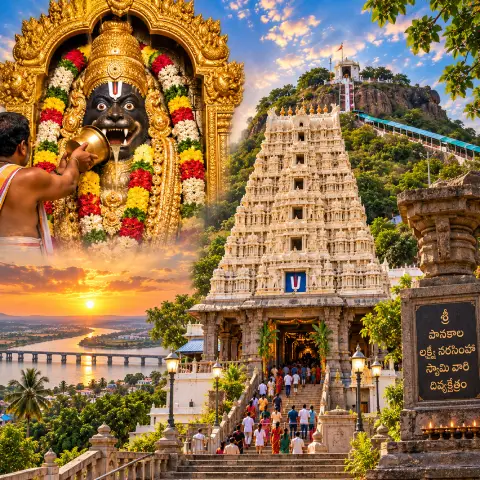
Sri Panakala Lakshmi Narasimha Swamy Temple, Mangalagiri – Overview
Introduction
Sri Panakala Lakshmi Narasimha Swamy Temple is one of the most distinctive Narasimha temples of Andhra Pradesh. It is located on the sacred Mangalagiri hill between Vijayawada and Guntur and is particularly famous for the unique worship of Lord Narasimha through the offering of Panakam, a traditional preparation of jaggery water.
The hill of Mangalagiri is regarded as a sacred Narasimha Kshetra and contains an important group of shrines associated with Lord Narasimha. The principal hill shrine is dedicated to Sri Panakala Narasimha Swamy, while Sri Lakshmi Narasimha Swamy is worshipped at the foot of the hill. Another sacred shrine, traditionally known as Gandala Narasimha Swamy, is associated with the upper portion of the hill.
The temple is especially renowned because devotees offer Panakam directly into the open mouth of the Lord's sacred representation. Andhra Pradesh Tourism describes Mangalagiri as a place where Lord Narasimha is traditionally believed to consume the Panakam offered by devotees. :contentReference[oaicite:1]{index=1}
The Meaning of Mangalagiri
The name Mangalagiri is traditionally understood as “Auspicious Hill.” The hill and its surrounding area have developed as an important pilgrimage centre because of their long association with Lord Narasimha.
The sacred hill rises prominently above the surrounding plains and provides a distinctive setting for the temple. Devotees climb the hill to reach the Panakala Narasimha shrine, while the larger Lakshmi Narasimha temple is situated at its base.
The combination of the hill shrine, the foothill temple and the traditional Panakam worship makes Mangalagiri different from many other Narasimha pilgrimage centres.
Lord Panakala Narasimha Swamy
The principal deity of the hill shrine is Panakala Narasimha Swamy, a form of Lord Narasimha, the man-lion incarnation of Lord Vishnu.
At the hilltop shrine, the principal sacred representation is distinctive because devotees primarily worship the open mouth of Narasimha carved into the sacred rock. The Panakam offering is poured directly into this opening by the temple priest.
This unusual form of worship has made Mangalagiri one of the most recognisable Narasimha pilgrimage centres in South India.
The Panakam Tradition
The word Panakala is associated with the offering of Panakam to Lord Narasimha. Panakam is traditionally prepared using jaggery dissolved in water, with spices such as cardamom and pepper used according to local preparation.
Devotees purchase or prepare the sacred Panakam and offer it to the Lord through the priest. The priest pours the offering into the open mouth of the deity.
According to temple tradition, a portion of the Panakam is believed to be accepted by the Lord, while the remaining quantity returns through the mouth and is distributed as prasadam.
The Andhra Pradesh Tourism Department specifically describes this distinctive practice and notes that the deity is believed to consume the Panakam offered by devotees. :contentReference[oaicite:2]{index=2}
The Sacred Sound During Panakam Offering
Devotees traditionally associate the Panakam offering with a distinctive sound heard when the sacred drink is poured into the mouth of the deity.
This experience is regarded as an important devotional feature of the temple. The manner in which the offering disappears into the sacred opening is considered by devotees to be a manifestation of the Lord accepting their offering.
The interpretation of this phenomenon belongs to the temple's religious tradition and should be understood in a devotional context.
Legend of Narasimha and Namuchi
The Sthala Purana of Mangalagiri connects the sacred hill with the story of the demon Namuchi.
According to the traditional account, Namuchi obtained extraordinary powers and became a threat to the Devas. Indra, the king of the Devas, sought a way to defeat him.
Lord Vishnu, in the form of Narasimha, is traditionally believed to have destroyed Namuchi and protected the Devas. The sacred hill of Mangalagiri is associated with this manifestation of Narasimha.
Because Narasimha manifested in a fierce form, devotees traditionally believe that the offering of Panakam has a cooling and pacifying significance.
This is a traditional Sthala Purana account and is presented as religious tradition rather than independently verified historical evidence.
Why Panakam Is Offered
The offering of Panakam is traditionally understood as a means of cooling and pacifying the fierce form of Narasimha.
Jaggery water is therefore not merely a food offering at Mangalagiri; it forms the central ritual identity of the hill shrine.
For devotees, offering Panakam represents surrender, gratitude and an act of personal devotion to Lord Narasimha.
The Three Narasimha Shrines of Mangalagiri
Mangalagiri is traditionally associated with three important forms of Narasimha worship distributed across the sacred hill and its surroundings.
- Sri Lakshmi Narasimha Swamy Temple – located at the foothills and featuring the principal Lakshmi Narasimha shrine.
- Sri Panakala Narasimha Swamy Temple – located on the hill and famous for the Panakam offering.
- Sri Gandala Narasimha Swamy – traditionally associated with the upper portion of Mangalagiri hill.
This arrangement makes Mangalagiri an important pilgrimage landscape rather than a single isolated shrine.
Sri Lakshmi Narasimha Swamy Temple at the Foothill
At the foot of Mangalagiri hill stands the larger Sri Lakshmi Narasimha Swamy Temple.
Here Lord Narasimha is worshipped together with Goddess Lakshmi. The foothill temple forms an important part of the pilgrimage and is usually visited along with the Panakala Narasimha shrine.
The temple is known for its imposing Raja Gopuram and large temple complex. The gopuram is one of the prominent architectural landmarks of Mangalagiri.
Raja Gopuram
The massive Raja Gopuram of the foothill temple is one of Mangalagiri's most recognisable architectural features.
The tall gateway tower dominates the townscape and can be seen from considerable distances around Mangalagiri.
The gopuram and the surrounding temple structures reflect the development of South Indian temple architecture and the continued patronage that the shrine received over different periods.
History
Mangalagiri has a long religious history and has developed over centuries as a major Narasimha pilgrimage centre.
The temple's historical traditions associate the sacred hill with ancient Hindu religious narratives and with the continued worship of Narasimha over successive generations.
Later rulers and local patrons contributed to the development of the temple complex and its architectural structures. The foothill temple and its monumental gopuram represent important stages in the later development of Mangalagiri as a pilgrimage centre.
Because traditional temple histories and later historical records do not always provide identical dates for individual structures, the history of the temple is best presented as a combination of documented architectural development and long-standing religious tradition.
Agama and Worship Tradition
The temple follows traditional Vaishnava worship practices. Sources associated with the temple describe the observance of Vaikhanasa Agama traditions.
Daily worship includes sacred purification, Archana, Panakam offering, Naivedyam, Harathi and other ritual services according to the temple calendar.
The unique Panakam ritual remains the defining devotional practice of the hill shrine.
Daily Rituals
The day begins with the opening of the temple and morning worship. Devotees then participate in darshan, Archana and the special Panakam offering.
The hill shrine traditionally does not operate as a normal evening-darshan temple. Temple tradition explains the afternoon closure by saying that celestial beings and sages worship the Lord during the evening hours.
This belief is an important part of the devotional identity of the temple.
Panakam as Prasadam
After the Panakam is offered to Lord Narasimha, the remaining portion is traditionally received as prasadam.
Devotees regard this sacred Panakam as a blessed offering and partake of it with reverence.
The ritual therefore creates a direct devotional connection between the devotee's offering and the temple's principal form of worship.
Religious Significance
Mangalagiri is regarded as an important Narasimha Kshetra because of its association with Lord Narasimha and the unique Panakam worship.
The temple is especially significant to devotees seeking the protection of Lord Narasimha, relief from difficulties and spiritual strength.
The image of Narasimha as a fierce yet compassionate protector is central to the devotional identity of the temple.
The Panakam offering is traditionally understood as an expression of devotion and as a cooling offering to the fierce manifestation of the Lord.
Festivals
- Mangalagiri Brahmotsavam – the principal annual festival associated with Sri Panakala Lakshmi Narasimha Swamy. It includes special worship, processions, cultural and devotional activities.
- Narasimha Jayanti – celebrates the manifestation of Lord Narasimha and is observed with special prayers and rituals.
- Vaikuntha Ekadashi – an important Vaishnava festival marked by special worship and devotional observances.
- Sri Rama Navami – celebrated with prayers and devotional activities associated with Lord Rama.
- Hanuman Jayanti – a festival dedicated to Lord Hanuman and observed with special worship.
- Ugadi – the Telugu New Year, observed with religious activities and special prayers.
- Karthika Masam – the sacred month of Karthika is observed with additional devotional activities.
Mangalagiri Brahmotsavam
Brahmotsavam is one of the most important annual celebrations at Mangalagiri.
During the festival, special rituals, devotional ceremonies and processions are conducted for Lord Narasimha. Large numbers of devotees visit Mangalagiri during the festival period.
The festival forms an important part of the cultural and religious calendar of the temple.
Hill and Pilgrimage Experience
The pilgrimage to Panakala Narasimha Swamy is different from a conventional temple visit because the shrine is situated on Mangalagiri hill.
Devotees can reach the hill shrine by climbing the traditional steps or using the available road access to the hill.
The climb itself is regarded by many devotees as part of their pilgrimage and devotional journey.
From the hill, visitors can also enjoy broad views of Mangalagiri and the surrounding plains.
Connection with Vijayawada and Guntur
Mangalagiri is strategically located between the major cities of Vijayawada and Guntur, making the temple easily accessible to pilgrims from both cities.
Andhra Pradesh Tourism describes Mangalagiri as being about 13 kilometres from Vijayawada and recommends visiting the temple as part of a trip from Vijayawada. :contentReference[oaicite:3]{index=3}
The temple's location has contributed to its development as one of the most frequently visited pilgrimage centres in the region.
Unique Features of the Temple
- Panakam Offering – jaggery water is offered directly into the open mouth of the hilltop Narasimha representation.
- Panakala Narasimha – a distinctive manifestation of Lord Narasimha associated with the sacred hill.
- Three Narasimha Shrines – the sacred landscape includes the foothill, hill and upper Narasimha shrines.
- Massive Raja Gopuram – the foothill temple is distinguished by its monumental gateway tower.
- Hilltop Pilgrimage – devotees climb Mangalagiri hill as part of the traditional pilgrimage.
- Unique Evening Tradition – the hill shrine closes in the afternoon, with local tradition holding that divine beings worship the Lord during the evening.
Spiritual Importance
For devotees, Mangalagiri represents the protective and powerful aspect of Lord Narasimha combined with the compassionate presence of Goddess Lakshmi.
The Panakam offering provides the temple with an especially distinctive spiritual identity. Devotees do not merely place their offering before the deity; they participate in a ritual in which the sacred drink is directly offered into the Narasimha representation.
This direct interaction between devotee, offering and deity has made Mangalagiri one of the most memorable Narasimha pilgrimage experiences in Andhra Pradesh.
Why Visit Sri Panakala Lakshmi Narasimha Swamy Temple?
- To receive darshan of Sri Panakala Narasimha Swamy.
- To participate in the unique Panakam offering.
- To visit the sacred Mangalagiri hill.
- To worship Sri Lakshmi Narasimha Swamy at the foothill temple.
- To experience the distinctive Narasimha traditions associated with the three sacred shrines.
- To see the monumental Raja Gopuram of the foothill temple.
- To participate in Brahmotsavam and Narasimha Jayanti celebrations.
- To undertake the traditional hill pilgrimage.
- To experience one of Andhra Pradesh's most distinctive Vaishnava pilgrimage centres.
శ్రీ పానకాల లక్ష్మీ నరసింహ స్వామి దేవాలయం, మంగళగిరి – అవలోకనం
పరిచయం
ఆంధ్రప్రదేశ్లోని అత్యంత విశిష్టమైన నరసింహ క్షేత్రాలలో మంగళగిరి శ్రీ పానకాల లక్ష్మీ నరసింహ స్వామి దేవాలయం ఒకటి. విజయవాడ మరియు గుంటూరు నగరాల మధ్య ఉన్న పవిత్ర మంగళగిరి కొండపై ఈ క్షేత్రం కొలువై ఉంది. పానకం అనే బెల్లపు నీటిని స్వామివారి నోటికి నేరుగా సమర్పించే విశిష్టమైన ఆరాధనా విధానం ఈ ఆలయానికి ప్రత్యేక గుర్తింపును తీసుకువచ్చింది.
మంగళగిరి కొండ మరియు పరిసర ప్రాంతాలు నరసింహ స్వామి ఆరాధనకు ప్రసిద్ధి చెందిన పవిత్ర క్షేత్రంగా భావించబడతాయి. కొండపై శ్రీ పానకాల నరసింహ స్వామి సన్నిధి ఉండగా, కొండ దిగువన శ్రీ లక్ష్మీ నరసింహ స్వామి ఆలయం ఉంది. కొండ పైభాగానికి సంబంధించిన మరో పవిత్ర సన్నిధిని సంప్రదాయంగా గండాల నరసింహ స్వామిగా పేర్కొంటారు.
భక్తులు స్వామివారి పవిత్ర సన్నిధిలో పానకాన్ని సమర్పించే విధానం ఈ ఆలయానికి అత్యంత ప్రత్యేకమైన ఆచారం. ఆంధ్రప్రదేశ్ పర్యాటక శాఖ కూడా మంగళగిరి ఆలయానికి ప్రధాన ఆకర్షణగా స్వామివారికి పానకం సమర్పించే ఈ సంప్రదాయాన్ని పేర్కొంది. :contentReference[oaicite:4]{index=4}
మంగళగిరి అనే పేరు
మంగళగిరి అనే పదాన్ని సంప్రదాయంగా “మంగళకరమైన కొండ” లేదా “శుభప్రదమైన కొండ” అనే అర్థంలో భావిస్తారు. నరసింహ స్వామివారి ఆరాధనతో ఈ కొండకు శతాబ్దాలుగా ప్రత్యేకమైన ధార్మిక ప్రాధాన్యత ఉంది.
చుట్టుపక్కల ఉన్న మైదాన ప్రాంతాల మధ్య మంగళగిరి కొండ ప్రత్యేకంగా కనిపిస్తుంది. భక్తులు కొండపైకి చేరుకుని పానకాల నరసింహ స్వామివారిని దర్శించుకుంటారు. కొండ దిగువన ఉన్న లక్ష్మీ నరసింహ స్వామి ఆలయం కూడా యాత్రలో ముఖ్యమైన భాగంగా ఉంటుంది.
కొండ ఆలయం, దిగువ ఆలయం మరియు పానకం సమర్పించే విశిష్టమైన సంప్రదాయం కలిసి మంగళగిరిని ఇతర నరసింహ క్షేత్రాల కంటే ప్రత్యేకంగా నిలబెడతాయి.
శ్రీ పానకాల నరసింహ స్వామి
కొండపై ఉన్న ప్రధాన దేవత శ్రీ పానకాల నరసింహ స్వామి. నరసింహుడు శ్రీమహావిష్ణువు యొక్క మనిషి-సింహ రూప అవతారంగా హిందూ సంప్రదాయంలో ప్రసిద్ధి చెందారు.
కొండ ఆలయంలోని ప్రధాన పవిత్ర రూపం సాధారణ విగ్రహ రూపానికి భిన్నంగా ఉంటుంది. ఇక్కడ భక్తులు ప్రధానంగా పవిత్ర శిలలో చెక్కబడిన నరసింహ స్వామివారి తెరిచి ఉన్న నోటి రూపాన్ని ఆరాధిస్తారు.
పూజారి భక్తులు సమర్పించే పానకాన్ని ఈ పవిత్ర నోటి ద్వారా స్వామివారికి సమర్పిస్తారు. ఈ ప్రత్యేకమైన ఆరాధనా విధానం మంగళగిరిని దక్షిణ భారతదేశంలోని ప్రసిద్ధ నరసింహ క్షేత్రాలలో ఒకటిగా నిలిపింది.
పానకం సమర్పించే సంప్రదాయం
పానకాల అనే పేరు స్వామివారికి సమర్పించే పానకం అనే నైవేద్యంతో అనుసంధానించబడింది. పానకం సాధారణంగా బెల్లాన్ని నీటిలో కలిపి తయారు చేస్తారు. ప్రాంతీయ సంప్రదాయం ప్రకారం ఏలకులు, మిరియాలు వంటి సుగంధ ద్రవ్యాలను కూడా ఉపయోగిస్తారు.
భక్తులు పానకాన్ని తీసుకుని ఆలయానికి వచ్చి, పూజారి ద్వారా స్వామివారి పవిత్ర నోటిలో నేరుగా సమర్పిస్తారు.
ఆలయ సంప్రదాయం ప్రకారం సమర్పించిన పానకంలో కొంత భాగాన్ని స్వామివారు స్వీకరిస్తారని, మిగిలిన భాగం తిరిగి బయటకు వచ్చి ప్రసాదంగా భక్తులకు అందుతుందని నమ్మకం.
ఆంధ్రప్రదేశ్ పర్యాటక శాఖ కూడా స్వామివారు భక్తులు సమర్పించే పానకాన్ని స్వీకరిస్తారని విశ్వసించే ఈ ప్రత్యేక ఆచారాన్ని మంగళగిరి ఆలయ ప్రధాన విశేషంగా పేర్కొంది. :contentReference[oaicite:5]{index=5}
పానకం సమర్పించే సమయంలో వినిపించే శబ్దం
పానకాన్ని స్వామివారి పవిత్ర నోటిలో పోసే సమయంలో ఒక ప్రత్యేకమైన శబ్దం వినిపిస్తుందని భక్తులలో సంప్రదాయ విశ్వాసం ఉంది.
పానకం పవిత్ర నోటిలోకి వెళ్లే విధానాన్ని భక్తులు స్వామివారు తమ నైవేద్యాన్ని స్వీకరిస్తున్న దైవిక సంకేతంగా భావిస్తారు.
ఈ అనుభవానికి సంబంధించిన వివరణలను ఆలయ భక్తి సంప్రదాయ పరిధిలోనే చూడాలి.
నముచి రాక్షసుడి స్థలపురాణం
మంగళగిరి స్థలపురాణం నముచి అనే రాక్షసుడి కథతో అనుసంధానించబడింది.
సంప్రదాయ కథనం ప్రకారం నముచి అసాధారణమైన శక్తులను పొంది దేవతలకు మరియు లోకాలకు ఇబ్బంది కలిగించాడని చెబుతారు. దేవేంద్రుడు అతనిని ఎదుర్కొనే మార్గం కోసం ప్రార్థించాడని స్థలపురాణం చెబుతుంది.
శ్రీమహావిష్ణువు నరసింహ స్వరూపంలో ప్రత్యక్షమై నముచిని సంహరించి దేవతలను రక్షించాడని సంప్రదాయ కథనం. మంగళగిరి కొండ ఈ నరసింహ అవతారంతో అనుసంధానించబడింది.
నరసింహ స్వామివారి ఉగ్ర స్వభావాన్ని శాంతింపజేయడానికి పానకాన్ని సమర్పించడం ప్రారంభమైందని భక్తి సంప్రదాయంలో వివరణ ఉంది.
ఇది స్థలపురాణానికి సంబంధించిన ధార్మిక సంప్రదాయం. స్వతంత్ర చారిత్రక ఆధారంతో నిర్ధారించబడిన సంఘటనగా దీనిని పరిగణించకూడదు.
పానకం ఎందుకు సమర్పిస్తారు?
ఉగ్ర నరసింహ స్వరూపాన్ని చల్లబరచి శాంతింపజేసే నైవేద్యంగా పానకాన్ని సంప్రదాయంగా భావిస్తారు.
అందువల్ల మంగళగిరిలో పానకం సాధారణ నైవేద్యం మాత్రమే కాదు. కొండపై ఉన్న నరసింహ స్వామి ఆరాధనకు ఇది ప్రధాన గుర్తింపుగా మారింది.
భక్తులు పానకం సమర్పించడం ద్వారా తమ భక్తిని, కృతజ్ఞతను మరియు సంపూర్ణ శరణాగతిని వ్యక్తపరుస్తారు.
మంగళగిరిలోని మూడు నరసింహ సన్నిధులు
మంగళగిరి పవిత్ర ప్రాంతం నరసింహ స్వామివారి మూడు ముఖ్యమైన సన్నిధులతో సంప్రదాయంగా అనుసంధానించబడింది.
- శ్రీ లక్ష్మీ నరసింహ స్వామి ఆలయం – మంగళగిరి కొండ దిగువన ఉన్న ప్రధాన ఆలయం.
- శ్రీ పానకాల నరసింహ స్వామి ఆలయం – కొండపై ఉన్న ఆలయం. పానకం సమర్పించే ప్రత్యేక సంప్రదాయం ఇక్కడే ఉంటుంది.
- శ్రీ గండాల నరసింహ స్వామి – మంగళగిరి కొండ పైభాగానికి సంబంధించిన పవిత్ర సన్నిధిగా సంప్రదాయంగా పేర్కొనబడుతుంది.
ఈ మూడు సన్నిధులు కలిసి మంగళగిరిని ఒక విస్తృతమైన నరసింహ తీర్థయాత్రా ప్రాంతంగా నిలబెడతాయి.
కొండ దిగువన శ్రీ లక్ష్మీ నరసింహ స్వామి ఆలయం
మంగళగిరి కొండ దిగువన ఉన్న శ్రీ లక్ష్మీ నరసింహ స్వామి ఆలయం మంగళగిరి యాత్రలో మరో ప్రధాన భాగం.
ఇక్కడ నరసింహ స్వామివారు లక్ష్మీ దేవితో కలిసి ఆరాధించబడతారు. కొండపై పానకాల నరసింహ స్వామివారి దర్శనంతో పాటు భక్తులు ఈ ఆలయాన్ని కూడా దర్శిస్తారు.
దిగువ ఆలయం భారీ రాజగోపురంతో ప్రత్యేకంగా ప్రసిద్ధి చెందింది. ఆలయ సముదాయం మరియు గోపురం మంగళగిరి పట్టణానికి ముఖ్యమైన నిర్మాణ గుర్తింపును అందిస్తున్నాయి.
రాజగోపురం
మంగళగిరి దిగువ ఆలయంలోని భారీ రాజగోపురం ఈ క్షేత్రంలోని ప్రముఖ నిర్మాణ విశేషాలలో ఒకటి.
ఎత్తైన ఈ గోపురం మంగళగిరి పట్టణ దృశ్యంలో ప్రత్యేకంగా కనిపిస్తుంది మరియు దూర ప్రాంతాల నుంచి కూడా దర్శనమిస్తుంది.
గోపురం మరియు ఆలయ నిర్మాణాలు దక్షిణ భారతీయ ఆలయ వాస్తు సంప్రదాయాల అభివృద్ధిని ప్రతిబింబిస్తాయి.
చరిత్ర
మంగళగిరికి దీర్ఘమైన ధార్మిక చరిత్ర ఉంది. అనేక శతాబ్దాలుగా ఈ ప్రాంతం నరసింహ స్వామి ఆరాధనకు ముఖ్యమైన కేంద్రంగా అభివృద్ధి చెందింది.
ఆలయ సంప్రదాయ చరిత్రలు మంగళగిరి పవిత్ర కొండను ప్రాచీన హిందూ ధార్మిక కథనాలతో అనుసంధానిస్తాయి. తరతరాలుగా భక్తులు ఈ కొండపై నరసింహ స్వామిని ఆరాధిస్తూ వచ్చారు.
తరువాతి కాలాల్లో వివిధ పాలకులు మరియు స్థానిక దాతల సహకారంతో ఆలయ నిర్మాణాలు, గోపురాలు మరియు యాత్రికుల సౌకర్యాలు అభివృద్ధి చెందాయి.
ఆలయానికి సంబంధించిన సంప్రదాయ కథనాలు మరియు వివిధ చారిత్రక ఆధారాలలో నిర్మాణ తేదీల విషయంలో భిన్నతలు కనిపించవచ్చు. అందువల్ల మంగళగిరి చరిత్రను చారిత్రక నిర్మాణ అభివృద్ధి మరియు దీర్ఘకాలిక ధార్మిక సంప్రదాయాల సమ్మేళనంగా వివరించడం సముచితం.
ఆగమ మరియు పూజా సంప్రదాయం
మంగళగిరి ఆలయంలో సంప్రదాయ వైష్ణవ ఆరాధనా విధానాలు అనుసరించబడుతున్నాయి. ఆలయానికి సంబంధించిన సమాచారంలో వైఖానస ఆగమ సంప్రదాయాన్ని పేర్కొంటారు.
నిత్య పూజల్లో పవిత్రీకరణ, అర్చన, పానకం సమర్పణ, నైవేద్యం, హారతి మరియు ఇతర ఆలయ సేవలు ఉంటాయి.
కొండ ఆలయానికి ప్రత్యేకమైన పానకం నైవేద్యం అక్కడి ప్రధాన పూజా సంప్రదాయంగా కొనసాగుతోంది.
నిత్య పూజా కార్యక్రమాలు
ఉదయం ఆలయ ద్వారాలు తెరిచి నిత్య పూజా కార్యక్రమాలు ప్రారంభిస్తారు. అనంతరం భక్తులకు దర్శనం, అర్చన మరియు ప్రత్యేక పానకం సమర్పణకు అవకాశం ఉంటుంది.
కొండపై ఉన్న ఆలయం సాధారణ ఆలయాల మాదిరిగా సాయంత్రం దర్శనానికి తెరిచి ఉండదు. సాయంత్రం సమయంలో దేవతలు మరియు ఋషులు స్వామివారిని ఆరాధిస్తారనే సంప్రదాయ విశ్వాసం కారణంగా మధ్యాహ్నం తరువాత ఆలయాన్ని మూసివేస్తారని చెబుతారు.
ఈ విశ్వాసం మంగళగిరి ఆలయ ప్రత్యేక ధార్మిక సంప్రదాయాలలో ఒకటి.
పానకం ప్రసాదం
స్వామివారికి పానకం సమర్పించిన అనంతరం మిగిలిన భాగాన్ని ప్రసాదంగా భక్తులు స్వీకరిస్తారు.
ఈ పవిత్ర పానకాన్ని భక్తులు భక్తిశ్రద్ధలతో స్వీకరిస్తారు.
దీని ద్వారా భక్తుడి సమర్పణ, స్వామివారి ఆరాధన మరియు ప్రసాద స్వీకరణ మధ్య ఒక ప్రత్యేకమైన ఆధ్యాత్మిక అనుబంధం ఏర్పడుతుంది.
ఆధ్యాత్మిక ప్రాముఖ్యత
నరసింహ స్వామివారి ఆరాధనతో పాటు పానకం సమర్పించే విశిష్టమైన సంప్రదాయం కారణంగా మంగళగిరి ఒక ముఖ్యమైన నరసింహ క్షేత్రంగా భక్తులు భావిస్తారు.
కష్టాల నుంచి రక్షణ, ఆధ్యాత్మిక బలం మరియు స్వామివారి అనుగ్రహం కోసం భక్తులు పానకాల నరసింహ స్వామివారిని ప్రార్థిస్తారు.
ఉగ్రుడైనప్పటికీ భక్తులను రక్షించే కరుణామయుడైన నరసింహ స్వరూపం ఈ ఆలయ భక్తి సంప్రదాయానికి కేంద్రబిందువుగా ఉంది.
పానకాన్ని సమర్పించడం ఉగ్ర నరసింహ స్వరూపాన్ని శాంతింపజేసే భక్తి నైవేద్యంగా సంప్రదాయంగా భావించబడుతుంది.
ప్రధాన ఉత్సవాలు
- మంగళగిరి బ్రహ్మోత్సవాలు – శ్రీ పానకాల లక్ష్మీ నరసింహ స్వామివారి ప్రధాన వార్షిక ఉత్సవం. ప్రత్యేక పూజలు, ఉత్సవాలు, ఊరేగింపులు మరియు భక్తి కార్యక్రమాలు నిర్వహిస్తారు.
- నరసింహ జయంతి – శ్రీ నరసింహ స్వామివారి అవతారాన్ని స్మరించుకునే పర్వదినం. ప్రత్యేక పూజలు మరియు ధార్మిక కార్యక్రమాలు నిర్వహిస్తారు.
- వైకుంఠ ఏకాదశి – వైష్ణవ సంప్రదాయంలో అత్యంత పవిత్రమైన పర్వదినం. ప్రత్యేక ఆరాధన మరియు భక్తి కార్యక్రమాలు నిర్వహిస్తారు.
- శ్రీరామ నవమి – శ్రీరామ జన్మోత్సవం సందర్భంగా ప్రత్యేక పూజలు నిర్వహిస్తారు.
- హనుమాన్ జయంతి – శ్రీ హనుమంతుని ఆరాధనతో ప్రత్యేక కార్యక్రమాలు నిర్వహిస్తారు.
- ఉగాది – తెలుగు నూతన సంవత్సర సందర్భంగా ప్రత్యేక పూజలు మరియు ధార్మిక కార్యక్రమాలు జరుగుతాయి.
- కార్తీక మాసం – కార్తీక మాసంలో ప్రత్యేక భక్తి కార్యక్రమాలు మరియు ఆరాధనలు నిర్వహిస్తారు.
మంగళగిరి బ్రహ్మోత్సవాలు
బ్రహ్మోత్సవాలు మంగళగిరి ఆలయంలో జరిగే అత్యంత ముఖ్యమైన వార్షిక ఉత్సవాలలో ఒకటి.
ఉత్సవ కాలంలో శ్రీ నరసింహ స్వామివారికి ప్రత్యేక పూజలు, ధార్మిక కార్యక్రమాలు మరియు ఊరేగింపులు నిర్వహిస్తారు. ఈ సందర్భంగా పెద్ద సంఖ్యలో భక్తులు మంగళగిరికి చేరుకుంటారు.
బ్రహ్మోత్సవాలు ఆలయ ధార్మిక క్యాలెండర్తో పాటు మంగళగిరి ప్రాంత సాంస్కృతిక జీవితంలో కూడా ముఖ్యమైన స్థానం కలిగి ఉన్నాయి.
కొండ యాత్ర మరియు తీర్థయాత్ర అనుభవం
పానకాల నరసింహ స్వామివారి దర్శనం సాధారణ ఆలయ దర్శనం కంటే భిన్నంగా ఉంటుంది. ఎందుకంటే ప్రధాన సన్నిధి మంగళగిరి కొండపై ఉంది.
భక్తులు సంప్రదాయ మెట్ల మార్గం ద్వారా కొండపైకి చేరుకోవచ్చు. అలాగే కొండకు అందుబాటులో ఉన్న రోడ్డు మార్గాన్ని కూడా ఉపయోగించవచ్చు.
కొండపైకి నడిచి వెళ్లడం అనేక మంది భక్తులు తమ తీర్థయాత్రలో ఒక భాగంగా భావిస్తారు.
కొండపై నుంచి మంగళగిరి పట్టణం మరియు చుట్టుపక్కల మైదాన ప్రాంతాల విస్తృత దృశ్యాలను కూడా చూడవచ్చు.
విజయవాడ మరియు గుంటూరుతో అనుబంధం
విజయవాడ మరియు గుంటూరు నగరాల మధ్య మంగళగిరి ఉండటం వల్ల ఈ క్షేత్రానికి రాకపోకలు సులభంగా ఉంటాయి.
ఆంధ్రప్రదేశ్ పర్యాటక శాఖ ప్రకారం మంగళగిరి విజయవాడకు సుమారు 13 కిలోమీటర్ల దూరంలో ఉంది. విజయవాడ నుంచి మంగళగిరిని ఒక రోజు తీర్థయాత్రగా దర్శించవచ్చని కూడా పర్యాటక శాఖ సూచిస్తుంది. :contentReference[oaicite:6]{index=6}
విజయవాడ మరియు గుంటూరు సమీపంలో ఉండటం వల్ల మంగళగిరి ప్రాంతంలోని ముఖ్యమైన తీర్థయాత్రా కేంద్రాలలో ఒకటిగా అభివృద్ధి చెందింది.
ఆలయ ప్రత్యేకతలు
- పానకం సమర్పణ – కొండపై నరసింహ స్వామివారి పవిత్ర నోటిలోకి బెల్లపు నీటిని నేరుగా సమర్పించడం.
- పానకాల నరసింహ స్వామి – మంగళగిరి కొండకు ప్రత్యేకమైన నరసింహ స్వరూపం.
- మూడు నరసింహ సన్నిధులు – కొండ దిగువ, కొండపై మరియు కొండ పైభాగానికి సంబంధించిన నరసింహ సన్నిధులు.
- భారీ రాజగోపురం – కొండ దిగువన ఉన్న ఆలయానికి ప్రధాన నిర్మాణ ఆకర్షణ.
- కొండ తీర్థయాత్ర – సంప్రదాయంగా భక్తులు కొండను అధిరోహించి స్వామివారిని దర్శించుకుంటారు.
- ప్రత్యేక సాయంత్ర సంప్రదాయం – సాయంత్రం దేవతలు మరియు ఋషులు స్వామివారిని ఆరాధిస్తారనే విశ్వాసంతో కొండ ఆలయం మధ్యాహ్నం తరువాత మూసివేయబడుతుంది.
ఆధ్యాత్మిక ప్రాముఖ్యత
మంగళగిరి క్షేత్రం శ్రీ నరసింహ స్వామివారి రక్షణాత్మక మరియు శక్తివంతమైన స్వరూపంతో పాటు లక్ష్మీ దేవి కరుణామయ సాన్నిధ్యాన్ని కూడా భక్తులకు అనుభవింపజేస్తుంది.
పానకం సమర్పించే సంప్రదాయం ఈ క్షేత్రానికి ప్రత్యేకమైన ఆధ్యాత్మిక గుర్తింపును అందిస్తుంది. భక్తులు సాధారణంగా నైవేద్యాన్ని స్వామివారి ముందు ఉంచడం మాత్రమే కాకుండా, ఇక్కడ పానకాన్ని స్వామివారి పవిత్ర నోటిలోకి నేరుగా సమర్పించే ప్రత్యేక పూజలో పాల్గొంటారు.
భక్తుడు, నైవేద్యం మరియు దైవం మధ్య ఏర్పడే ఈ ప్రత్యక్షమైన ఆరాధనా అనుభవం మంగళగిరిని ఆంధ్రప్రదేశ్లోని అత్యంత విశిష్టమైన నరసింహ తీర్థయాత్రా కేంద్రాలలో ఒకటిగా నిలబెట్టింది.
శ్రీ పానకాల లక్ష్మీ నరసింహ స్వామి దేవాలయాన్ని ఎందుకు దర్శించాలి?
- శ్రీ పానకాల నరసింహ స్వామివారి దర్శనం పొందడానికి.
- విశిష్టమైన పానకం సమర్పణలో పాల్గొనడానికి.
- పవిత్ర మంగళగిరి కొండను దర్శించడానికి.
- కొండ దిగువన ఉన్న శ్రీ లక్ష్మీ నరసింహ స్వామివారిని దర్శించడానికి.
- మంగళగిరిలోని మూడు నరసింహ సన్నిధులతో అనుసంధానమైన సంప్రదాయాలను అనుభవించడానికి.
- దిగువ ఆలయంలోని భారీ రాజగోపురాన్ని దర్శించడానికి.
- బ్రహ్మోత్సవాలు మరియు నరసింహ జయంతి ఉత్సవాల్లో పాల్గొనడానికి.
- సంప్రదాయ కొండ తీర్థయాత్రను అనుభవించడానికి.
- ఆంధ్రప్రదేశ్లోని విశిష్టమైన వైష్ణవ పుణ్యక్షేత్రాలలో ఒకదాన్ని దర్శించడానికి.