
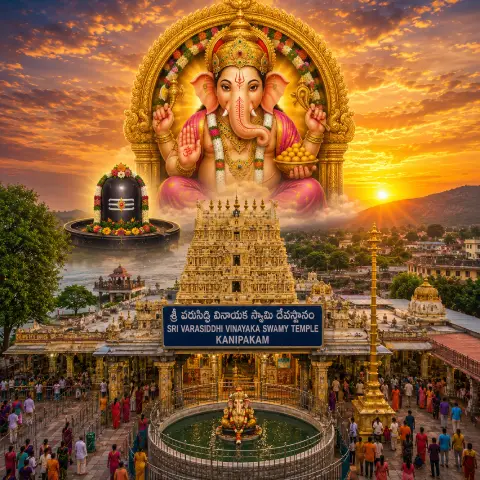
Sri Varasiddhi Vinayaka Swamy Temple, Kanipakam – Overview
Introduction
Located at Kanipakam in Chittoor district of Andhra Pradesh, Sri Varasiddhi Vinayaka Swamy Temple is one of the most revered temples dedicated to Lord Ganesha in South India. The presiding deity is worshipped as Sri Varasiddhi Vinayaka Swamy and is traditionally regarded as a Swayambhu, or self-manifested, form of Lord Ganesha. The temple is situated about 11 kilometres from Chittoor and approximately 68 kilometres from Tirupati.
The most distinctive feature of the temple is that the Swayambhu image of Lord Vinayaka is worshipped at the very well from which the deity is traditionally believed to have manifested. The well continues to contain water, and its sacred water is distributed to devotees as Theertham. The temple's tradition further holds that the visible form of the deity has been gradually increasing in size.
Kanipakam is particularly associated with faith in Lord Vinayaka as a remover of obstacles, fulfiller of righteous wishes and protector of truth. The temple is also traditionally regarded as a place where people approach the deity to seek justice and resolution of disputes. These beliefs form an important part of Kanipakam's living devotional tradition.
Legend
According to the traditional Sthala Purana, three brothers lived in the region of Kanipakam. One was unable to speak, another was unable to hear and the third was unable to see. The brothers depended on agriculture and worked together to cultivate their land.
As they needed water for their fields, the brothers began digging a well. During the excavation, their digging implement struck a hard object beneath the ground. When they continued digging, blood is traditionally said to have emerged from the spot and mixed with the water in the well.
The sight was regarded as a divine miracle. According to the traditional account, the three brothers were miraculously relieved of their physical disabilities. When the villagers came to know of the extraordinary event, they gathered at the well and attempted to investigate the source.
They discovered the form of Lord Ganesha emerging from the well. Although the villagers tried to excavate further, they were unable to find the complete base of the image. The inability to reach the bottom of the form led them to recognize it as a Swayambhu manifestation of Lord Vinayaka.
The deity came to be worshipped as Sri Varasiddhi Vinayaka. The original well remains associated with the sanctum, and the presence of perennial water around the Swayambhu image is regarded by devotees as one of the distinctive sacred features of Kanipakam.
The Meaning and Tradition of Kanipakam
The origin of the name Kanipakam is traditionally connected with the sacred event surrounding the well and the flow of water after the manifestation of the deity. One traditional explanation connects the name with the extent of land reached by the water offered during the initial worship.
Different explanations of the word Kanipakam appear in local traditions and devotional literature. For the Stutimala database, the name is best presented as part of the temple's traditional history rather than as a linguistically established historical fact.
The Growing Swayambhu Vinayaka
One of the most distinctive traditions of Kanipakam is that the Swayambhu Vinayaka idol continues to increase in size. The temple's official website records this as an important feature associated with Sri Varasiddhi Vinayaka and states that the deity is believed to continue growing until the end of Kali Yuga.
The idol remains in the well where it was discovered. Devotees traditionally observe that portions of the deity that were once covered or less visible have become increasingly apparent over time. The Andhra Pradesh Tourism Department has also highlighted the tradition that older garments or protective coverings offered to the deity no longer fit as they once did.
This belief is an important part of the devotional identity of Kanipakam and is presented as a sacred tradition rather than as a scientifically established phenomenon.
History
Kanipakam is an ancient religious centre in the Chittoor region. The wider Chittoor area contains numerous historic temples associated with the Pallava, Chola and Vijayanagara periods. Government historical material lists Sri Varasiddhi Vinayaka Swamy Temple at Kanipakam among the important historical pilgrimage centres of the district.
Traditional and popular historical accounts commonly associate the early development of the temple with the Chola period and particularly with Kulottunga Chola. Later additions and development are associated with the Vijayanagara period. However, the surviving temple complex has evolved over several periods, and the exact chronology of every present structure should not be attributed to a single ruler without specific epigraphical evidence.
The temple's long history is therefore best understood through its living worship tradition, its architectural development and the historical context of the Chittoor region. The district's historical records identify Kanipakam as one of its important religious and heritage centres.
The Temple Complex
The temple is centred around the Swayambhu Sri Varasiddhi Vinayaka shrine. Unlike temples where the principal deity is installed on a conventional pedestal, the Kanipakam Vinayaka is traditionally worshipped at the well associated with his manifestation.
The sanctum and surrounding structures form a traditional South Indian temple complex, with the principal shrine, circumambulatory spaces, mandapas and other associated religious structures. The architectural development of the complex reflects the long history of worship at the site.
The perennial water associated with the sacred well is one of the most distinctive features of the temple. The water is treated as sacred Theertham and is distributed to devotees.
The temple attracts particularly large crowds during Vinayaka Chavithi and the annual Brahmotsavam. During major celebrations, the processional deity is taken through the temple streets on different vahanams accompanied by devotional music and religious ceremonies.
Presiding Deity
The principal deity is Sri Varasiddhi Vinayaka Swamy, a Swayambhu manifestation of Lord Ganesha. The name Varasiddhi Vinayaka is traditionally associated with the Lord's ability to grant boons and fulfil righteous wishes of devotees.
Lord Ganesha is worshipped throughout Hindu tradition as the remover of obstacles, the deity invoked at the beginning of auspicious undertakings and the patron of wisdom and discernment. At Kanipakam, these attributes are expressed through the unique Swayambhu form and the temple's long-standing devotional traditions.
Truth and Justice Tradition
Kanipakam has a distinctive reputation as a temple associated with truth and justice. According to a long-standing local tradition, people involved in disputes may approach the deity and make a solemn declaration before Lord Vinayaka.
The belief is that a person who knowingly gives a false statement before the deity risks divine consequences. Because of this tradition, Kanipakam has historically been regarded by devotees as a place where truth is expected to prevail and disputes may be resolved through religious conscience.
This is a devotional and social tradition associated with the temple. It should not be interpreted as a substitute for a legally binding judicial process.
The Legend of Sankha and Likhita
Another traditional story associated with Kanipakam concerns the brothers Sankha and Likhita. According to the legend, the two brothers were travelling on pilgrimage. During the journey, the younger brother Likhita became hungry and plucked a mango from a tree despite his elder brother's warning.
Sankha regarded the act as a violation of righteousness and reported the matter to the local ruler. Likhita was punished and is traditionally said to have lost both his arms as a consequence.
Later, the brothers reached the sacred waters near Kanipakam. According to the tradition, after Likhita entered the water, his arms were restored. The story is associated with the sacred character of the waters and the broader Kanipakam tradition of truth, justice and divine grace.
The story is part of the religious tradition surrounding the temple and should be understood as a Sthala Purana rather than as a historically documented incident.
Ritual Practice
Regular worship at Sri Varasiddhi Vinayaka Swamy Temple follows the established traditions of Ganesha worship. Daily services include suprabhata, abhishekam, archana, alankaram, naivedyam and other prescribed rituals.
Special forms of worship are performed for devotees seeking the blessings of Lord Vinayaka before beginning important activities, marriages, educational pursuits, business ventures and other auspicious undertakings.
Abhishekam and other sevas are offered according to the temple's prescribed procedures. The sacred water associated with the original well is distributed as Theertham to devotees.
Festivals
- Vinayaka Chavithi – the most important annual festival at Kanipakam. The festival celebrates the birth and glory of Lord Ganesha and marks the beginning of the temple's major annual Brahmotsavam celebrations.
- Annual Brahmotsavam – the grand Brahmotsavam traditionally begins with Vinayaka Chavithi and continues for approximately 21 days. During the celebrations, the processional deity is taken out on different vahanams and devotees participate in special worship and ceremonial events.
- Gramotsavam – the festival begins with the traditional village procession, symbolically taking the presence of Lord Vinayaka into the wider community.
- Vahana Sevas – during Brahmotsavam, the processional deity is taken on different ceremonial vehicles, including Hamsa, Peacock, Mooshika, Sesha, Vrishabha, Gaja and other vahanams.
- Rathotsavam – the temple chariot procession is one of the major attractions of the annual Brahmotsavam, with devotees gathering to participate in the ceremonial pulling of the chariot.
- Thirukalyanam – the ceremonial divine wedding celebration is conducted as part of the annual Brahmotsavam tradition.
- Vadayathu Utsavam – this traditional ceremony forms part of the annual Brahmotsavam sequence.
- Teppotsavam – the float festival is conducted towards the conclusion of the annual celebrations and forms an important part of the temple's festive tradition.
Religious Significance
Kanipakam is regarded as a powerful pilgrimage centre dedicated to Lord Ganesha. Devotees traditionally visit the temple to seek the removal of obstacles, success in righteous endeavours, wisdom, prosperity and fulfilment of sincere prayers.
The Swayambhu nature of the deity gives the temple a special place in Ganesha worship. The fact that the deity is traditionally believed to have manifested from a living well and continues to be worshipped at the place of manifestation distinguishes Kanipakam from many other Ganesha temples.
The temple's association with truth and justice further contributes to its religious identity. Devotees believe that Lord Vinayaka at Kanipakam responds to sincere prayers and protects those who follow the path of truth.
Historical and Cultural Importance
Kanipakam forms part of the rich religious heritage of the Chittoor region, which contains temples representing several centuries of South Indian history. Government records identify Kanipakam as an important pilgrimage centre among the historic temples of the district.
The temple's importance extends beyond its architecture. Its Swayambhu tradition, the perennial sacred well, the belief in the growing deity, the truth-and-justice tradition and the large annual Brahmotsavam have created a distinctive cultural identity that continues to attract devotees from Andhra Pradesh and neighbouring states.
The annual festival transforms Kanipakam into a major centre of devotional activity. Processions, vahana sevas, chariot celebrations, rituals and community participation bring together religious tradition and local culture.
Nearby and Associated Religious Places
- Sri Manikanteswara Swamy Temple – an associated historic Shiva shrine in Kanipakam.
- Other Kanipakam Sacred Shrines – the village contains additional religious shrines forming part of the wider sacred landscape around the Varasiddhi Vinayaka temple.
- Chittoor Temples – several historic temples in and around Chittoor form part of the broader pilgrimage circuit of the region.
Why Visit Sri Varasiddhi Vinayaka Swamy Temple?
- To receive darshan of the Swayambhu Sri Varasiddhi Vinayaka.
- To worship Lord Ganesha at the sacred well associated with his traditional manifestation.
- To receive the sacred Theertham associated with the perennial temple well.
- To experience the unique tradition that the Swayambhu deity continues to grow in size.
- To seek Lord Vinayaka's blessings before important and auspicious undertakings.
- To experience the temple's distinctive tradition of truth, justice and righteous conduct.
- To learn about the traditional stories of the three brothers and the Sankha-Likhita legend.
- To participate in the grand Vinayaka Chavithi and annual Brahmotsavam celebrations.
- To witness the colourful vahana sevas and Rathotsavam.
- To experience one of the important living Ganesha pilgrimage traditions of Andhra Pradesh.
శ్రీ వరసిద్ధి వినాయక స్వామి దేవాలయం, కాణిపాకం – అవలోకనం
పరిచయం
ఆంధ్రప్రదేశ్లోని చిత్తూరు జిల్లాలో కాణిపాకంలో కొలువై ఉన్న శ్రీ వరసిద్ధి వినాయక స్వామి దేవాలయం దక్షిణ భారతదేశంలోని ప్రముఖ వినాయక క్షేత్రాలలో ఒకటి. ఇక్కడ ప్రధాన దేవత శ్రీ వరసిద్ధి వినాయక స్వామి. ఆయనను సంప్రదాయంగా స్వయంభూ, అంటే స్వయంగా ఆవిర్భవించిన వినాయక స్వరూపంగా ఆరాధిస్తారు. ఈ ఆలయం చిత్తూరు పట్టణానికి సుమారు 11 కిలోమీటర్ల దూరంలో, తిరుపతికి సుమారు 68 కిలోమీటర్ల దూరంలో ఉంది.
కాణిపాకం ఆలయానికి అత్యంత ప్రత్యేకమైన అంశం స్వయంభూ వినాయక మూర్తి ఆవిర్భవించిందని విశ్వసించే అదే బావి వద్ద స్వామివారిని ఆరాధించడం. ఆ బావిలో ఇప్పటికీ నీరు ఉండటం, ఆ పవిత్ర జలాన్ని భక్తులకు తీర్థంగా అందించడం ఈ క్షేత్రంలోని ప్రత్యేకతలలో ఒకటి. ఆలయ సంప్రదాయం ప్రకారం స్వామివారి మూర్తి కాలక్రమేణా పరిమాణంలో పెరుగుతూ వస్తోంది.
విఘ్నాలను తొలగించే దేవుడిగా, ధర్మబద్ధమైన కోరికలను నెరవేర్చే దేవుడిగా మరియు సత్యాన్ని కాపాడే దైవంగా శ్రీ వరసిద్ధి వినాయక స్వామివారిని భక్తులు ఆరాధిస్తారు. వివాదాల్లో సత్యం వెలుగులోకి రావాలని కోరుకునే భక్తులు కూడా ఈ క్షేత్రాన్ని ఆశ్రయించే సంప్రదాయం ఉంది. ఈ విశ్వాసాలు కాణిపాకం యొక్క జీవంతమైన భక్తి సంప్రదాయంలో ముఖ్యమైన భాగం.
స్థలపురాణం
సంప్రదాయ స్థలపురాణం ప్రకారం కాణిపాకం ప్రాంతంలో ముగ్గురు సోదరులు నివసించేవారు. వారిలో ఒకరు మాట్లాడలేకపోయేవాడు, మరొకరు వినలేకపోయేవాడు, మూడవ వ్యక్తి చూడలేకపోయేవాడు. వారు వ్యవసాయంపై ఆధారపడి తమ జీవనాన్ని కొనసాగించేవారు.
పొలాలకు నీటిని అందించేందుకు వారు ఒక బావిని తవ్వడం ప్రారంభించారు. బావి తవ్వుతున్న సమయంలో వారి పనిముట్టు భూమిలోని ఒక గట్టి వస్తువును తాకింది. మరింత లోతుగా తవ్వినప్పుడు ఆ ప్రదేశం నుంచి రక్తం కారిందని, అది బావిలోని నీటితో కలిసిందని సంప్రదాయ కథ చెబుతుంది.
ఈ సంఘటనను భక్తులు దైవిక అద్భుతంగా భావించారు. సంప్రదాయ విశ్వాసం ప్రకారం ఆ ముగ్గురు సోదరులు తమ శారీరక లోపాల నుంచి అద్భుతంగా విముక్తి పొందారు. ఈ అసాధారణ సంఘటన గురించి తెలుసుకున్న గ్రామస్థులు పెద్ద సంఖ్యలో అక్కడికి చేరుకున్నారు.
బావిలో నుంచి శ్రీ గణపతి స్వామివారి రూపం వెలువడినట్లు గ్రామస్థులు గుర్తించారని పురాణగాథ చెబుతుంది. మూర్తి అడుగు భాగాన్ని తెలుసుకోవడానికి వారు మరింత లోతుగా తవ్వినప్పటికీ సంపూర్ణమైన ఆధారాన్ని కనుగొనలేకపోయారు. అందువల్ల అది స్వయంభూ వినాయక స్వరూపమని భక్తులు గుర్తించి ఆరాధించడం ప్రారంభించారు.
ఆ దివ్య స్వరూపం తరువాత శ్రీ వరసిద్ధి వినాయక స్వామిగా ప్రసిద్ధి చెందింది. స్వామివారు ఆవిర్భవించారని విశ్వసించే అసలు బావి ఇప్పటికీ ఆలయంతో అనుసంధానమై ఉంది. ఆ బావిలోని నిరంతర జలధారలు కాణిపాకం క్షేత్రంలోని ప్రత్యేక పవిత్రతకు ప్రతీకగా భక్తులు భావిస్తారు.
కాణిపాకం అనే పేరు
కాణిపాకం అనే పేరుకు సంబంధించి స్థానికంగా వివిధ సంప్రదాయ వివరణలు ఉన్నాయి. స్వామివారి ఆవిర్భావం అనంతరం భక్తులు సమర్పించిన కొబ్బరికాయల నుంచి వచ్చిన నీరు విస్తారమైన భూభాగంలో ప్రవహించిందనే స్థలపురాణ సంప్రదాయంతో ఈ పేరును అనుసంధానించే వివరణ ఒకటి.
కాణిపాకం అనే పదానికి సంబంధించి స్థానిక భక్తి సాహిత్యంలో వివిధ అర్థ వివరణలు కనిపిస్తాయి. అందువల్ల స్టుతిమాల డేటాబేస్లో ఈ పేరుకు సంబంధించిన వివరణను ఖచ్చితమైన భాషాశాస్త్ర చరిత్రగా కాకుండా స్థానిక స్థలపురాణ సంప్రదాయంగా పరిగణించడం సముచితం.
పెరుగుతున్న స్వయంభూ వినాయకుడు
కాణిపాకం క్షేత్రంలోని అత్యంత విశిష్టమైన సంప్రదాయాలలో స్వయంభూ వరసిద్ధి వినాయక మూర్తి పరిమాణం కాలక్రమేణా పెరుగుతోందనే విశ్వాసం ఒకటి. ఆలయ అధికారిక వెబ్సైట్ కూడా ఈ సంప్రదాయాన్ని స్వామివారి ప్రత్యేకతగా పేర్కొంటూ, కలియుగాంతం వరకు మూర్తి పెరుగుతూనే ఉంటాడని భక్తుల విశ్వాసాన్ని తెలియజేస్తుంది.
స్వామివారు ఆవిర్భవించారని విశ్వసించే అసలు బావిలోనే ఆయనను ఆరాధిస్తున్నారు. గతంలో కనిపించిన మూర్తి భాగాలతో పోలిస్తే కాలక్రమేణా మరిన్ని భాగాలు స్పష్టంగా కనిపిస్తున్నాయని భక్తులు విశ్వసిస్తారు. ఆంధ్రప్రదేశ్ పర్యాటక శాఖ కూడా గతంలో స్వామివారికి సమర్పించిన వస్త్రాలు లేదా కవచాలు ప్రస్తుతం సరిపోకపోవడం గురించి ఉన్న భక్తి సంప్రదాయాన్ని ప్రస్తావిస్తుంది.
ఇది కాణిపాకం క్షేత్ర భక్తి విశ్వాసంలో ముఖ్యమైన భాగం. దీనిని శాస్త్రీయంగా నిరూపించబడిన విషయంగా కాకుండా ఆలయ సంప్రదాయంగా ప్రస్తావించడం సముచితం.
చరిత్ర
కాణిపాకం చిత్తూరు ప్రాంతంలోని ప్రాచీన ధార్మిక కేంద్రాలలో ఒకటి. చిత్తూరు ప్రాంతంలో పల్లవ, చోళ మరియు విజయనగర కాలాలకు సంబంధించిన అనేక చారిత్రక ఆలయాలు ఉన్నాయి. ప్రభుత్వ చారిత్రక సమాచారం కూడా శ్రీ వరసిద్ధి వినాయక స్వామి ఆలయాన్ని జిల్లాలోని ముఖ్యమైన చారిత్రక తీర్థయాత్రా కేంద్రాలలో ఒకటిగా గుర్తిస్తుంది.
సంప్రదాయ మరియు ప్రసిద్ధ చారిత్రక వర్ణనల్లో ఆలయ ప్రారంభ అభివృద్ధిని చోళుల కాలంతో, ముఖ్యంగా కులోత్తుంగ చోళుడితో అనుసంధానిస్తారు. తరువాతి కాలంలో విజయనగర పాలకుల ఆదరణతో ఆలయం మరింత అభివృద్ధి చెందిందని సాధారణంగా పేర్కొంటారు. అయితే ప్రస్తుతం కనిపించే ప్రతి నిర్మాణ భాగాన్ని ఒకే రాజు లేదా ఒకే కాలానికి చెందినదిగా ఖచ్చితంగా పేర్కొనడానికి ప్రత్యేక శాసన ఆధారాలు అవసరం.
అందువల్ల కాణిపాకం ఆలయ చరిత్రను దీర్ఘకాలంగా కొనసాగుతున్న ఆరాధనా సంప్రదాయం, ఆలయ నిర్మాణ అభివృద్ధి మరియు చిత్తూరు ప్రాంతం యొక్క చారిత్రక నేపథ్యంతో కలిపి చూడటం సముచితం. జిల్లా ప్రభుత్వ చారిత్రక సమాచారం కాణిపాకాన్ని ముఖ్యమైన ధార్మిక మరియు వారసత్వ కేంద్రంగా గుర్తిస్తుంది.
ఆలయ సముదాయం
కాణిపాకం ఆలయ సముదాయం యొక్క ప్రధాన కేంద్రం స్వయంభూ శ్రీ వరసిద్ధి వినాయక స్వామి సన్నిధి. సాధారణ ఆలయాల్లో విగ్రహాన్ని ఒక పీఠంపై ప్రతిష్ఠించి ఆరాధిస్తే, కాణిపాకంలో స్వామివారు ఆవిర్భవించారని విశ్వసించే బావి వద్దనే ఆయనను ఆరాధించడం ప్రత్యేకత.
ప్రధాన సన్నిధి చుట్టూ దక్షిణ భారతీయ ఆలయ నిర్మాణ సంప్రదాయానికి సంబంధించిన ప్రదక్షిణ మార్గాలు, మండపాలు మరియు ఇతర ధార్మిక నిర్మాణాలు ఉన్నాయి. ఆలయ సముదాయం అనేక సంవత్సరాలుగా కొనసాగిన ఆరాధన మరియు నిర్మాణ అభివృద్ధిని ప్రతిబింబిస్తుంది.
పవిత్ర బావిలోని నిరంతర జలం ఆలయానికి అత్యంత ప్రత్యేకమైన లక్షణాలలో ఒకటి. ఈ నీటిని పవిత్ర తీర్థంగా భావించి భక్తులకు అందిస్తారు.
వినాయక చవితి మరియు వార్షిక బ్రహ్మోత్సవాల సందర్భంగా ఆలయంలో భక్తుల రద్దీ గణనీయంగా పెరుగుతుంది. ప్రధాన ఉత్సవాల్లో ఉత్సవమూర్తిని వివిధ వాహనాలపై ఆలయ వీధుల్లో ఊరేగిస్తూ పూజలు, భజనలు మరియు ఇతర ధార్మిక కార్యక్రమాలు నిర్వహిస్తారు.
ప్రధాన దేవత
ఆలయంలో ప్రధాన దేవత శ్రీ వరసిద్ధి వినాయక స్వామి. ఆయనను స్వయంభూ, అంటే స్వయంగా ఆవిర్భవించిన శ్రీ గణపతి స్వరూపంగా ఆరాధిస్తారు. వరసిద్ధి వినాయకుడు అనే పేరు భక్తుల ధర్మబద్ధమైన కోరికలను నెరవేర్చే, వరాలను ప్రసాదించే వినాయక స్వరూపంతో సంప్రదాయంగా అనుసంధానించబడింది.
హిందూ సంప్రదాయంలో శ్రీ గణపతి విఘ్నాలను తొలగించే దేవుడిగా, శుభకార్యాల ప్రారంభంలో ముందుగా ఆరాధించబడే దేవుడిగా మరియు జ్ఞానం, వివేకానికి ప్రతీకగా పూజించబడతాడు. కాణిపాకంలో ఈ గుణాలు స్వయంభూ వినాయక స్వరూపం మరియు దీర్ఘకాలిక భక్తి సంప్రదాయాల ద్వారా ప్రత్యేకంగా వ్యక్తమవుతాయి.
సత్యం మరియు న్యాయం – కాణిపాకం సంప్రదాయం
కాణిపాకం ఆలయానికి సత్యం మరియు న్యాయంతో ప్రత్యేకమైన సంబంధం ఉందనే స్థానిక సంప్రదాయం ఉంది. వివాదాల్లో ఉన్న వ్యక్తులు శ్రీ వరసిద్ధి వినాయక స్వామివారి సన్నిధిలో సత్యాన్ని ప్రకటించే సంప్రదాయం చాలా కాలంగా కొనసాగుతోందని భక్తి వర్ణనలు చెబుతాయి.
స్వామివారి ముందు తెలిసి అబద్ధం చెప్పిన వ్యక్తికి దైవిక పరిణామాలు ఎదురవుతాయని భక్తుల విశ్వాసం. ఈ కారణంగా కాణిపాకం సత్యం వెలుగులోకి రావాలని, ధర్మం గెలవాలని కోరుకునే భక్తులకు ప్రత్యేకమైన క్షేత్రంగా ప్రసిద్ధి చెందింది.
ఇది ఆలయానికి సంబంధించిన ధార్మిక మరియు సామాజిక సంప్రదాయం. దీనిని చట్టపరమైన న్యాయ ప్రక్రియకు ప్రత్యామ్నాయంగా పరిగణించకూడదు.
శంఖ – లిఖితుల కథ
కాణిపాకం క్షేత్రంతో అనుసంధానించబడిన మరో సంప్రదాయ కథ శంఖుడు మరియు లిఖితుడి గురించి చెబుతుంది. ఒకసారి ఈ ఇద్దరు సోదరులు తీర్థయాత్రకు బయలుదేరారు. ప్రయాణంలో చిన్నవాడైన లిఖితుడికి ఆకలి వేయడంతో అన్నయ్య హెచ్చరించినప్పటికీ ఒక మామిడి పండును కోశాడని కథనం.
లిఖితుడు చేసిన పనిని ధర్మవిరుద్ధమైన చర్యగా భావించిన శంఖుడు ఈ విషయాన్ని రాజుకు తెలియజేశాడు. రాజు లిఖితుడికి శిక్ష విధించగా, అతని రెండు చేతులు కోల్పోయినట్లు స్థలపురాణ సంప్రదాయం చెబుతుంది.
తరువాత ఇద్దరు సోదరులు కాణిపాకం సమీపంలోని పవిత్ర జలాల్లో స్నానం చేశారు. లిఖితుడు పవిత్ర జలాల్లో మునిగిన తరువాత అతని చేతులు తిరిగి వచ్చాయని సంప్రదాయ కథ చెబుతుంది. ఈ గాథ కాణిపాకం క్షేత్రంలోని పవిత్ర జలాలు, సత్యం, ధర్మం మరియు దైవానుగ్రహంతో అనుసంధానించబడింది.
ఈ కథను కాణిపాకం స్థలపురాణంలోని ఒక భక్తి గాథగా చూడాలి; చారిత్రకంగా నిర్ధారించబడిన సంఘటనగా కాదు.
పూజా విధానాలు
శ్రీ వరసిద్ధి వినాయక స్వామి దేవాలయంలో గణపతి ఆరాధనా సంప్రదాయాలకు అనుగుణంగా నిత్య పూజలు నిర్వహిస్తారు. సుప్రభాతం, అభిషేకం, అర్చన, అలంకారం, నైవేద్యం మరియు ఇతర నిర్ణీత పూజా కార్యక్రమాలు నిత్య సేవల్లో భాగంగా ఉంటాయి.
ముఖ్యమైన శుభకార్యాలు, వివాహాలు, విద్యాభ్యాసం, వ్యాపార ప్రారంభాలు మరియు ఇతర శుభ కార్యక్రమాలకు ముందు స్వామివారి ఆశీస్సులు పొందేందుకు భక్తులు ప్రత్యేక పూజలు మరియు సేవలు నిర్వహిస్తారు.
అభిషేకం మరియు ఇతర సేవలను ఆలయ నియమాల ప్రకారం నిర్వహిస్తారు. ఆలయంలోని అసలు పవిత్ర బావికి సంబంధించిన నీటిని భక్తులకు తీర్థంగా అందిస్తారు.
ఉత్సవాలు
- వినాయక చవితి – కాణిపాకం ఆలయంలో జరిగే ప్రధాన వార్షిక పర్వదినం. గణపతి జన్మోత్సవాన్ని పురస్కరించుకుని ప్రత్యేక పూజలు నిర్వహిస్తారు. ఈ పర్వదినం నుంచే ప్రధాన వార్షిక బ్రహ్మోత్సవాలు ప్రారంభమవుతాయి.
- వార్షిక బ్రహ్మోత్సవాలు – సంప్రదాయంగా వినాయక చవితి నుంచి ప్రారంభమయ్యే ఈ మహోత్సవాలు సుమారు 21 రోజుల పాటు జరుగుతాయి. ఉత్సవమూర్తిని వివిధ వాహనాలపై ఊరేగిస్తూ ప్రత్యేక పూజలు మరియు ధార్మిక కార్యక్రమాలు నిర్వహిస్తారు.
- గ్రామోత్సవం – బ్రహ్మోత్సవాల ప్రారంభ కార్యక్రమాల్లో భాగంగా గ్రామోత్సవాన్ని నిర్వహిస్తారు. స్వామివారి దివ్య సాన్నిధ్యాన్ని సమాజంలోకి తీసుకెళ్లే ప్రతీకాత్మక ఉత్సవంగా దీనిని భావిస్తారు.
- వాహన సేవలు – బ్రహ్మోత్సవాల సమయంలో హంస, నెమలి, మూషిక, శేష, వృషభ, గజ తదితర వివిధ వాహనాలపై ఉత్సవమూర్తిని ఊరేగిస్తారు.
- రథోత్సవం – వార్షిక బ్రహ్మోత్సవాల్లో ప్రధాన ఆకర్షణలలో రథోత్సవం ఒకటి. భక్తులు పెద్ద సంఖ్యలో పాల్గొని స్వామివారి రథాన్ని లాగుతారు.
- తిరుకల్యాణం – వార్షిక బ్రహ్మోత్సవ సంప్రదాయంలో భాగంగా నిర్వహించే దివ్య కల్యాణోత్సవం.
- వడయత్తు ఉత్సవం – వార్షిక బ్రహ్మోత్సవ కార్యక్రమాల క్రమంలో నిర్వహించే సంప్రదాయ ఉత్సవ కార్యక్రమం.
- తెప్పోత్సవం – వార్షిక ఉత్సవాల ముగింపు దశలో నిర్వహించే పవిత్ర జలవిహార ఉత్సవం. బ్రహ్మోత్సవ సంప్రదాయంలో దీనికి ప్రత్యేక స్థానం ఉంది.
ఆధ్యాత్మిక ప్రాముఖ్యత
కాణిపాకం శ్రీ వరసిద్ధి వినాయక స్వామి క్షేత్రం గణపతి ఆరాధనలో అత్యంత విశిష్టమైన పుణ్యక్షేత్రంగా భక్తులచే పరిగణించబడుతుంది. విఘ్న నివారణ, ధర్మబద్ధమైన కార్యాలలో విజయం, జ్ఞానం, ఐశ్వర్యం మరియు మనస్ఫూర్తిగా కోరుకున్న కోరికల నెరవేర్పు కోసం భక్తులు స్వామివారిని ప్రార్థిస్తారు.
స్వామివారు స్వయంభూ స్వరూపంగా భావించబడటం కాణిపాకం క్షేత్రానికి ప్రత్యేకమైన ఆధ్యాత్మిక ప్రాధాన్యతను అందిస్తుంది. జీవంతమైన బావి నుంచి స్వామివారు ఆవిర్భవించారని విశ్వసిస్తూ, ఆయన ఆవిర్భవించిన ప్రదేశంలోనే నేటికీ పూజలు కొనసాగించడం కాణిపాకం ప్రత్యేకత.
సత్యం మరియు న్యాయంతో ఆలయానికి ఉన్న అనుబంధం కూడా దాని ఆధ్యాత్మిక గుర్తింపును మరింత బలపరుస్తుంది. కాణిపాకం వరసిద్ధి వినాయకుడు నిజాయితీతో ప్రార్థించే భక్తులను కాపాడి, ధర్మమార్గంలో నడిపిస్తాడని భక్తుల విశ్వాసం.
చారిత్రక మరియు సాంస్కృతిక ప్రాముఖ్యత
కాణిపాకం చిత్తూరు ప్రాంతంలోని సమృద్ధమైన ధార్మిక వారసత్వంలో ఒక ముఖ్యమైన భాగం. ఈ ప్రాంతంలో దక్షిణ భారతదేశ చరిత్రలోని వివిధ కాలాలకు చెందిన అనేక ఆలయాలు ఉన్నాయి. జిల్లా ప్రభుత్వ రికార్డులు కూడా కాణిపాకాన్ని చారిత్రక మరియు ముఖ్యమైన తీర్థయాత్రా కేంద్రంగా గుర్తిస్తున్నాయి.
ఆలయ ప్రాముఖ్యత కేవలం నిర్మాణంలోనే లేదు. స్వయంభూ వినాయక సంప్రదాయం, నిరంతర పవిత్ర జలధారలతో ఉన్న బావి, పెరుగుతున్న స్వామివారి మూర్తి అనే విశ్వాసం, సత్యం-న్యాయ సంప్రదాయం మరియు భారీ వార్షిక బ్రహ్మోత్సవాలు కాణిపాకానికి ప్రత్యేకమైన సాంస్కృతిక గుర్తింపును అందించాయి.
వార్షిక ఉత్సవాల సమయంలో కాణిపాకం ఒక ప్రధాన భక్తి కేంద్రంగా మారుతుంది. వాహన సేవలు, రథోత్సవం, ప్రత్యేక పూజలు, ఉత్సవ కార్యక్రమాలు మరియు భక్తుల సామూహిక భాగస్వామ్యం ధార్మిక సంప్రదాయాన్ని స్థానిక సంస్కృతితో అనుసంధానిస్తాయి.
సమీప మరియు అనుబంధ పవిత్ర క్షేత్రాలు
- శ్రీ మణికంఠేశ్వర స్వామి దేవాలయం – కాణిపాకంలో ఉన్న అనుబంధ చారిత్రక శివాలయం.
- కాణిపాకంలోని ఇతర పవిత్ర ఆలయాలు – వరసిద్ధి వినాయక ఆలయాన్ని చుట్టుముట్టిన విస్తృత పవిత్ర క్షేత్రంలో మరికొన్ని ఆలయాలు మరియు సన్నిధులు ఉన్నాయి.
- చిత్తూరు ప్రాంతంలోని ఆలయాలు – చిత్తూరు మరియు పరిసర ప్రాంతాల్లోని అనేక చారిత్రక ఆలయాలు కాణిపాకంతో కలిపి ప్రాంతీయ తీర్థయాత్రా మార్గంలో భాగంగా నిలుస్తాయి.
శ్రీ వరసిద్ధి వినాయక స్వామి దేవాలయాన్ని ఎందుకు దర్శించాలి?
- స్వయంభూ శ్రీ వరసిద్ధి వినాయక స్వామివారి పవిత్ర దర్శనం కోసం.
- స్వామివారు ఆవిర్భవించారని విశ్వసించే పవిత్ర బావి వద్ద వినాయకుడిని దర్శించడానికి.
- ఆలయంలోని నిరంతర పవిత్ర జలధారలకు సంబంధించిన తీర్థాన్ని స్వీకరించడానికి.
- స్వయంభూ వినాయక మూర్తి పరిమాణం కాలక్రమేణా పెరుగుతోందనే విశిష్టమైన భక్తి సంప్రదాయాన్ని తెలుసుకోవడానికి.
- ముఖ్యమైన శుభకార్యాలకు ముందు శ్రీ వినాయక స్వామివారి ఆశీస్సులు పొందడానికి.
- కాణిపాకం ఆలయానికి ప్రత్యేకమైన సత్యం, న్యాయం మరియు ధర్మ సంప్రదాయాన్ని అనుభవించడానికి.
- ముగ్గురు సోదరుల స్థలపురాణం మరియు శంఖ-లిఖితుల కథను తెలుసుకోవడానికి.
- వినాయక చవితి మరియు వార్షిక బ్రహ్మోత్సవాల్లో పాల్గొనడానికి.
- వివిధ వాహన సేవలు మరియు రథోత్సవాన్ని దర్శించడానికి.
- ఆంధ్రప్రదేశ్లోని జీవంతమైన మరియు విశిష్టమైన గణపతి తీర్థయాత్రా సంప్రదాయాలలో ఒకదాన్ని అనుభవించడానికి.