Sri Venkateswara Swamy Temple, Dwaraka Tirumala – Overview
Introduction
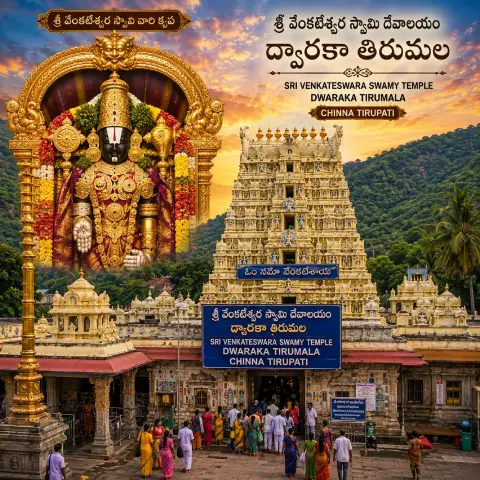
Located in the Dwaraka Tirumala region of Andhra Pradesh, the Sri Venkateswara Swamy Temple is one of the most revered Vaishnava pilgrimage centres in the state. The temple is popularly known as Chinna Tirupati, meaning “Little Tirupati,” because of its close religious association with Lord Venkateswara and the traditional belief that the deity here is self-manifested.
The temple is dedicated to Sri Venkateswara Swamy, an incarnation of Lord Vishnu who is worshipped as the presiding deity of the Kali Yuga. The peaceful hill setting, the ancient traditions associated with Sage Dwaraka and the distinctive form of the presiding deity have made Dwaraka Tirumala an important destination for devotees from Andhra Pradesh and neighbouring states.
Dwaraka Tirumala is situated approximately 40 kilometres from Eluru. Government records identify it as an important Hindu religious centre and specifically note its local identity as “Chinna Tirupati.” :contentReference[oaicite:1]{index=1}
The Andhra Pradesh Tourism Department describes Dwaraka Tirumala as a temple of Lord Venkateswara whose deity is traditionally regarded as Swayambhu. The same source associates the name of the place with Sage Dwaraka, who is believed to have discovered the Lord's image after prolonged penance. :contentReference[oaicite:2]{index=2}
Legend of Sage Dwaraka
According to the traditional Sthala Purana, a sage named Dwaraka performed intense penance seeking the vision and blessings of Lord Vishnu.
During his prolonged meditation, Lord Vishnu is traditionally believed to have manifested before him in the form of Sri Venkateswara. The manifestation is said to have occurred in an anthill, and Sage Dwaraka discovered the divine image after his penance.
According to the tradition, the sage worshipped the Lord at the site and the place subsequently became known as Dwaraka Tirumala. The association with Sage Dwaraka is therefore central to the traditional explanation of the temple's name.
The self-manifested nature of the deity is one of the principal reasons devotees consider this temple especially sacred. The tradition should be understood as a religious Sthala Purana rather than as independently verified historical evidence.
Why Dwaraka Tirumala is Called Chinna Tirupati
Dwaraka Tirumala is popularly known as Chinna Tirupati because Lord Venkateswara is the principal deity here, just as Lord Venkateswara is the presiding deity at Tirumala.
The traditional Swayambhu association of the deity, the Vaishnava worship, the temple's Venkateswara tradition and its large annual festivals have contributed to its identity as a “Little Tirupati.”
For generations, devotees who are unable to undertake a pilgrimage to Tirumala have also considered Dwaraka Tirumala an important place to seek the blessings of Lord Venkateswara. However, the two temples are independent pilgrimage centres with their own temple traditions, ritual schedules and administrative arrangements.
The Unique Form of the Presiding Deity
One of the most distinctive features of Dwaraka Tirumala is the traditional belief that the original Swayambhu form of Lord Venkateswara is visible only partially, while a complete anthropomorphic image of the Lord is also installed behind it.
Temple tradition describes the Swayambhu form as emerging from the anthill and being visible above the ground, with the remaining portion believed to extend beneath the surface. This unusual arrangement has given the shrine a distinctive place among Venkateswara temples.
A complete image of Lord Venkateswara is traditionally associated with the installation attributed to Sri Ramanujacharya. Thus, the sanctum is associated with both the ancient Swayambhu tradition and the later established form of the Lord.
This distinctive arrangement is one of the features most frequently highlighted in descriptions of Dwaraka Tirumala and contributes to the temple's unique religious identity.
The Divine Feet of the Lord
Another important tradition associated with Dwaraka Tirumala concerns the sacred feet of Lord Venkateswara.
According to temple tradition, the lower portion of the Swayambhu form is believed to extend beneath the ground. The Lord's sacred feet are traditionally associated with King Bali and his worship.
This belief contributes to the temple's distinctive theological tradition, in which the visible portion of the Swayambhu deity is worshipped together with the separately established complete form of the Lord.
History
Dwaraka Tirumala is an ancient religious centre whose history is closely intertwined with the development of Vaishnavism in the Godavari region.
The earliest origins of the shrine are preserved primarily through religious traditions associated with Sage Dwaraka and the Swayambhu manifestation of Lord Venkateswara. The historical development of the present temple complex occurred over successive periods, with later rulers, patrons and religious institutions contributing to its expansion and maintenance.
The temple's religious traditions are also associated with Sri Ramanujacharya, whose Vaishnava influence shaped temple worship in several parts of South India. Local temple tradition associates him with the establishment of the complete image of Lord Venkateswara behind the Swayambhu form.
The temple complex has subsequently undergone additions, renovations and improvements to accommodate the increasing number of pilgrims. Government tourism material continues to identify Dwaraka Tirumala as an important Hindu religious centre in the region. :contentReference[oaicite:3]{index=3}
The Temple Architecture
The temple is situated on a hill and is approached through a traditional South Indian temple layout. The complex includes the main sanctum, entrance structures, mandapas, subsidiary shrines, processional spaces and facilities for pilgrims.
The principal temple has a prominent Rajagopuram and a spacious courtyard. Traditional descriptions of the complex also mention shrines associated with Garuda, Anjaneya, the Alwars, Sage Dwaraka and the saint-composer Tallapaka Annamacharya.
The temple complex incorporates Vaishnava religious symbolism through sculptures, shrine arrangements and representations of the Alwars and the 108 Divya Desams.
The surrounding hill and greenery contribute to the peaceful atmosphere of the temple and are an important part of the pilgrimage experience.
Presiding Deity
The principal deity is Sri Venkateswara Swamy, worshipped as an incarnation of Lord Vishnu and the divine protector of devotees in the Kali Yuga.
Lord Venkateswara is traditionally associated with compassion, protection, prosperity and the fulfilment of righteous prayers. Devotees approach the Lord seeking relief from difficulties, spiritual strength, family welfare, prosperity and success in auspicious undertakings.
The temple also has important associations with Goddess Padmavati and Goddess Andal, along with other Vaishnava deities and saints within the temple complex.
Goddess Padmavati and Goddess Andal
The worship of Goddess Padmavati forms an important part of the Venkateswara tradition at Dwaraka Tirumala. She is revered as the divine consort of Lord Venkateswara and is associated with prosperity, compassion and auspiciousness.
Goddess Andal, one of the most revered women saints of the Sri Vaishnava tradition, is also represented within the temple complex. Her presence reflects the strong connection of the temple with the broader Sri Vaishnava devotional tradition.
Vaishnava Tradition and the Alwars
Dwaraka Tirumala has a strong Vaishnava identity. The temple complex contains representations of the Alwars, the twelve celebrated Tamil Vaishnava poet-saints whose hymns form an important part of Sri Vaishnava devotional literature.
The temple tradition also associates the sacred complex with the 108 Divya Desams, the celebrated Vishnu pilgrimage centres revered in the Sri Vaishnava tradition.
These associations connect Dwaraka Tirumala with the larger religious and literary heritage of South Indian Vaishnavism.
Ritual Practice
Worship at Sri Venkateswara Swamy Temple follows established Vaishnava temple traditions and is traditionally conducted according to the Vaikhanasa Agama system.
Daily worship includes Suprabhata Seva, preparation and offering of sacred food, Archana, Abhishekam or Snapana on prescribed occasions, Naivedyam, Harathi and evening rituals.
Vedic recitations and devotional worship form an important part of the daily temple routine. The temple also provides various Arjitha Sevas through which devotees can participate in special forms of worship.
Among the most popular services is the Nitya Arjitha Kalyanam, the daily ceremonial wedding of Lord Venkateswara with His divine consorts. Current temple information available through pilgrimage sources places the Kalyanotsavam at approximately 9:30 AM, although devotees should confirm the day's schedule with the Devasthanam before travelling. :contentReference[oaicite:4]{index=4}
Nitya Arjitha Kalyanam
The Nitya Arjitha Kalyanam is one of the most prominent devotional services at Dwaraka Tirumala. The ceremony represents the divine wedding of Lord Venkateswara with His consorts.
The ritual traditionally includes ceremonies such as Punahavachanam, Vishwaksena Aradhana, Ankurarpana, Pratisara Bandhana, Agni Pratishta, Vastra Samarpana, Maha Sankalpam, Kanyadanam, Mangala Dharana and other prescribed wedding rituals.
Devotees, particularly married couples and families, participate in the Kalyanotsavam seeking the blessings of the Lord for harmony, prosperity and well-being.
The ceremony is generally conducted in the Kalyana Mandapam and is followed by darshan for participating devotees. Current published information places the daily ceremony at around 9:30 AM, subject to festival and temple-calendar changes. :contentReference[oaicite:5]{index=5}
Other Important Sevas
- Suprabhata Seva – the traditional early morning awakening ceremony performed with sacred hymns.
- Sahasranama Archana – recitation of the thousand names of Lord Venkateswara.
- Ashtottara Shatanamarchana – devotional worship involving the recitation of 108 names of the Lord.
- Snapana Abhishekam – ceremonial bathing of the deity on prescribed occasions.
- Swarna Tulasidala Seva – a special devotional offering involving golden representations of Tulasi leaves.
- Arjitha Kalyanam – participation in the ceremonial divine wedding of the Lord.
- Garudotsavam – processional worship of the Lord associated with Garuda.
- Sesha Vahanotsavam – processional worship associated with the serpent vehicle of Lord Vishnu.
- Pavalimpu Seva – the traditional concluding night ritual of the temple.
Festivals
- Vaishakha Kalyanotsavam – an important annual celebration associated with the Swayambhu form of Lord Venkateswara and the divine wedding tradition.
- Aswayuja Kalyanotsavam – another major annual Kalyanotsavam associated with the established complete form of the Lord.
- Brahmotsavam – the annual grand festival featuring special worship, processions and vahana sevas.
- Vaikuntha Ekadashi – an important Vaishnava festival during which devotees seek special darshan and spiritual merit.
- Rathotsavam – the ceremonial chariot festival in which the processional deity is taken through the temple surroundings.
- Teppotsavam – the traditional float festival celebrated with the processional deity in a ceremonial water procession.
- Pavitrotsavam – a purification festival involving special rituals and homams according to temple tradition.
- Ratha Saptami – an important festival during which special processional worship is conducted.
Festival schedules and the exact dates of annual celebrations follow the temple's religious calendar and may vary from year to year.
Rathotsavam and Processions
Processions are an important part of the devotional life of Dwaraka Tirumala. During major festivals, the processional deity is decorated elaborately and taken through the temple surroundings on different vahanams.
Garuda, Sesha and other traditional vahanas are associated with the festival processions. The Rathotsavam is particularly significant, bringing together large numbers of devotees in a celebration of the Lord's presence among the community.
Teppotsavam
The Teppotsavam, or float festival, is another important celebration associated with Dwaraka Tirumala.
During the festival, the processional deity is taken on a decorated float as part of the ceremonial worship. Lamps, flowers, devotional music and the reflection of the decorated float on the water create a distinctive festive atmosphere.
The festival is traditionally associated with the sacred Vaishnava celebration calendar and forms part of the temple's annual cycle of utsavams.
Hair Offering Tradition
Offering hair, traditionally known as Tala Neelalu, is an important devotional practice at Dwaraka Tirumala.
Devotees, including children, may offer their hair as an act of humility and surrender before Lord Venkateswara. The practice is also associated with the wider Venkateswara pilgrimage tradition.
A traditional story connects the offering of hair with Neela Devi, who is said to have offered her hair to Lord Venkateswara after noticing an injury to His head. This story is part of the devotional tradition surrounding the practice.
The ritual should be understood as a religious offering and symbol of devotion rather than merely as a customary tonsure.
Annadanam and Pilgrim Services
As a major pilgrimage centre, Dwaraka Tirumala provides various facilities intended to support visiting devotees, including accommodation, prasadam distribution, dining facilities and pilgrim amenities.
Annadanam, or the offering of food to devotees, forms an important part of the temple's service tradition. The temple complex also includes facilities for pilgrim accommodation and other basic requirements.
The continued development of these facilities reflects the large number of devotees who visit Dwaraka Tirumala throughout the year.
Religious Significance
Dwaraka Tirumala is regarded as one of the important Venkateswara pilgrimage centres of Andhra Pradesh. Its identity as Chinna Tirupati, the Swayambhu tradition and the unique presence of the Swayambhu and established forms of the deity give it a distinctive religious position.
Devotees worship Lord Venkateswara here seeking protection, prosperity, removal of difficulties, fulfilment of righteous desires and spiritual well-being.
The temple is especially important for Vaishnava devotees because of its association with Lord Venkateswara, the Alwars, Vaishnava Agama worship and the wider Sri Vaishnava devotional tradition.
Cultural and Historical Importance
Dwaraka Tirumala forms part of the religious and cultural heritage of the Godavari region of Andhra Pradesh.
The temple has served as a centre of pilgrimage, religious education, devotional music, charitable activities and community gatherings for generations.
The presence of shrines associated with Vaishnava saints and traditions, together with the annual festivals and processions, has helped preserve the temple's cultural importance.
The Government of Andhra Pradesh identifies Dwaraka Tirumala as a place of Hindu religious importance and notes its location about 40 kilometres from Eluru. :contentReference[oaicite:6]{index=6}
Associated Sacred Places within the Temple Complex
- Sri Venkateswara Swamy Shrine – the principal shrine of Lord Venkateswara.
- Sri Padmavati Devi Shrine – associated with the divine consort of Lord Venkateswara.
- Andal Devi Shrine – associated with the celebrated Sri Vaishnava saint Andal.
- Sri Anjaneya Swamy Shrine – a shrine dedicated to Lord Hanuman.
- Sri Garuda Shrine – associated with Garuda, the divine vehicle of Lord Vishnu.
- Sage Dwaraka Shrine – associated with the sage whose penance is traditionally connected with the manifestation of the Lord.
- Tallapaka Annamacharya Shrine – associated with the celebrated Telugu saint-poet and composer.
- Alwar Shrines – representations of the twelve Alwars associated with Sri Vaishnava tradition.
Why Visit Sri Venkateswara Swamy Temple, Dwaraka Tirumala?
- To receive darshan of Sri Venkateswara Swamy at the famous Chinna Tirupati.
- To experience the traditional Swayambhu form of Lord Venkateswara.
- To see the distinctive arrangement of the Swayambhu form and the complete established image of the Lord.
- To learn about the traditional story of Sage Dwaraka and his penance.
- To participate in Nitya Arjitha Kalyanam.
- To seek blessings for family welfare, prosperity and auspicious beginnings.
- To offer Tala Neelalu as a traditional act of devotion.
- To participate in Brahmotsavam, Rathotsavam and Teppotsavam.
- To experience the Vaishnava traditions associated with the Alwars and other sacred figures.
- To visit one of the important Venkateswara pilgrimage centres of Andhra Pradesh.
శ్రీ వేంకటేశ్వర స్వామి దేవాలయం, ద్వారకా తిరుమల – అవలోకనం
పరిచయం
ఆంధ్రప్రదేశ్లోని ద్వారకా తిరుమలలో కొలువై ఉన్న శ్రీ వేంకటేశ్వర స్వామి దేవాలయం రాష్ట్రంలోని ప్రముఖ వైష్ణవ పుణ్యక్షేత్రాలలో ఒకటి. ఈ ఆలయాన్ని భక్తులు ప్రేమగా చిన్న తిరుపతి అని పిలుస్తారు. తిరుమలలోని శ్రీ వేంకటేశ్వర స్వామివారితో ఉన్న ధార్మిక అనుబంధం మరియు ఇక్కడి స్వామివారు స్వయంభూ రూపంగా ఆవిర్భవించారని ఉన్న సంప్రదాయ విశ్వాసం ఈ పేరుకు ప్రధాన కారణాలు.
కలియుగ ప్రత్యక్ష దైవంగా భావించే శ్రీ వేంకటేశ్వర స్వామివారు ఇక్కడ ప్రధాన దేవతగా కొలువై ఉన్నారు. ప్రశాంతమైన కొండ ప్రాంతం, ద్వారక మహర్షికి సంబంధించిన స్థలపురాణం మరియు స్వామివారి విశిష్టమైన రూపం ద్వారకా తిరుమలను ఆంధ్రప్రదేశ్ మరియు పరిసర రాష్ట్రాల భక్తులకు ముఖ్యమైన తీర్థయాత్రా కేంద్రంగా మార్చాయి.
ద్వారకా తిరుమల ఏలూరు నగరానికి సుమారు 40 కిలోమీటర్ల దూరంలో ఉంది. ప్రభుత్వ రికార్డులు దీనిని ముఖ్యమైన హిందూ ధార్మిక కేంద్రంగా గుర్తిస్తూ “చిన్న తిరుపతి”గా పేర్కొంటున్నాయి. :contentReference[oaicite:7]{index=7}
ఆంధ్రప్రదేశ్ పర్యాటక శాఖ ద్వారకా తిరుమల ఆలయాన్ని శ్రీ వేంకటేశ్వర స్వామి ఆలయంగా పేర్కొంటూ, ఇక్కడి స్వామివారిని స్వయంభూ రూపంగా సంప్రదాయంగా భావిస్తారని మరియు దీర్ఘకాల తపస్సు అనంతరం ద్వారక మహర్షి స్వామివారి విగ్రహాన్ని కనుగొన్నారని స్థలపురాణ సంప్రదాయం చెబుతుందని పేర్కొంది. :contentReference[oaicite:8]{index=8}
ద్వారక మహర్షి స్థలపురాణం
సంప్రదాయ స్థలపురాణం ప్రకారం ద్వారక మహర్షి శ్రీమహావిష్ణువును దర్శించుకుని ఆయన అనుగ్రహాన్ని పొందేందుకు తీవ్రమైన తపస్సు చేశారు.
దీర్ఘకాలం సాగిన ఆయన తపస్సుకు ప్రసన్నుడైన శ్రీమహావిష్ణువు శ్రీ వేంకటేశ్వర స్వామి రూపంలో ప్రత్యక్షమయ్యారని సంప్రదాయ కథనం చెబుతుంది.
ఈ దివ్య ఆవిర్భావం ఒక చీమల పుట్టలో జరిగిందని, తపస్సు అనంతరం ద్వారక మహర్షి ఆ పుట్టలో స్వామివారి దివ్యరూపాన్ని కనుగొన్నారని స్థలపురాణం చెబుతుంది.
మహర్షి ఆ ప్రదేశంలో స్వామివారిని ఆరాధించడం ప్రారంభించారని, ఆయన పేరు మీదనే ఈ ప్రాంతానికి ద్వారకా తిరుమల అనే పేరు వచ్చిందని సంప్రదాయ విశ్వాసం.
స్వామివారు స్వయంభూ రూపంలో ఆవిర్భవించారనే విశ్వాసం ఈ క్షేత్రానికి ప్రత్యేక పవిత్రతను అందిస్తుంది. దీనిని స్థలపురాణ సంప్రదాయంగా చూడాలి; స్వతంత్ర చారిత్రక ఆధారాలతో నిర్ధారించబడిన సంఘటనగా కాదు.
ద్వారకా తిరుమలను చిన్న తిరుపతి అని ఎందుకు పిలుస్తారు?
ద్వారకా తిరుమలలో ప్రధాన దేవత శ్రీ వేంకటేశ్వర స్వామివారు. తిరుమలలో కూడా అదే శ్రీ వేంకటేశ్వర స్వామివారు ప్రధాన దేవతగా కొలువై ఉండటం వల్ల ద్వారకా తిరుమలను భక్తులు చిన్న తిరుపతి అని ప్రేమగా పిలుస్తారు.
స్వామివారి స్వయంభూ సంప్రదాయం, వైష్ణవ ఆరాధనా విధానం, వేంకటేశ్వర స్వామి ఆరాధన మరియు వైభవంగా జరిగే వార్షిక ఉత్సవాలు ఈ క్షేత్రాన్ని చిన్న తిరుపతిగా ప్రసిద్ధి చెందేలా చేశాయి.
తిరుమలకు వెళ్లలేని భక్తులు కూడా ద్వారకా తిరుమలను శ్రీ వేంకటేశ్వర స్వామివారి దర్శనానికి ముఖ్యమైన పుణ్యక్షేత్రంగా భావిస్తూ తరతరాలుగా ఇక్కడికి వస్తున్నారు. అయితే తిరుమల మరియు ద్వారకా తిరుమల రెండు స్వతంత్ర ఆలయాలు; వాటికి తమతమ ప్రత్యేక ఆరాధనా సంప్రదాయాలు, సేవా విధానాలు మరియు పరిపాలనా వ్యవస్థలు ఉన్నాయి.
స్వామివారి విశిష్టమైన రూపం
ద్వారకా తిరుమల ఆలయంలో అత్యంత ప్రత్యేకమైన అంశాలలో ఒకటి స్వయంభూ శ్రీ వేంకటేశ్వర స్వామివారి రూపం ఒక భాగంగా కనిపించడంతో పాటు, దాని వెనుక సంపూర్ణ స్వరూపంలోని మరో విగ్రహాన్ని ప్రతిష్ఠించి ఆరాధించడం.
ఆలయ సంప్రదాయం ప్రకారం చీమల పుట్ట నుంచి ఆవిర్భవించిన స్వయంభూ స్వామివారి రూపం భూమి పైభాగంలో కొంతవరకు మాత్రమే కనిపిస్తుందని, మిగిలిన భాగం భూమి లోపల ఉందని విశ్వాసం.
స్వయంభూ స్వామివారి వెనుక సంపూర్ణ మానవాకార రూపంలో శ్రీ వేంకటేశ్వర స్వామివారి విగ్రహం ప్రతిష్ఠించబడిందని ఆలయ సంప్రదాయం చెబుతుంది. ఈ సంపూర్ణ రూపాన్ని శ్రీ రామానుజాచార్యుల ప్రతిష్ఠతో అనుసంధానిస్తారు.
ఒకే గర్భగృహంలో స్వయంభూ రూపం మరియు సంపూర్ణంగా ప్రతిష్ఠించబడిన రూపం రెండింటికీ ఉన్న ఈ ప్రత్యేకత ద్వారకా తిరుమల ఆలయాన్ని ఇతర వేంకటేశ్వర ఆలయాల నుంచి విశిష్టంగా నిలబెడుతుంది.
స్వామివారి దివ్య పాదాల సంప్రదాయం
ద్వారకా తిరుమల క్షేత్రంలో స్వామివారి దివ్య పాదాలకు సంబంధించిన ప్రత్యేకమైన సంప్రదాయం ఉంది.
స్వయంభూ స్వామివారి రూపం యొక్క దిగువ భాగం భూమి లోపల విస్తరించి ఉందని ఆలయ సంప్రదాయం చెబుతుంది. స్వామివారి దివ్య పాదాలు రాజా బలికి సంబంధించినవిగా, ఆయన నిత్య ఆరాధనకు అనుగ్రహించబడినవిగా స్థానిక భక్తి సంప్రదాయం వివరిస్తుంది.
స్వయంభూ స్వరూపం మరియు సంపూర్ణంగా ప్రతిష్ఠించబడిన స్వరూపం రెండింటినీ కలిపి ఆరాధించే ఈ సంప్రదాయం ద్వారకా తిరుమల క్షేత్రంలోని విశిష్టమైన ధార్మిక భావనలలో ఒకటి.
చరిత్ర
ద్వారకా తిరుమల గోదావరి ప్రాంతంలోని పురాతన ధార్మిక కేంద్రాలలో ఒకటి. ఈ క్షేత్ర చరిత్ర వైష్ణవ సంప్రదాయాల విస్తరణతో సన్నిహితంగా అనుసంధానమై ఉంది.
ఆలయ ప్రాచీన మూలాలు ప్రధానంగా ద్వారక మహర్షి మరియు స్వయంభూ శ్రీ వేంకటేశ్వర స్వామివారి ఆవిర్భావానికి సంబంధించిన స్థలపురాణ సంప్రదాయాల ద్వారా తెలుస్తాయి. ప్రస్తుతం ఉన్న ఆలయ సముదాయం మాత్రం వివిధ కాలాల్లో పాలకులు, దాతలు మరియు ధార్మిక సంస్థల సహకారంతో క్రమంగా అభివృద్ధి చెందింది.
దక్షిణ భారతదేశంలోని అనేక వైష్ణవ ఆలయాల మాదిరిగానే ద్వారకా తిరుమల ఆరాధనా సంప్రదాయం కూడా శ్రీ రామానుజాచార్యుల వైష్ణవ ప్రభావంతో అనుసంధానించబడింది. స్వయంభూ రూపం వెనుక సంపూర్ణ స్వామివారి విగ్రహాన్ని ప్రతిష్ఠించిన సంప్రదాయాన్ని కూడా రామానుజాచార్యులతో అనుసంధానిస్తారు.
కాలక్రమేణా భక్తుల సంఖ్య పెరగడంతో ఆలయ సముదాయంలో అనేక నిర్మాణాలు, పునరుద్ధరణలు మరియు భక్తుల సౌకర్యాల అభివృద్ధి జరిగాయి. ఆంధ్రప్రదేశ్ పర్యాటక శాఖ కూడా ద్వారకా తిరుమలను ముఖ్యమైన హిందూ ధార్మిక కేంద్రంగా గుర్తిస్తుంది. :contentReference[oaicite:9]{index=9}
ఆలయ నిర్మాణం
ద్వారకా తిరుమల ఆలయం ఒక కొండ ప్రాంతంలో ఉంది. సంప్రదాయ దక్షిణ భారతీయ ఆలయ నిర్మాణ శైలికి అనుగుణంగా ప్రధాన గర్భగృహం, ప్రవేశ నిర్మాణాలు, మండపాలు, ఉపాలయాలు, ఉత్సవ కార్యక్రమాల కోసం ప్రదేశాలు మరియు భక్తుల సౌకర్యాల కోసం వివిధ నిర్మాణాలు ఉన్నాయి.
ఆలయానికి ప్రముఖ రాజగోపురం మరియు విశాలమైన ప్రాకారం ఉన్నాయి. గరుడుడు, ఆంజనేయ స్వామి, ఆళ్వార్లు, ద్వారక మహర్షి మరియు తాళ్లపాక అన్నమాచార్యులకు సంబంధించిన సన్నిధులు లేదా విగ్రహాలు ఆలయ సంప్రదాయంలో ముఖ్యమైన స్థానాన్ని కలిగి ఉన్నాయి.
ఆలయ సముదాయంలో వైష్ణవ ధార్మిక ప్రతీకలు, ఆళ్వార్ల రూపాలు మరియు 108 దివ్యదేశాలకు సంబంధించిన సంప్రదాయ ప్రతీకలు కనిపిస్తాయి.
ఆలయం చుట్టూ ఉన్న కొండలు, పచ్చదనం మరియు ప్రశాంతమైన వాతావరణం భక్తుల తీర్థయాత్ర అనుభవానికి ప్రత్యేకమైన ఆధ్యాత్మిక వాతావరణాన్ని అందిస్తాయి.
ప్రధాన దేవత
ఆలయంలో ప్రధాన దేవత శ్రీ వేంకటేశ్వర స్వామి. ఆయనను శ్రీమహావిష్ణువు అవతారంగా మరియు కలియుగంలో భక్తులను రక్షించే దైవంగా ఆరాధిస్తారు.
శ్రీ వేంకటేశ్వర స్వామివారిని కరుణ, రక్షణ, ఐశ్వర్యం మరియు ధర్మబద్ధమైన కోరికలను నెరవేర్చే దైవంగా భక్తులు భావిస్తారు. కష్టాల నుంచి ఉపశమనం, కుటుంబ శ్రేయస్సు, ఐశ్వర్యం, ఆధ్యాత్మిక బలం మరియు శుభకార్యాల విజయానికి భక్తులు స్వామివారిని ప్రార్థిస్తారు.
ఆలయ సముదాయంలో శ్రీ పద్మావతి అమ్మవారు, శ్రీ ఆండాళ్ దేవి మరియు ఇతర వైష్ణవ దేవతలు, ఆచార్యులు మరియు భక్తి సంప్రదాయాలకు సంబంధించిన సన్నిధులు కూడా ఉన్నాయి.
శ్రీ పద్మావతి అమ్మవారు మరియు ఆండాళ్ దేవి
శ్రీ పద్మావతి అమ్మవారి ఆరాధన ద్వారకా తిరుమల వేంకటేశ్వర సంప్రదాయంలో ముఖ్యమైన భాగం. ఆమెను శ్రీ వేంకటేశ్వర స్వామివారి దివ్య సతీమణిగా, ఐశ్వర్యం, కరుణ మరియు మంగళానికి ప్రతీకగా ఆరాధిస్తారు.
శ్రీ వైష్ణవ సంప్రదాయంలోని ప్రముఖ భక్తురాలు మరియు కవయిత్రి అయిన ఆండాళ్ దేవికి కూడా ఆలయ సముదాయంలో ప్రత్యేక స్థానం ఉంది. ఆమె సన్నిధి దక్షిణ భారతదేశంలోని విస్తృత శ్రీ వైష్ణవ భక్తి సంప్రదాయంతో ద్వారకా తిరుమలకు ఉన్న అనుబంధాన్ని ప్రతిబింబిస్తుంది.
వైష్ణవ సంప్రదాయం మరియు ఆళ్వార్లు
ద్వారకా తిరుమల క్షేత్రానికి బలమైన వైష్ణవ ధార్మిక గుర్తింపు ఉంది. ఆలయ సముదాయంలో శ్రీ వైష్ణవ సంప్రదాయంలోని పన్నెండు ఆళ్వార్లకు సంబంధించిన ప్రతిరూపాలు ఉన్నాయి.
ఆళ్వార్లు తమిళ భాషలో భగవంతునిపై భక్తి గీతాలను రచించిన ప్రసిద్ధ వైష్ణవ భక్త కవులు. వారి దివ్యప్రబంధ సాహిత్యం శ్రీ వైష్ణవ సంప్రదాయంలో అత్యంత ముఖ్యమైనది.
108 దివ్యదేశాల సంప్రదాయంతో ఆలయానికి ఉన్న అనుబంధం ద్వారకా తిరుమలను దక్షిణ భారతదేశంలోని విస్తృత వైష్ణవ తీర్థయాత్రా సంప్రదాయంతో అనుసంధానిస్తుంది.
పూజా విధానాలు
శ్రీ వేంకటేశ్వర స్వామి ఆలయంలో వైష్ణవ ఆలయ సంప్రదాయాలకు అనుగుణంగా పూజలు నిర్వహిస్తారు. ఇక్కడి ఆరాధనా విధానం సంప్రదాయంగా వైఖానస ఆగమం ఆధారంగా కొనసాగుతోంది.
నిత్య పూజల్లో సుప్రభాత సేవ, పవిత్ర జలాల సమర్పణ, అర్చన, నిర్ణీత సందర్భాల్లో అభిషేకం లేదా స్నపన సేవ, నైవేద్యం, హారతి మరియు సాయంకాల పూజలు ముఖ్యమైనవి.
వేద పారాయణం మరియు భక్తి ఆరాధన నిత్య ఆలయ కార్యక్రమాల్లో ముఖ్యమైన భాగాలు. భక్తులు ప్రత్యేకంగా పాల్గొనేందుకు వివిధ అర్జిత సేవలు కూడా నిర్వహిస్తారు.
అందులో అత్యంత ప్రసిద్ధమైన సేవలలో నిత్య అర్జిత కల్యాణం ఒకటి. ఇది శ్రీ వేంకటేశ్వర స్వామివారి దివ్య కల్యాణాన్ని ప్రతీకాత్మకంగా నిర్వహించే సేవ. ప్రస్తుతం అందుబాటులో ఉన్న తీర్థయాత్రా సమాచారం ప్రకారం ఈ కల్యాణోత్సవం సాధారణంగా ఉదయం 9:30 గంటల సమయంలో ప్రారంభమవుతుంది. అయితే ప్రయాణానికి ముందు ఆ రోజు సేవా సమయాన్ని దేవస్థానం వద్ద నిర్ధారించుకోవడం మంచిది. :contentReference[oaicite:10]{index=10}
నిత్య అర్జిత కల్యాణం
ద్వారకా తిరుమల ఆలయంలో అత్యంత ప్రముఖమైన భక్తి సేవలలో నిత్య అర్జిత కల్యాణం ఒకటి. ఈ సేవలో శ్రీ వేంకటేశ్వర స్వామివారి దివ్య వివాహాన్ని వైదిక మరియు ఆలయ సంప్రదాయాల ప్రకారం నిర్వహిస్తారు.
ఈ కార్యక్రమంలో పునఃపుణ్యవాచనం, విష్వక్సేన ఆరాధన, అంకురార్పణ, ప్రతిసర బంధనం, అగ్ని ప్రతిష్ఠ, వస్త్ర సమర్పణ, మహా సంకల్పం, కన్యాదానం, మాంగల్యధారణ మరియు ఇతర వివాహ సంబంధిత వైదిక కార్యక్రమాలు సంప్రదాయంగా నిర్వహిస్తారు.
ముఖ్యంగా దంపతులు మరియు కుటుంబాలు స్వామివారి కల్యాణ సేవలో పాల్గొని కుటుంబ సౌఖ్యం, ఐశ్వర్యం మరియు శ్రేయస్సు కోసం ఆశీస్సులు కోరుకుంటారు.
ఈ సేవ సాధారణంగా కల్యాణ మండపంలో నిర్వహించబడుతుంది. కల్యాణోత్సవం అనంతరం పాల్గొన్న భక్తులకు స్వామివారి దర్శనం కల్పిస్తారు. ప్రస్తుతం ప్రచురితమైన సమాచారంలో నిత్య కల్యాణం సుమారు ఉదయం 9:30 గంటలకు ప్రారంభమవుతుందని పేర్కొనబడింది; ఉత్సవాలు మరియు ఆలయ క్యాలెండర్ కారణంగా సమయాల్లో మార్పులు ఉండవచ్చు. :contentReference[oaicite:11]{index=11}
ఇతర ముఖ్యమైన సేవలు
- సుప్రభాత సేవ – తెల్లవారుజామున పవిత్ర స్తోత్రాలు మరియు మంగళ గీతాలతో స్వామివారిని మేల్కొలిపే సేవ.
- సహస్రనామ అర్చన – శ్రీ వేంకటేశ్వర స్వామివారి వెయ్యి నామాలను స్మరిస్తూ చేసే ప్రత్యేక అర్చన.
- అష్టోత్తర శతనామార్చన – స్వామివారి 108 నామాలను స్మరిస్తూ నిర్వహించే భక్తి పూజ.
- స్నపన అభిషేకం – నిర్ణీత సందర్భాల్లో నిర్వహించే పవిత్ర అభిషేక కార్యక్రమం.
- సువర్ణ తులసీదళ సేవ – బంగారు తులసీదళాల ప్రతీకాత్మక సమర్పణతో నిర్వహించే ప్రత్యేక భక్తి సేవ.
- అర్జిత కల్యాణం – స్వామివారి దివ్య కల్యాణంలో భక్తులు పాల్గొనే సేవ.
- గరుడోత్సవం – గరుడ వాహనంతో అనుసంధానమైన ప్రత్యేక ఉత్సవ సేవ.
- శేష వాహనోత్సవం – శ్రీమహావిష్ణువు దివ్య శేష వాహనంతో అనుసంధానమైన ఊరేగింపు.
- పవళింపు సేవ – రాత్రి నిర్వహించే సంప్రదాయ ముగింపు సేవ.
ప్రధాన ఉత్సవాలు
- వైశాఖ కల్యాణోత్సవం – స్వయంభూ శ్రీ వేంకటేశ్వర స్వామివారి సంప్రదాయానికి సంబంధించిన ముఖ్యమైన వార్షిక కల్యాణోత్సవం.
- ఆశ్వయుజ కల్యాణోత్సవం – సంపూర్ణంగా ప్రతిష్ఠించబడిన స్వామివారి రూపానికి సంబంధించిన మరో ముఖ్యమైన వార్షిక కల్యాణోత్సవం.
- బ్రహ్మోత్సవాలు – ప్రత్యేక పూజలు, వాహన సేవలు, ఊరేగింపులు మరియు అనేక ధార్మిక కార్యక్రమాలతో నిర్వహించే వార్షిక మహోత్సవాలు.
- వైకుంఠ ఏకాదశి – వైష్ణవ సంప్రదాయంలో అత్యంత పవిత్రమైన పర్వదినం. ప్రత్యేక దర్శనం మరియు ఆధ్యాత్మిక పుణ్యం కోసం భక్తులు పెద్ద సంఖ్యలో పాల్గొంటారు.
- రథోత్సవం – ఉత్సవమూర్తిని అలంకరించిన రథంపై ఊరేగించే వైభవమైన ఉత్సవం.
- తెప్పోత్సవం – అలంకరించిన తెప్పపై ఉత్సవమూర్తిని తీసుకువెళ్లే పవిత్ర జల ఉత్సవం.
- పవిత్రోత్సవం – ఆలయ పూజా విధానంలో సంభవించిన లోపాల పరిహారార్థం ప్రత్యేక పూజలు, హోమాలు మరియు శుద్ధి కార్యక్రమాలతో నిర్వహించే పవిత్రోత్సవం.
- రథ సప్తమి – ప్రత్యేక పూజలు మరియు ఊరేగింపులతో నిర్వహించే ముఖ్యమైన పర్వదినం.
వార్షిక ఉత్సవాల ఖచ్చితమైన తేదీలు ఆలయ పంచాంగం మరియు ధార్మిక క్యాలెండర్ ఆధారంగా సంవత్సరానికొకసారి మారవచ్చు.
రథోత్సవం మరియు వాహన సేవలు
ద్వారకా తిరుమల భక్తి సంప్రదాయంలో స్వామివారి ఊరేగింపులకు ప్రత్యేక ప్రాధాన్యత ఉంది. ముఖ్యమైన ఉత్సవాల సందర్భంగా ఉత్సవమూర్తిని అందంగా అలంకరించి వివిధ వాహనాలపై ఆలయ పరిసరాల్లో ఊరేగిస్తారు.
గరుడ, శేష మరియు ఇతర సంప్రదాయ వాహనాలు ఉత్సవ ఊరేగింపుల్లో ముఖ్యమైనవి. రథోత్సవం సందర్భంగా భక్తులు పెద్ద సంఖ్యలో పాల్గొని స్వామివారి రథోత్సవ వైభవాన్ని దర్శిస్తారు.
తెప్పోత్సవం
ద్వారకా తిరుమల వార్షిక ఉత్సవ సంప్రదాయంలో తెప్పోత్సవం కూడా ఒక ముఖ్యమైన ఉత్సవం.
ఈ సందర్భంగా ఉత్సవమూర్తిని అందంగా అలంకరించిన తెప్పపై తీసుకువెళ్లి ప్రత్యేక పూజలు నిర్వహిస్తారు. దీపాలు, పుష్పాలంకరణలు, భక్తి సంగీతం మరియు నీటిపై ప్రతిబింబించే అలంకరణలు ఉత్సవానికి ప్రత్యేకమైన శోభను అందిస్తాయి.
ఈ ఉత్సవం ఆలయ వార్షిక వైష్ణవ ఉత్సవ చక్రంలో ఒక ముఖ్యమైన భాగంగా కొనసాగుతోంది.
తలనీలాల సమర్పణ సంప్రదాయం
శ్రీ వేంకటేశ్వర స్వామివారికి తలనీలాలు సమర్పించడం ద్వారకా తిరుమలలో కూడా ముఖ్యమైన భక్తి సంప్రదాయం.
పిల్లలు సహా అనేక మంది భక్తులు తమ వెంట్రుకలను స్వామివారికి సమర్పించి వినయానికి, శరణాగతికి ప్రతీకగా ఈ సేవను నిర్వహిస్తారు. వేంకటేశ్వర స్వామి తీర్థయాత్రా సంప్రదాయంలో తలనీలాల సమర్పణకు ప్రత్యేక స్థానం ఉంది.
స్వామివారి తలపై ఏర్పడిన గాయాన్ని గమనించిన నీలాదేవి తన వెంట్రుకలను స్వామివారికి సమర్పించిందనే కథ ఈ సంప్రదాయంతో అనుసంధానించబడింది. ఇది ఆలయ భక్తి సంప్రదాయానికి చెందిన స్థలపురాణ గాథ.
తలనీలాల సమర్పణను కేవలం ఒక ఆచారంగా కాకుండా భక్తుడు తన అహంకారాన్ని విడిచిపెట్టి స్వామివారికి శరణాగతి చెందే ప్రతీకగా కూడా భావిస్తారు.
అన్నదానం మరియు భక్తుల సౌకర్యాలు
ప్రముఖ తీర్థయాత్రా కేంద్రంగా ద్వారకా తిరుమల ఆలయంలో భక్తుల కోసం వివిధ సౌకర్యాలు అందుబాటులో ఉన్నాయి. వసతి, ప్రసాదం, భోజన సౌకర్యాలు మరియు ఇతర ప్రాథమిక యాత్రిక సదుపాయాలు ఆలయ నిర్వహణలో భాగంగా ఉన్నాయి.
భక్తులకు ఆహారాన్ని ప్రసాదంగా అందించే అన్నదానం ఆలయ సేవా సంప్రదాయంలో ముఖ్యమైన స్థానం కలిగి ఉంది.
సంవత్సరం పొడవునా వచ్చే పెద్ద సంఖ్యలో భక్తుల అవసరాలను దృష్టిలో ఉంచుకుని ఆలయ పరిసరాల్లో వసతి మరియు ఇతర సౌకర్యాలు కూడా అభివృద్ధి చేయబడ్డాయి.
ఆధ్యాత్మిక ప్రాముఖ్యత
ద్వారకా తిరుమల ఆంధ్రప్రదేశ్లోని ముఖ్యమైన వేంకటేశ్వర పుణ్యక్షేత్రాలలో ఒకటి. చిన్న తిరుపతి అనే గుర్తింపు, స్వయంభూ స్వామివారి సంప్రదాయం మరియు స్వయంభూ రూపంతో పాటు సంపూర్ణంగా ప్రతిష్ఠించబడిన స్వామివారి రూపం ఉండటం ఈ క్షేత్రానికి ప్రత్యేకమైన ఆధ్యాత్మిక స్థానాన్ని కల్పించాయి.
భక్తులు శ్రీ వేంకటేశ్వర స్వామివారిని రక్షణ, ఐశ్వర్యం, కష్టాల నివారణ, ధర్మబద్ధమైన కోరికల నెరవేర్పు మరియు కుటుంబ శ్రేయస్సు కోసం ప్రార్థిస్తారు.
ఆళ్వార్లు, వైష్ణవ ఆగమ ఆరాధన మరియు శ్రీ వైష్ణవ భక్తి సంప్రదాయాలతో ఉన్న అనుబంధం కారణంగా ఈ క్షేత్రానికి వైష్ణవ భక్తులలో ప్రత్యేకమైన ప్రాధాన్యత ఉంది.
చారిత్రక మరియు సాంస్కృతిక ప్రాముఖ్యత
ద్వారకా తిరుమల ఆంధ్రప్రదేశ్లోని గోదావరి ప్రాంత ధార్మిక మరియు సాంస్కృతిక వారసత్వంలో ఒక ముఖ్యమైన భాగం.
తరతరాలుగా ఈ ఆలయం తీర్థయాత్ర, ధార్మిక విద్య, భక్తి సంగీతం, అన్నదానం మరియు సామూహిక ధార్మిక కార్యక్రమాలకు కేంద్రంగా కొనసాగుతోంది.
వైష్ణవ ఆచార్యులు, ఆళ్వార్లు, సంతులు మరియు భక్తి సంప్రదాయాలకు సంబంధించిన సన్నిధులు, వార్షిక ఉత్సవాలు మరియు వాహన సేవలు ఆలయ సాంస్కృతిక ప్రాముఖ్యతను సజీవంగా ఉంచుతున్నాయి.
ఆంధ్రప్రదేశ్ ప్రభుత్వం ద్వారకా తిరుమలను ముఖ్యమైన హిందూ ధార్మిక ప్రదేశంగా గుర్తిస్తూ, ఏలూరు నుంచి సుమారు 40 కిలోమీటర్ల దూరంలో ఉన్నట్లు పేర్కొంటుంది. :contentReference[oaicite:12]{index=12}
ఆలయ సముదాయంలోని అనుబంధ పవిత్ర సన్నిధులు
- శ్రీ వేంకటేశ్వర స్వామి సన్నిధి – ఆలయంలోని ప్రధాన దేవత సన్నిధి.
- శ్రీ పద్మావతి అమ్మవారి సన్నిధి – శ్రీ వేంకటేశ్వర స్వామివారి దివ్య సతీమణికి సంబంధించిన పవిత్ర సన్నిధి.
- శ్రీ ఆండాళ్ దేవి సన్నిధి – ప్రసిద్ధ శ్రీ వైష్ణవ భక్తురాలు ఆండాళ్కు సంబంధించిన సన్నిధి.
- శ్రీ ఆంజనేయ స్వామి సన్నిధి – హనుమంతునికి అంకితం చేయబడిన పవిత్ర సన్నిధి.
- శ్రీ గరుడ సన్నిధి – శ్రీమహావిష్ణువు దివ్య వాహనమైన గరుడునికి సంబంధించిన సన్నిధి.
- ద్వారక మహర్షి సన్నిధి – స్వామివారి ఆవిర్భావంతో సంప్రదాయంగా అనుసంధానమైన మహర్షి ద్వారకకు సంబంధించిన పవిత్ర స్థలం.
- తాళ్లపాక అన్నమాచార్యుల సన్నిధి – ప్రసిద్ధ తెలుగు వాగ్గేయకారుడు మరియు భక్త కవి అన్నమాచార్యులతో అనుసంధానమైన పవిత్ర సన్నిధి.
- ఆళ్వార్ల సన్నిధులు – శ్రీ వైష్ణవ సంప్రదాయంలోని పన్నెండు ఆళ్వార్లకు సంబంధించిన పవిత్ర రూపాలు.
శ్రీ వేంకటేశ్వర స్వామి దేవాలయం, ద్వారకా తిరుమలను ఎందుకు దర్శించాలి?
- ప్రసిద్ధ చిన్న తిరుపతిలో శ్రీ వేంకటేశ్వర స్వామివారి దర్శనం పొందడానికి.
- స్వయంభూ శ్రీ వేంకటేశ్వర స్వామివారి విశిష్ట సంప్రదాయాన్ని అనుభవించడానికి.
- స్వయంభూ రూపం మరియు సంపూర్ణంగా ప్రతిష్ఠించబడిన స్వామివారి రూపం రెండింటినీ దర్శించడానికి.
- ద్వారక మహర్షి తపస్సు మరియు స్వామివారి ఆవిర్భావానికి సంబంధించిన స్థలపురాణాన్ని తెలుసుకోవడానికి.
- నిత్య అర్జిత కల్యాణంలో పాల్గొనడానికి.
- కుటుంబ శ్రేయస్సు, ఐశ్వర్యం మరియు శుభకార్యాల విజయానికి స్వామివారి ఆశీస్సులు పొందడానికి.
- తలనీలాలను సమర్పించి భక్తి మరియు శరణాగతిని వ్యక్తపరచడానికి.
- బ్రహ్మోత్సవాలు, రథోత్సవం మరియు తెప్పోత్సవంలో పాల్గొనడానికి.
- ఆళ్వార్లు మరియు శ్రీ వైష్ణవ భక్తి సంప్రదాయాలతో అనుసంధానమైన పవిత్ర వాతావరణాన్ని అనుభవించడానికి.
- ఆంధ్రప్రదేశ్లోని ప్రముఖ వేంకటేశ్వర పుణ్యక్షేత్రాలలో ఒకదాన్ని దర్శించడానికి.