
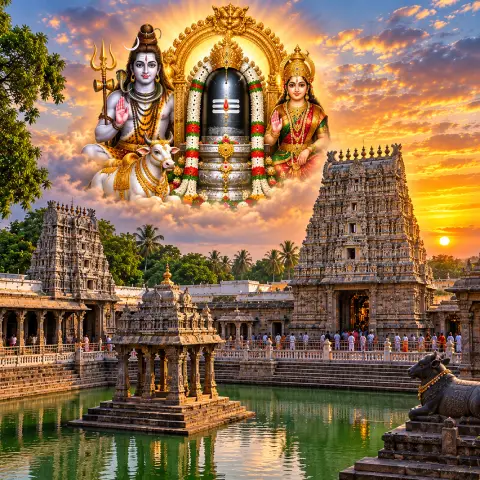
Sri Bhimeswara Swamy Temple, Draksharamam – Overview
Introduction
Sri Bhimeswara Swamy Temple at Draksharamam is one of the most revered Shaiva pilgrimage centres of Andhra Pradesh. Located on the eastern bank of the Godavari River, the temple is traditionally regarded as one of the Pancharama Kshetras, the five sacred temples associated with the fragments of Lord Shiva's Atma Linga.
Draksharamam is also popularly known as Dakshina Kasi, or the Southern Kasi, because of its exceptional importance in Shaiva tradition. The sacred complex is especially distinctive because Lord Shiva is worshipped here as Sri Bhimeswara Swamy while Goddess Parvati is revered as Sri Manikyamba Devi, traditionally counted among the Ashtadasa Shakti Peethas.
Andhra Pradesh Tourism describes Draksharamam as both a Pancharama and a Shakti Peetha, making it one of the rare pilgrimage centres where the worship of Shiva and Shakti has equal prominence. The temple is also regarded as a protected historical monument and contains a substantial collection of inscriptions that are important to historians and epigraphists. :contentReference[oaicite:1]{index=1}
The Meaning of Draksharamam
The name Draksharamam is traditionally associated with Daksha Prajapati, the father of Sati and father-in-law of Lord Shiva. The sacred tradition connects the place with Daksha and the events surrounding his great sacrifice, or Yajna.
According to the temple's traditional account, the name Draksharamam therefore signifies the sacred abode associated with Daksha Prajapati.
The etymology belongs to the religious tradition surrounding the kshetra and should be understood in the context of its Sthala Purana.
Presiding Deity – Sri Bhimeswara Swamy
The principal deity of Draksharamam is Lord Bhimeswara Swamy, a manifestation of Lord Shiva worshipped in the form of a sacred Shiva Linga.
The main Linga is exceptionally tall and is traditionally described as approximately 2.6 metres in height. Because of its unusual height and form, the sanctum has a distinctive two-level arrangement that allows devotees to view and worship the different portions of the Linga.
The sacred Linga is traditionally regarded as Swayambhu, meaning self-manifested. The temple is therefore considered a particularly powerful centre of Shiva worship. Andhra Pradesh government sources identify Bhimeswara as a Swayambhu deity and describe the tall Linga as one of the major features of the temple. :contentReference[oaicite:2]{index=2}
Goddess Manikyamba Devi
Sri Manikyamba Devi is the divine consort of Lord Bhimeswara Swamy and the principal Goddess worshipped at Draksharamam.
According to the traditional Shakti Peetha account, a part of Goddess Sati's body is believed to have fallen at Draksharamam. The Goddess is worshipped here as Manikyamba and is traditionally identified as one of the Ashtadasa Shakti Peethas.
Government sources describe Manikyamba of Draksharamam as the twelfth of the eighteen Shakti Peethas in the traditional enumeration. :contentReference[oaicite:3]{index=3}
Pancharama Significance
Draksharamam is one of the five sacred Pancharama Kshetras dedicated to Lord Shiva. The five traditional Pancharama temples are:
- Amararamam – Sri Amareswara Swamy Temple, Amaravati.
- Draksharamam – Sri Bhimeswara Swamy Temple.
- Kumararamam – Sri Kumararama Bhimeswara Swamy Temple, Samalkota.
- Somaramam – Sri Someswara Janardhana Swamy Temple, Bhimavaram.
- Ksheeraramam – Sri Ksheera Ramalingeswara Swamy Temple, Palakollu.
The Pancharama tradition holds that portions of the sacred Atma Linga associated with Lord Shiva became established at these five locations. Draksharamam is therefore an important destination for devotees undertaking a Pancharama pilgrimage. Andhra Pradesh government tourism sources identify Draksharamam as one of the five Pancharamas. :contentReference[oaicite:4]{index=4}
Legend of Daksha Yajna
The principal Sthala Purana associated with Draksharamam is connected with Daksha Yajna.
According to the traditional account, Daksha Prajapati organised a great Yajna but did not invite Lord Shiva. Sati, the daughter of Daksha and wife of Shiva, nevertheless went to her father's sacrifice.
At the Yajna, Sati was deeply distressed by the disrespect shown towards Lord Shiva. Unable to bear the humiliation, she gave up her physical body in the sacrificial fire.
Lord Shiva, overwhelmed by grief, carried Sati's body and began the fierce Pralaya Tandava. To bring an end to the cosmic consequences of Shiva's grief, Lord Vishnu is traditionally said to have used his Sudarshana Chakra to divide Sati's body into multiple parts. The places where these parts are believed to have fallen became the sacred Shakti Peethas.
The Draksharamam tradition identifies Manikyamba Devi with one of these sacred Shakti Peethas. This narrative is part of the religious Sthala Purana and is presented as sacred tradition rather than independently verified historical evidence. :contentReference[oaicite:5]{index=5}
Legend of Bhimeswara
Another traditional account explains the manifestation of Bhimeswara at Draksharamam.
According to temple tradition, Lord Shiva manifested here as a self-originated sacred Linga and became established at this holy place. Some traditional accounts connect the manifestation of Bhimeswara with the divine will of Goddess Parvati.
Devotees therefore regard the Bhimeswara Linga as Swayambhu and believe that worship at this sacred shrine provides the blessings and protection of Lord Shiva.
These accounts form part of the religious traditions associated with Draksharamam.
Historical Background
Draksharamam has a long and important history extending across the medieval period of the eastern Deccan.
The present temple is strongly associated with the Eastern Chalukyas of Vengi. Andhra Pradesh government historical records identify Chalukya Bhima I, who ruled approximately from 892 to 921 CE, as the ruler who built a temple dedicated to Shiva at Draksharamam. :contentReference[oaicite:6]{index=6}
The temple subsequently continued to receive patronage during different political periods. Its inscriptions record gifts, religious activities and administrative developments associated with the temple.
Andhra Pradesh Tourism notes that the temple contains hundreds of inscriptions, with records spanning several centuries. These inscriptions make Draksharamam particularly valuable for the study of medieval Andhra history. :contentReference[oaicite:7]{index=7}
Eastern Chalukyan Heritage
The Eastern Chalukyas played a significant role in the political, religious and cultural history of the Godavari region.
Draksharamam developed as an important Shaiva centre during their period. The temple's architectural character contains features associated with Chalukyan traditions and later additions.
Government sources specifically note the Chalukyan character of the sculptural work in the Mukha Mandapa. The temple therefore provides valuable evidence of the architectural development of medieval temple construction in the Godavari region. :contentReference[oaicite:8]{index=8}
Temple Architecture
The Draksharamam temple is notable for its imposing stone architecture and carefully planned enclosure system.
The temple has two prakaras, or concentric enclosures. The outer prakara has entrances on all four sides, each marked by a gopuram. The western gopuram is particularly prominent and has five tiers.
The inner enclosure is surrounded by a pillared, two-storeyed verandah. This arrangement contributes to the temple's distinctive architectural character.
The Mukha Mandapa contains sculptural work displaying clear Chalukyan characteristics. Shrines dedicated to Lakshmi Narayana, Sankaranarayana, Ganapati and the Navagrahas are also present within the complex. :contentReference[oaicite:9]{index=9}
The Two-Level Sanctum
One of the most distinctive architectural features of Draksharamam is the arrangement of the sanctum around the unusually tall Bhimeswara Linga.
The sacred Linga rises to an exceptional height, requiring access to more than one level for its complete ritual worship.
Two flights of stairs lead towards the upper level of the sanctum. The arrangement allows the different portions of the tall Linga to be approached and worshipped according to temple ritual.
This unusual two-storeyed sanctum is one of the architectural features that distinguish Draksharamam from many other Shiva temples. :contentReference[oaicite:10]{index=10}
Inscriptions and Historical Records
The walls and architectural elements of the temple preserve a substantial collection of inscriptions.
These inscriptions are valuable sources for understanding medieval political history, temple administration, religious donations, land grants and social conditions in the Godavari region.
Andhra Pradesh Tourism records approximately 381 inscriptions at Draksharamam, ranging from around 1080 CE to 1434 CE. This makes the temple an important site for epigraphic and historical research. :contentReference[oaicite:11]{index=11}
Sri Bhimeswara and Manikyamba – Shiva and Shakti
Draksharamam is particularly significant because the shrine of Lord Shiva and the shrine of Goddess Manikyamba are both central to the religious identity of the pilgrimage centre.
The combination of a Pancharama Shiva shrine and a traditional Shakti Peetha makes Draksharamam exceptionally important to both Shaiva and Shakta devotees.
Government tourism descriptions compare Draksharamam with Varanasi and Srisailam as one of the rare pilgrimage centres where the principal Shiva and Goddess shrines hold especially prominent positions together. :contentReference[oaicite:12]{index=12}
Other Shrines
The temple complex contains several subsidiary shrines associated with different Hindu deities.
- Sri Lakshmi Narayana Swamy
- Sri Sankaranarayana Swamy
- Sri Ganapati
- Navagraha Devatas
- Other Shaiva and Vaishnava forms
The presence of these shrines reflects the broad devotional character of the temple complex. :contentReference[oaicite:13]{index=13}
Kotilingala Cheruvu
Kotilingala Cheruvu is one of the sacred water bodies associated with Draksharamam.
The water body and the surrounding sacred landscape form part of the wider pilgrimage experience of the temple town. The Andhra Pradesh district administration includes Kotilingala Cheruvu among the notable features of the Draksharamam area. :contentReference[oaicite:14]{index=14}
Religious Significance
Draksharamam occupies a special position in Hindu pilgrimage because of the convergence of three important traditions: Pancharama Kshetra, Shiva worship and Shakti Peetha tradition.
Devotees visit the temple to worship Lord Bhimeswara Swamy, seek the blessings of Goddess Manikyamba and participate in special Shiva-related rituals.
The temple is particularly important for devotees undertaking Pancharama pilgrimages and for those visiting important Shakti Peetha traditions in Andhra Pradesh.
Dakshina Kasi
Draksharamam is popularly called Dakshina Kasi, meaning Southern Kasi.
The title reflects the exceptional spiritual importance traditionally attributed to the temple and its association with Lord Shiva.
The combination of the Bhimeswara shrine, Manikyamba Devi, sacred water bodies, inscriptions and centuries-old worship traditions has helped establish Draksharamam as one of the foremost Shaiva pilgrimage centres of Andhra Pradesh.
Ritual Practices
Daily worship at the temple includes traditional Shiva rituals such as Abhishekam, Archana, Naivedyam and Harathi.
Special worship is performed on Mondays, Pradosham, Maha Shivaratri and other auspicious days associated with Lord Shiva.
Devotees also visit the shrine of Manikyamba Devi and perform worship according to the temple's established ritual traditions.
Major Festivals
- Maha Shivaratri – one of the most important annual celebrations of the temple, attracting large numbers of Shiva devotees for special worship and darshan.
- Sri Bhimeswara Swamy Kalyanam – the ceremonial divine wedding of Lord Bhimeswara Swamy, traditionally celebrated on Bhishma Ekadashi during Magha Masam.
- Saran Navaratri / Devi Navaratri – special celebrations dedicated to Goddess Manikyamba during the Navaratri period.
- Karthika Masam – the sacred month of Karthika is marked by special Shiva worship, Monday observances and the traditional Jwalathoranam.
- Bhimeswara Swamy Birthday – traditionally observed on Margashira Shuddha Chaturdashi.
- Subrahmanya Shasti – an important festival observed with special worship.
- Dhanurmasam – devotional observances associated with the sacred month of Dhanurmasam.
The East Godavari district administration lists Saran Navaratri, Karthika Monday festivals and Jwalathoranam, Bhimeswara Swamy's birthday, Shasti, Swamy Vari Kalyanam and Maha Shivaratri among the major annual celebrations. :contentReference[oaicite:15]{index=15}
Maha Shivaratri
Maha Shivaratri is one of the largest annual religious occasions at Draksharamam.
Devotees from different parts of Andhra Pradesh and neighbouring regions visit the temple for special Shiva worship, Abhishekam, darshan and other religious observances.
The festival reinforces Draksharamam's identity as one of the foremost Shiva pilgrimage centres in the state.
Bhimeswara Swamy Kalyanam
The Bhimeswara Swamy Kalyanam is an important annual religious celebration at Draksharamam.
The divine marriage of Lord Bhimeswara Swamy is traditionally celebrated on Bhishma Ekadashi during Magha Masam.
The festival attracts devotees who participate in the ceremonial worship and seek the blessings of Lord Shiva and Goddess Parvati.
Karthika Masam
Karthika Masam has a special place in Shaiva worship at Draksharamam.
Devotees observe Mondays during Karthika Masam with special prayers and Shiva worship. The temple also traditionally conducts Jwalathoranam as part of the Karthika celebrations.
The festival period is particularly significant for devotees who undertake Shiva pilgrimage during the sacred month. :contentReference[oaicite:16]{index=16}
Temple as a Protected Monument
The Draksharamam temple is recognised as a protected historical monument. Its architectural elements, inscriptions and sculptural features make it significant not only as a place of worship but also as an important heritage site.
Conservation of the historic structures is therefore important for preserving the religious and architectural heritage of the Godavari region.
Location and Pilgrimage Connectivity
Draksharamam is situated in the Godavari region of Andhra Pradesh. The East Godavari district administration places it approximately 28 kilometres from Kakinada, 50 kilometres from Rajahmundry and 25 kilometres from Amalapuram. :contentReference[oaicite:17]{index=17}
The temple is connected by road with important towns in the region, making it accessible to pilgrims visiting the Pancharama temples and other sacred centres of the Godavari districts.
Why Visit Sri Bhimeswara Swamy Temple?
- To receive darshan of Sri Bhimeswara Swamy, one of the sacred Pancharama deities.
- To worship Goddess Manikyamba, traditionally associated with the Ashtadasa Shakti Peethas.
- To experience the unique combination of Shaiva and Shakta pilgrimage traditions.
- To see the exceptionally tall Bhimeswara Shiva Linga.
- To appreciate the Chalukyan architectural features of the historic temple.
- To explore the extensive collection of historical inscriptions.
- To participate in Maha Shivaratri and other major temple festivals.
- To undertake a Pancharama pilgrimage.
- To experience the spiritual atmosphere of a temple popularly known as Dakshina Kasi.
- To explore one of the important historical and religious monuments of the Godavari region.
శ్రీ భీమేశ్వర స్వామి దేవాలయం, ద్రాక్షారామం – అవలోకనం
పరిచయం
ఆంధ్రప్రదేశ్లోని అత్యంత ప్రసిద్ధ శైవ పుణ్యక్షేత్రాలలో ద్రాక్షారామంలోని శ్రీ భీమేశ్వర స్వామి దేవాలయం ఒకటి. గోదావరి నది తూర్పు ఒడ్డున ఉన్న ఈ క్షేత్రం పంచారామ క్షేత్రాలలో ఒకటిగా భక్తులచే అత్యంత పవిత్రంగా భావించబడుతుంది.
ద్రాక్షారామం దక్షిణ కాశిగా కూడా ప్రసిద్ధి చెందింది. ఇక్కడ పరమశివుడు శ్రీ భీమేశ్వర స్వామిగా, అమ్మవారు శ్రీ మాణిక్యాంబ దేవిగా కొలువుదీరారు. మాణిక్యాంబ అమ్మవారు సంప్రదాయంగా అష్టాదశ శక్తిపీఠాలలో ఒకటిగా పరిగణించబడతారు.
శివుడు మరియు శక్తి ఇద్దరికీ సమానమైన ధార్మిక ప్రాధాన్యత ఉన్న అరుదైన పుణ్యక్షేత్రాలలో ద్రాక్షారామం ఒకటిగా ఆంధ్రప్రదేశ్ ప్రభుత్వ పర్యాటక వివరాలు పేర్కొంటాయి. ఆలయం చారిత్రక స్మారకంగా కూడా ప్రాధాన్యత కలిగి ఉంది. ఆలయ గోడలపై ఉన్న అనేక శాసనాలు చరిత్రకారులు మరియు శాసన పరిశోధకులకు ఎంతో విలువైన ఆధారాలను అందిస్తున్నాయి. :contentReference[oaicite:18]{index=18}
ద్రాక్షారామం అనే పేరు
ద్రాక్షారామం అనే పేరును సంప్రదాయంగా దక్ష ప్రజాపతితో అనుసంధానిస్తారు. దక్షుడు సతీదేవి తండ్రి మరియు పరమశివుని మామగారు.
దక్ష ప్రజాపతి నిర్వహించిన యజ్ఞం మరియు అందుకు సంబంధించిన సంఘటనలతో ఈ పవిత్ర ప్రాంతానికి సంబంధం ఉందని స్థలపురాణ సంప్రదాయం చెబుతుంది.
అందువల్ల దక్ష ప్రజాపతికి సంబంధించిన పవిత్ర ఆవాసంగా ద్రాక్షారామం అనే పేరు ఏర్పడిందని ధార్మిక సంప్రదాయంలో భావిస్తారు.
ప్రధాన దేవత – శ్రీ భీమేశ్వర స్వామి
ద్రాక్షారామంలోని ప్రధాన దేవత శ్రీ భీమేశ్వర స్వామి. ఇక్కడ పరమశివుడు పవిత్ర శివలింగ రూపంలో ఆరాధించబడతారు.
ఇక్కడి శివలింగం అత్యంత ఎత్తుగా ఉండటం ఆలయానికి ప్రత్యేకత. దీనిని సుమారు 2.6 మీటర్ల ఎత్తు ఉన్న లింగంగా ఆంధ్రప్రదేశ్ పర్యాటక వనరులు వివరిస్తున్నాయి.
శివలింగం అసాధారణమైన ఎత్తు కారణంగా గర్భగృహ నిర్మాణం కూడా ప్రత్యేకంగా రెండు స్థాయిల్లో ఉంటుంది. లింగంలోని వివిధ భాగాలను సంప్రదాయ పూజా విధానం ప్రకారం దర్శించడానికి మరియు ఆరాధించడానికి ఈ నిర్మాణం అనుకూలంగా ఉంటుంది.
భీమేశ్వర స్వామివారిని సంప్రదాయంగా స్వయంభూగా భావిస్తారు. అంటే స్వయంగా వెలసిన దైవ స్వరూపంగా భక్తులు ఆరాధిస్తారు. ఆంధ్రప్రదేశ్ ప్రభుత్వ వనరులు కూడా భీమేశ్వర స్వామిని స్వయంభూ దేవతగా పేర్కొంటున్నాయి. :contentReference[oaicite:19]{index=19}
శ్రీ మాణిక్యాంబ దేవి
శ్రీ మాణిక్యాంబ దేవి భీమేశ్వర స్వామివారి దివ్య సహచరిణిగా మరియు ద్రాక్షారామంలోని ప్రధాన అమ్మవారిగా ఆరాధించబడుతున్నారు.
అష్టాదశ శక్తిపీఠాల సంప్రదాయం ప్రకారం సతీదేవి శరీరంలోని ఒక భాగం ద్రాక్షారామంలో పడిందని విశ్వాసం. ఇక్కడ అమ్మవారు మాణిక్యాంబ రూపంలో కొలువుదీరారని స్థలపురాణం చెబుతుంది.
ప్రభుత్వ వనరులలో ద్రాక్షారామంలోని మాణిక్యాంబను అష్టాదశ శక్తిపీఠాలలో సంప్రదాయంగా పన్నెండవ శక్తిపీఠంగా పేర్కొంటారు. :contentReference[oaicite:20]{index=20}
పంచారామ క్షేత్ర ప్రాముఖ్యత
ద్రాక్షారామం ఐదు పవిత్రమైన పంచారామ క్షేత్రాలలో ఒకటి. పంచారామాలుగా ప్రసిద్ధి చెందిన శైవ క్షేత్రాలు:
- అమరారామం – అమరావతిలోని శ్రీ అమరేశ్వర స్వామి దేవాలయం.
- ద్రాక్షారామం – శ్రీ భీమేశ్వర స్వామి దేవాలయం.
- కుమారారామం – సామర్లకోటలోని శ్రీ కుమారారామ భీమేశ్వర స్వామి దేవాలయం.
- సోమారామం – భీమవరంలోని శ్రీ సోమేశ్వర జనార్దన స్వామి దేవాలయం.
- క్షీరారామం – పాలకొల్లులోని శ్రీ క్షీర రామలింగేశ్వర స్వామి దేవాలయం.
పంచారామ సంప్రదాయం ప్రకారం పరమశివుని పవిత్ర ఆత్మలింగానికి సంబంధించిన భాగాలు ఈ ఐదు ప్రాంతాల్లో ప్రతిష్ఠించబడ్డాయని విశ్వాసం. అందువల్ల పంచారామ యాత్ర చేసే భక్తులకు ద్రాక్షారామం అత్యంత ముఖ్యమైన క్షేత్రం. :contentReference[oaicite:21]{index=21}
దక్ష యజ్ఞం స్థలపురాణం
ద్రాక్షారామానికి సంబంధించిన ప్రధాన స్థలపురాణం దక్ష యజ్ఞం కథతో అనుసంధానించబడింది.
సంప్రదాయ కథనం ప్రకారం దక్ష ప్రజాపతి ఒక గొప్ప యజ్ఞాన్ని నిర్వహించాడు. అయితే ఆ యజ్ఞానికి పరమశివునికి ఆహ్వానం ఇవ్వలేదు. దక్షుని కుమార్తె, పరమశివుని భార్య అయిన సతీదేవి మాత్రం తన తండ్రి యజ్ఞానికి వెళ్లింది.
యజ్ఞస్థలంలో పరమశివునికి జరిగిన అవమానాన్ని చూసి సతీదేవి తీవ్రంగా బాధపడింది. ఆ అవమానాన్ని భరించలేక యజ్ఞాగ్నిలో తన శరీరాన్ని త్యజించిందని స్థలపురాణం చెబుతుంది.
సతీదేవి మరణవార్త తెలిసిన తరువాత పరమశివుడు విషాదంతో ఆమె శరీరాన్ని భుజాన వేసుకుని ప్రళయ తాండవం చేశారని సంప్రదాయ కథనం.
శివుని విషాదాన్ని మరియు సృష్టిపై దాని ప్రభావాన్ని ఆపేందుకు శ్రీమహావిష్ణువు తన సుదర్శన చక్రంతో సతీదేవి శరీరాన్ని అనేక భాగాలుగా విభజించాడని విశ్వాసం. ఆ భాగాలు పడిన ప్రదేశాలు శక్తిపీఠాలుగా ప్రసిద్ధి చెందాయని ధార్మిక సంప్రదాయం చెబుతుంది.
ద్రాక్షారామంలో మాణిక్యాంబ దేవి ఆ శక్తిపీఠ సంప్రదాయంతో అనుసంధానించబడింది. ఇది స్థలపురాణానికి చెందిన ధార్మిక విశ్వాసం; స్వతంత్ర చారిత్రక ఆధారంతో నిర్ధారించబడిన సంఘటనగా దీనిని పరిగణించకూడదు. :contentReference[oaicite:22]{index=22}
భీమేశ్వర స్వామి అవతరణ సంప్రదాయం
ద్రాక్షారామంలో భీమేశ్వర స్వామివారి అవతరణకు సంబంధించిన మరో స్థలపురాణ సంప్రదాయం ఉంది.
సంప్రదాయం ప్రకారం పరమశివుడు ఈ పవిత్ర ప్రాంతంలో స్వయంభూ శివలింగ రూపంలో వెలసి ఇక్కడ స్థిరనివాసం ఏర్పరచుకున్నారని భక్తుల విశ్వాసం.
కొన్ని స్థలపురాణ కథనాలు పార్వతీదేవి కోరికతో భీమనాథుడు లేదా భీమేశ్వరుడు ఈ ప్రాంతంలో వెలసినట్లు వివరిస్తాయి.
అందువల్ల భీమేశ్వర లింగాన్ని స్వయంభూ స్వరూపంగా భక్తులు భావిస్తూ శివుని అనుగ్రహం కోసం ఆరాధిస్తారు.
చారిత్రక నేపథ్యం
ద్రాక్షారామానికి తూర్పు దక్కన్ ప్రాంతంలోని మధ్యయుగ చరిత్రతో బలమైన సంబంధం ఉంది.
ప్రస్తుత ఆలయ చరిత్ర తూర్పు చాళుక్యులు లేదా వేంగి చాళుక్యుల కాలంతో సన్నిహితంగా అనుసంధానమై ఉంది.
ఆంధ్రప్రదేశ్ ప్రభుత్వ చారిత్రక వివరాల ప్రకారం సుమారు క్రీ.శ. 892 నుంచి 921 వరకు పాలించిన చాళుక్య భీముడు I ద్రాక్షారామంలో శివునికి ఆలయాన్ని నిర్మించాడు. :contentReference[oaicite:23]{index=23}
తరువాతి కాలాల్లో కూడా వివిధ రాజవంశాలు మరియు దాతలు ఆలయానికి సహకరించారు. ఆలయ శాసనాలలో దానాలు, భూదానాలు, ధార్మిక కార్యక్రమాలు మరియు ఆలయ పరిపాలనకు సంబంధించిన అనేక వివరాలు నమోదయ్యాయి.
ఈ శాసనాలు ద్రాక్షారామం చరిత్రను మాత్రమే కాకుండా మధ్యయుగ ఆంధ్రదేశంలోని సామాజిక, ఆర్థిక మరియు ధార్మిక పరిస్థితులను అర్థం చేసుకోవడానికి కూడా ముఖ్యమైన ఆధారాలుగా ఉన్నాయి.
తూర్పు చాళుక్యుల వారసత్వం
గోదావరి ప్రాంత రాజకీయ, సాంస్కృతిక మరియు ధార్మిక చరిత్రలో తూర్పు చాళుక్యులకు ముఖ్యమైన స్థానం ఉంది.
వారి కాలంలో ద్రాక్షారామం ప్రముఖ శైవ క్షేత్రంగా అభివృద్ధి చెందింది. ఆలయ నిర్మాణంలో చాళుక్య వాస్తు సంప్రదాయాలకు సంబంధించిన అనేక లక్షణాలు కనిపిస్తాయి.
ఆలయంలోని ముఖ మండప శిల్పాలలో చాళుక్యుల శిల్పకళా ప్రభావం స్పష్టంగా కనిపిస్తుందని ఆంధ్రప్రదేశ్ ప్రభుత్వ వనరులు పేర్కొంటున్నాయి. :contentReference[oaicite:24]{index=24}
ఆలయ నిర్మాణ శైలి
ద్రాక్షారామం ఆలయం భారీ రాతి నిర్మాణం మరియు సుసంపన్నమైన ఆలయ ప్రాకార వ్యవస్థకు ప్రసిద్ధి.
ఆలయంలో రెండు ప్రాకారాలు ఉన్నాయి. బయటి ప్రాకారానికి నాలుగు వైపులా నాలుగు గోపుర ప్రవేశద్వారాలు ఉన్నాయి. వీటిలో పశ్చిమ గోపురం ఐదు అంతస్తులతో ప్రత్యేకంగా కనిపిస్తుంది.
లోపలి ప్రాకారం చుట్టూ స్తంభాలతో నిర్మించిన రెండు అంతస్తుల వరండా ఉంటుంది. ఈ నిర్మాణం ద్రాక్షారామ ఆలయానికి ప్రత్యేకమైన వాస్తు గుర్తింపును అందిస్తుంది.
ముఖ మండపంలోని శిల్పాలలో చాళుక్యుల శిల్పకళా లక్షణాలు స్పష్టంగా కనిపిస్తాయి. ఆలయ సముదాయంలో లక్ష్మీనారాయణ, శంకరనారాయణ, గణపతి మరియు నవగ్రహాల సన్నిధులు కూడా ఉన్నాయి. :contentReference[oaicite:25]{index=25}
రెండు స్థాయిల గర్భగృహం
ద్రాక్షారామం ఆలయంలోని అత్యంత విశిష్టమైన నిర్మాణ లక్షణాలలో భీమేశ్వర లింగానికి అనుగుణంగా ఏర్పాటైన రెండు స్థాయిల గర్భగృహ వ్యవస్థ ఒకటి.
శివలింగం అత్యంత ఎత్తుగా ఉండటం వల్ల దాని పూర్తి రూపాన్ని దర్శించడానికి మరియు పూజా కార్యక్రమాలు నిర్వహించడానికి ప్రత్యేక నిర్మాణం అవసరమైంది.
గర్భగృహంలోని పైస్థాయికి చేరేందుకు రెండు మెట్ల మార్గాలు ఉన్నాయి. లింగంలోని వివిధ భాగాలను సంప్రదాయ పూజా విధానం ప్రకారం ఆరాధించడానికి ఈ నిర్మాణం ఉపయోగపడుతుంది.
ఈ రెండు అంతస్తుల గర్భగృహ నిర్మాణం ద్రాక్షారామాన్ని ఇతర శైవ ఆలయాల నుంచి ప్రత్యేకంగా నిలబెట్టే ముఖ్యమైన వాస్తు విశేషాలలో ఒకటి. :contentReference[oaicite:26]{index=26}
శాసనాల ప్రాముఖ్యత
ఆలయ గోడలు మరియు వివిధ నిర్మాణ భాగాలపై అనేక చారిత్రక శాసనాలు చెక్కబడి ఉన్నాయి.
ఈ శాసనాలు మధ్యయుగ రాజకీయ చరిత్ర, ఆలయ పరిపాలన, భూదానాలు, ధార్మిక విరాళాలు మరియు గోదావరి ప్రాంతంలోని సామాజిక పరిస్థితులను అర్థం చేసుకోవడానికి ఎంతో ఉపయోగకరంగా ఉన్నాయి.
ఆంధ్రప్రదేశ్ పర్యాటక వనరుల ప్రకారం ద్రాక్షారామంలో సుమారు 381 శాసనాలు ఉన్నాయి. ఇవి సుమారు క్రీ.శ. 1080 నుంచి 1434 వరకు విస్తరించిన కాలానికి సంబంధించినవిగా పేర్కొనబడ్డాయి. అందువల్ల ద్రాక్షారామం శాసన పరిశోధనకు కూడా ముఖ్యమైన కేంద్రం. :contentReference[oaicite:27]{index=27}
శ్రీ భీమేశ్వర స్వామి మరియు మాణిక్యాంబ దేవి
ద్రాక్షారామం యొక్క ప్రత్యేకతలో ప్రధానమైనది శివుడు మరియు శక్తి ఇద్దరికీ ఉన్న సమానమైన ధార్మిక ప్రాధాన్యత.
భీమేశ్వర స్వామి పంచారామ క్షేత్రంలోని ప్రధాన శివస్వరూపం కాగా, మాణిక్యాంబ దేవి శక్తిపీఠ సంప్రదాయంతో అనుసంధానించబడిన అమ్మవారు.
అందువల్ల శైవ మరియు శాక్త సంప్రదాయాలకు చెందిన భక్తులకు ద్రాక్షారామం అత్యంత ముఖ్యమైన తీర్థయాత్రా కేంద్రంగా ఉంది.
వరాణసి మరియు శ్రీశైలంతో పోల్చుతూ శివుడు, అమ్మవారు ఇద్దరికీ ముఖ్యమైన స్థానం ఉన్న అరుదైన క్షేత్రాలలో ద్రాక్షారామాన్ని ప్రభుత్వ పర్యాటక వనరులు కూడా పేర్కొంటున్నాయి. :contentReference[oaicite:28]{index=28}
ఇతర దేవతల సన్నిధులు
ద్రాక్షారామం ఆలయ సముదాయంలో అనేక అనుబంధ దేవతల సన్నిధులు ఉన్నాయి.
- శ్రీ లక్ష్మీ నారాయణ స్వామి
- శ్రీ శంకరనారాయణ స్వామి
- శ్రీ గణపతి
- నవగ్రహ దేవతలు
- ఇతర శైవ మరియు వైష్ణవ దైవ స్వరూపాలు
ఈ ఉపసన్నిధులు ఆలయ సముదాయంలోని విస్తృతమైన ధార్మిక సంప్రదాయాన్ని ప్రతిబింబిస్తాయి. :contentReference[oaicite:29]{index=29}
కోటిలింగాల చెరువు
కోటిలింగాల చెరువు ద్రాక్షారామ పవిత్ర ప్రాంతానికి సంబంధించిన ముఖ్యమైన జలాశయాలలో ఒకటి.
ఈ చెరువు మరియు దాని పరిసర పవిత్ర ప్రాంతాలు ద్రాక్షారామ తీర్థయాత్ర అనుభవంలో భాగంగా భావించబడతాయి. తూర్పు గోదావరి జిల్లా ప్రభుత్వం ద్రాక్షారామ ప్రాంతంలోని ముఖ్యమైన ప్రదేశాలలో కోటిలింగాల చెరువును కూడా పేర్కొంటుంది. :contentReference[oaicite:30]{index=30}
ఆధ్యాత్మిక ప్రాముఖ్యత
ద్రాక్షారామం హిందూ తీర్థయాత్రలో ప్రత్యేకమైన స్థానాన్ని కలిగి ఉంది. పంచారామ క్షేత్రం, శివారాధన మరియు శక్తిపీఠ సంప్రదాయం అనే మూడు ముఖ్యమైన ధార్మిక సంప్రదాయాలు ఇక్కడ కలుస్తాయి.
భక్తులు శ్రీ భీమేశ్వర స్వామివారిని దర్శించుకుని శివుని అనుగ్రహాన్ని కోరుతారు. అదే సమయంలో శ్రీ మాణిక్యాంబ దేవిని ఆరాధించి అమ్మవారి కృపను పొందాలని ప్రార్థిస్తారు.
పంచారామ యాత్ర చేసే భక్తులకు, శక్తిపీఠ సంప్రదాయంలోని పవిత్ర క్షేత్రాలను దర్శించే భక్తులకు ద్రాక్షారామం ప్రత్యేక ప్రాధాన్యత కలిగి ఉంది.
దక్షిణ కాశి
ద్రాక్షారామాన్ని భక్తులు దక్షిణ కాశిగా పిలుస్తారు. అంటే దక్షిణ భారతదేశంలోని కాశి అనే భావన.
పరమశివునితో ఉన్న గాఢమైన అనుబంధం మరియు శతాబ్దాలుగా కొనసాగుతున్న పూజా సంప్రదాయాల కారణంగా ఈ బిరుదు ఏర్పడింది.
భీమేశ్వర స్వామి సన్నిధి, మాణిక్యాంబ అమ్మవారి ఆలయం, పవిత్ర జలాశయాలు, చారిత్రక శాసనాలు మరియు పురాతన పూజా సంప్రదాయాలు కలిసి ద్రాక్షారామాన్ని ఆంధ్రప్రదేశ్లోని ప్రముఖ శైవ పుణ్యక్షేత్రాలలో ఒకటిగా నిలబెట్టాయి.
పూజా విధానాలు
ఆలయంలో నిత్య పూజల్లో అభిషేకం, అర్చన, నైవేద్యం మరియు హారతి వంటి సంప్రదాయ శైవ పూజా విధానాలు ఉంటాయి.
సోమవారాలు, ప్రదోషం, మహాశివరాత్రి మరియు ఇతర శుభదినాల్లో ప్రత్యేక శివారాధనలు నిర్వహిస్తారు.
భక్తులు మాణిక్యాంబ దేవి సన్నిధిని కూడా దర్శించుకుని ఆలయ సంప్రదాయం ప్రకారం అమ్మవారిని ఆరాధిస్తారు.
ప్రధాన ఉత్సవాలు
- మహాశివరాత్రి – ఆలయంలో జరిగే అత్యంత ముఖ్యమైన వార్షిక ఉత్సవాలలో ఒకటి. పెద్ద సంఖ్యలో శివభక్తులు ప్రత్యేక పూజలు, అభిషేకాలు మరియు దర్శనం కోసం తరలివస్తారు.
- శ్రీ భీమేశ్వర స్వామి కల్యాణం – మాఘమాసంలోని భీష్మ ఏకాదశి రోజున సంప్రదాయంగా నిర్వహించే దివ్య కల్యాణోత్సవం.
- శరణ్ నవరాత్రులు / దేవి నవరాత్రులు – నవరాత్రి కాలంలో మాణిక్యాంబ అమ్మవారికి ప్రత్యేక పూజలు నిర్వహిస్తారు.
- కార్తీక మాసం – కార్తీక సోమవారాల్లో ప్రత్యేక శివారాధనతో పాటు సంప్రదాయ జ్వాలాతోరణం నిర్వహిస్తారు.
- శ్రీ భీమేశ్వర స్వామి జన్మదినోత్సవం – మార్గశిర శుద్ధ చతుర్దశి రోజున సంప్రదాయంగా నిర్వహించబడుతుంది.
- సుబ్రహ్మణ్య షష్టి – ప్రత్యేక పూజలు మరియు ధార్మిక కార్యక్రమాలతో నిర్వహించే పర్వదినం.
- ధనుర్మాసం – ధనుర్మాసంలో ప్రత్యేక భక్తి కార్యక్రమాలు మరియు పూజలు నిర్వహిస్తారు.
తూర్పు గోదావరి జిల్లా ప్రభుత్వ వనరులు శరణ్ నవరాత్రులు, కార్తీక సోమవారాలు మరియు జ్వాలాతోరణం, భీమేశ్వర స్వామి జన్మదినం, షష్టి, స్వామివారి కల్యాణం మరియు మహాశివరాత్రిని ప్రధాన ఉత్సవాలుగా పేర్కొంటున్నాయి. :contentReference[oaicite:31]{index=31}
మహాశివరాత్రి
మహాశివరాత్రి ద్రాక్షారామంలో జరిగే అత్యంత ముఖ్యమైన వార్షిక ధార్మిక ఉత్సవాలలో ఒకటి.
ఆంధ్రప్రదేశ్లోని వివిధ ప్రాంతాలతో పాటు పరిసర ప్రాంతాల నుంచి కూడా పెద్ద సంఖ్యలో భక్తులు ఈ సందర్భంగా ఆలయానికి చేరుకుని శివారాధన, అభిషేకం, దర్శనం మరియు ఇతర ధార్మిక కార్యక్రమాల్లో పాల్గొంటారు.
మహాశివరాత్రి ఉత్సవం ద్రాక్షారామాన్ని ప్రముఖ శైవ తీర్థయాత్రా కేంద్రంగా మరింత ప్రత్యేకంగా నిలబెడుతుంది.
భీమేశ్వర స్వామి కల్యాణం
భీమేశ్వర స్వామి కల్యాణం ద్రాక్షారామంలోని ముఖ్యమైన వార్షిక ధార్మిక ఉత్సవాలలో ఒకటి.
మాఘమాసంలోని భీష్మ ఏకాదశి రోజున భీమేశ్వర స్వామివారి దివ్య కల్యాణాన్ని సంప్రదాయంగా నిర్వహిస్తారు.
ఈ సందర్భంగా భక్తులు కల్యాణోత్సవంలో పాల్గొని శ్రీ భీమేశ్వర స్వామి మరియు పార్వతీదేవి అనుగ్రహాన్ని కోరుకుంటారు.
కార్తీక మాసం
ద్రాక్షారామంలో శైవ ఆరాధనకు కార్తీక మాసం ప్రత్యేకమైన ప్రాధాన్యతను కలిగి ఉంది.
కార్తీక మాసంలోని సోమవారాల్లో భక్తులు ప్రత్యేక శివపూజలు నిర్వహిస్తారు. ఈ కాలంలో సంప్రదాయ జ్వాలాతోరణం కార్యక్రమం కూడా నిర్వహించబడుతుంది.
పవిత్రమైన కార్తీక మాసంలో శివ తీర్థయాత్ర చేసే భక్తులకు ఈ కాలం ఎంతో ప్రత్యేకమైనది. :contentReference[oaicite:32]{index=32}
చారిత్రక స్మారకంగా ఆలయం
ద్రాక్షారామం ఆలయం చారిత్రక ప్రాధాన్యత కలిగిన రక్షిత స్మారకంగా గుర్తించబడింది. ఆలయ నిర్మాణాలు, శాసనాలు మరియు శిల్పాలు ధార్మిక వారసత్వంతో పాటు చారిత్రక వారసత్వాన్ని కూడా ప్రతిబింబిస్తాయి.
అందువల్ల ఆలయ పురాతన నిర్మాణాలను సంరక్షించడం గోదావరి ప్రాంతంలోని ధార్మిక మరియు వాస్తు వారసత్వాన్ని భవిష్యత్ తరాలకు అందించడానికి ఎంతో అవసరం.
ప్రదేశం మరియు రాకపోకలు
ద్రాక్షారామం ఆంధ్రప్రదేశ్లోని గోదావరి ప్రాంతంలో ఉంది. తూర్పు గోదావరి జిల్లా ప్రభుత్వ వివరాల ప్రకారం ఇది కాకినాడకు సుమారు 28 కిలోమీటర్లు, రాజమహేంద్రవరానికి సుమారు 50 కిలోమీటర్లు మరియు అమలాపురానికి సుమారు 25 కిలోమీటర్ల దూరంలో ఉంది. :contentReference[oaicite:33]{index=33}
ప్రాంతంలోని ముఖ్య పట్టణాలతో రోడ్డు మార్గం ద్వారా ద్రాక్షారామానికి రాకపోకలు ఉన్నాయి. పంచారామ యాత్ర చేసే భక్తులకు మరియు గోదావరి ప్రాంతంలోని ఇతర పుణ్యక్షేత్రాలను దర్శించే వారికి ఇది అనుకూలమైన తీర్థయాత్ర కేంద్రంగా ఉంది.
శ్రీ భీమేశ్వర స్వామి దేవాలయాన్ని ఎందుకు దర్శించాలి?
- పంచారామ క్షేత్రాలలో ఒకటైన శ్రీ భీమేశ్వర స్వామివారి దర్శనం పొందడానికి.
- అష్టాదశ శక్తిపీఠ సంప్రదాయంతో అనుసంధానమైన శ్రీ మాణిక్యాంబ దేవిని దర్శించడానికి.
- శైవ మరియు శాక్త సంప్రదాయాల విశిష్ట సమ్మేళనాన్ని అనుభవించడానికి.
- అత్యంత ఎత్తైన భీమేశ్వర శివలింగాన్ని దర్శించడానికి.
- చాళుక్యుల శిల్పకళా ప్రభావం ఉన్న చారిత్రక ఆలయ నిర్మాణాన్ని చూడడానికి.
- ఆలయ గోడలపై ఉన్న అనేక చారిత్రక శాసనాలను తెలుసుకోవడానికి.
- మహాశివరాత్రి మరియు ఇతర ప్రధాన ఆలయ ఉత్సవాల్లో పాల్గొనడానికి.
- పంచారామ తీర్థయాత్రలో భాగంగా ద్రాక్షారామాన్ని దర్శించడానికి.
- దక్షిణ కాశిగా ప్రసిద్ధి చెందిన ప్రాచీన శైవ క్షేత్ర ఆధ్యాత్మిక వాతావరణాన్ని అనుభవించడానికి.
- గోదావరి ప్రాంతంలోని ముఖ్యమైన చారిత్రక మరియు ధార్మిక వారసత్వ కేంద్రాన్ని సందర్శించడానికి.