Sri Sita Ramachandraswamy Temple, Bhadrachalam – Overview
Introduction
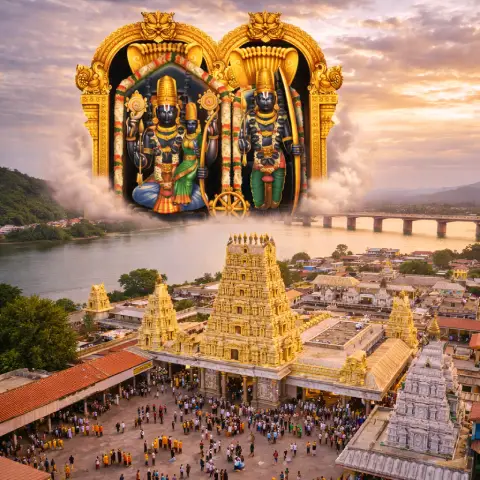
Located on the banks of the Godavari River in east Telangana, the Sri Sita Ramachandraswamy Temple is dedicated to Rama, a major avatar of Vishnu. Often called simply “Bhadrachalam” or “Bhadragiri/Bhadradri,” it is regarded as a Divya Kshetram of the Godavari and revered as Dakshina Ayodhya. The central icon depicts four‑armed Vaikuntha Rama – the form in which Vishnu is said to have appeared to grant the prayers of the sage Bhadra – with Sita seated on his lap and Lakshmana standing beside him.
Legend
In the Treta Yuga Rama, Sita and Lakshmana dwelt in the Dandaka forest. A stone transformed into a human named Bhadra, who meditated on Rama’s name on the Godavari banks. When Rama failed to keep his promise to return, Vishnu himself appeared as four‑armed Rama to fulfill the vow. This episode gives the temple its mythology and the “Bhadra” prefix found in related locations.
Another tradition credits a tribal woman, Pokala Dhammakka, with discovering the icon in an anthill; she dissolved the mound with river water, performed puja, and helped build the first shrine. She is considered a descendant of the sage Sabari.
History
The 17th‑century Bhakti saint Kancherla Gopanna (aka Bhadrachala Ramadasu), tehsildar under Sultan Abul Hasan Qutb Shah, is closely linked to the temple’s construction. Accused of diverting state funds to build or repair the shrine, he spent twelve years imprisoned, during which he composed devotional songs still sung today. Legend holds that Rama and Lakshmana appeared to the Sultan in a dream and repaid the treasury with gold coins, securing Gopanna’s release. Historical accounts vary: some say he was freed after a fair inquiry, others that he received a pension and land endowment.
Following him, priests Tumu Lakshmi Narasimha Dasu and Varada Ramadasu took over ritual duties. The temple’s worship follows the Pancharatra Agama pattern modelled on Srirangam.
Administratively, the temple remained under Hyderabad State and later came under the Andhra Pradesh Endowment Department in 1958. It survived a major flood in 1986 and became part of Telangana after the 2016 reorganization.
The Temple Complex
The layout is symbolically tied to Bhadra’s body: a shrine at the “head,” the sanctum at the “heart,” and the Rajagopuram at the “feet.” There are four entrances and 50 steps to the main gate; the northern Vaikuntha Dwaram hosts the Rajagopuram. A gold‑plated panchaloha dwajasthambham (and a Sudarshana Chakra atop the vimana) further distinguish the temple.
Rama’s self‑manifested icon sits in padmasana with Sita on his lap; the four upper arms bear conch and discus, the lower arms bow and arrow; the deity faces west. Festival idols are kept to the right of the sanctum. The complex also contains shrines to Ranganatha (on Ranganayakula Gutta), Lakshmi Thayar, two Anjaneyas (Abhayanjaneya and Dasanjaneya), Govindaraja Swamy, Yogananda Narasimha and others. A Rushyamookha exhibition hall displays Rama‑madas coins and temple jewelry crafted by Gopanna. A Nithyakalyana mandapam, Mithila Stadium and Govindaswamy matham support rituals; the Ambasatram houses icons used by Narasimha Dasu and serves food to devotees.
Ritual Practice
Gopanna invited five families from Srirangam versed in Pancharatra tradition, establishing the same worship system here. Daily services include suprabhata (~4 AM), balabhoga, archana, rajabhogam, darbar seva and pavalimpu. Abhishekam is performed to Rama’s feet on the rock in Bhadra’s shrine and to other deities on specific days. Weekly, fortnightly and monthly rites join the annual festivals. Ranganatha’s kalyanam and Thiruveedhi utsavam occur atop Ranganayakula Gutta each year.
Festivals
- Vaikuntha Ekadashi – modelled on Srirangam's tradition; devotees view the deities on Garudavahanam, pass through the Vaikuntha Dwaram, and celebrate with Teppotsavam, Goda Kalyanam and Rathotsavam.
- Vasanthotsavam – a spring festival coinciding with Holi; women prepare goṭi talambralu (pearl‑rice mixture), Rama is bedecked with turmeric blocks, temple is sanctified and devotees sprinkled with Vasantha theertham.
- Brahmotsavam – twelve‑day grand festival in March–April culminating in Sri Sitarama Thirukalyana Mahotsavam (divine marriage) using a unique three‑disc mangala sutra (one disc for Dasharatha, Janaka and Gopanna). Rituals include Garudadhivasam, Dwajarohanam, Edurukolu, Mahapattabishekam and Teppotsavam.
- Vijayadashami – ten‑day Dussehra with Ramayana recitation, weapon worship, procession on elephant and horse vehicles, and a Ramlila performance.
- Other major celebrations: Hanuman Jayanti, Sabari Smruti Yatra, Dhammakka Seva Yatra, and anniversaries of Gopanna and Narasimha Dasu.
Religious Significance
Known as “Dakshina Ayodhya,” Bhadrachalam’s unique Vaikuntha Rama icon is said to confer salvation. It is one of the Godavari‑bank Divya Kshetrams, hosting Pushkaram and Maha Pushkaram rituals. Local legend holds that the icons vanished when a Muslim saint was denied entry, reappearing after Ramadasu intervened.
Gopanna’s bhajan tradition spread Vaishnavism across Telugu lands and inspired composers such as Tyagaraja and Narasimha Dasu; the practice of offering pearls and silks to Rama’s marriage is replicated in many Rama temples. The region also contains several Ramayana‑linked shrines.
శ్రీ సీతారామచంద్రస్వామి దేవాలయం, భద్రాచలం – అవలోకనం
పరిచయం
భద్రాచలం (భద్రగిరి, భద్రద్రి) జిల్లా తెనాలి గోదావరి తీరంలో ఉన్న రాముడికి అంకితమైన ప్రముఖ వైష్ణవ దేవాలయం. ఇది “దక్షిణ అయోధ్య” గుర్తింపు పొందిన గోదావరి నదిలోని ఒక దివ్యక్షేత్రమ్. కేంద్ర విగ్రహం వైకుంఠరాముడి నాలుగు చేతుల రూపంలో ఉంటుంది; సీత, లక్ష్మణులూ అతని పక్కనే. కొన్ని మూలాల ప్రకారం 17వ శతాబ్దంలో కథాస్వరూప భక్తరామదాసు (కంచెర్ల దయాకరణ) నేనే దేవాలయాన్ని నిర్మించారు లేదా పునర్నిర్మించారు.
పురాణ‑కథలు
త్రేతాయుగంలో విహారి చెందిన రాముడు విభీషణుడు పట్ల చేసిన వాగ్ధానానికి సంబంధించిన భద్రా అనే మానవుడి కథ ఈ స్థలానికి మూలం. భద్రుడు గోదావరి ఒడ్డున రామ త్రాక మంత్రాన్ని జపించెడు, అనంతరం రాముడు తాను నాలుగు చేతులుగల వైకుంఠ రూపంలో ప్రత్యక్షరై ఉనాడనే కథనమిదే. మరో ప్రజ్ఞా కథలో గ్రామీణ పల్లెటూరి తల్లి పోకల ధమ్మక్క అంతలోహీలోంచి విగ్రహం కనుక్కుని చరాచరానికి పూజ చేసింది, ఆ ప్రజల సహకారంతో దేవాలయం నిర్మించినది.
చరిత్ర
భద్రాచల రామదాసు 17వ శతాబ్దంలో గోల్కొండ సుల్తాన్ రెవెన్యూ అఫీసర్గా ఉన్నప్పుడు దేవాలయానికి బకాయిని సుల్తాన్ కోషాధిస్తానికి నివ్వాలని సమర్పించి అరెస్ట్ అయ్యాడు. 12 ఏళ్ళ జైల్లో ఉన్నపుడు గేయాలు రాసి భక్తిని ప్రసారం చేశాడు; చివరికి రాముడు రామాదమ్మలు రూపంలో సుల్తాన్కి బకాయిని చెల్లించి విడుదలయ్యాడు. తరువాత తుము లక్ష్మి నరసింహదాసు, వరద రామదాసు పలకరిస్తూ పూజా నిర్వహించారు. దేవాలయం పంచరాత్రాగామాచరణపరమైనది; శ్రీరంగంలోని రాజార్థస్వామి సంస్కారాన్ని దానికి ఆదర్శంగా తీసుకున్నది.
భద్రాచలం దేవాలయం రెండిధరకాల పురాణ‑చరిత్రా డాక్యుమెంట్స్, ఉపాధానాలు కలిగినవి; 17వ శతాబ్దానికే నిర్మాణం పూర్తయిందని వేడుక చేసినారు. మొట్టమైన కథలు, జైలు‑సందర్భం, గోల్కొండ శాసన ప్రమాణాలు 1686‑87 వరకూ ఉన్నాయి; మోగలుల ఆక్రమణ సమయంలోనే సుల్తాన్ అజ్ఞాతుడయ్యాడు.
సంస్కృతి & అభివృద్ధి
పాల్వాంచి సమస్తానం‑పర్యవేక్షణతో ఉద్ధరించిన భూములకు 1959లో ఖమ్మం జిల్లాలో కలిపారు; 1958‑లో ఆంధ్రప్రదేశ్ ఎండవ్మెంట్స్ శాఖ దేనిని నిర్వాహణకు తీసుకున్నది. 1986‑లో గోదావరి వరదలలో అయిన నష్టం, 2016‑లో తెలంగాణ‑ఆంధ్ర మధ్య వాదనలు తరువాతా భద్రాచలం తెలంగాణలోనే కొనసాగింది.
దేవాలయ నిర్మాణం
దేవాలయం మూడు భాగాలుగా పరిగణిస్తారు – భద్రా తలభాగం, రామ హృదయ స్థలం (సంక్తం), పోదరాల చోటున్న రాజగోపురం (భద్రా అడుగులు). ఎడమవైపు ప్రత్యేక బిక్షాధారి‑రోడ్డు; ఉత్తరదిగ్గు వైకుంఠ ద్వారం రాజగోపురం. పఞ్చలోహ ద్వజస్థంభం, గోపురం పై విఘ్నానం, శివలింగ లక్ష్మణదేవుల అధ్యాయము వంటి ప్రత్యేకతలు. 50 మెట్లు ఎక్కితే ప్రధాన ద్వారం.
స్వయంభు బయల్కొలిచిన విగ్రహంలో రాముడు పద్మాసనంలో, సీతా గుండెలో ఉండగా, నాలుగు చేతులు శంఖ, చక్ర, బాణ, వజ్రం పట్టడం విశేషం. ప్రారాధనలు రోజువారీగా, ఉత్సవ విగ్రహాలు దీపాలుగా, వివిధ మండపాలు హాళ్లుగా నిర్వహిస్తారు. రంగనారాయణ, లక్ష్మీ థాయర్, అంజనేయ, గోవిందరాజ మును తదితర ఉపదేవతలు కూడా ఉన్నాయి.
పూజా విధానం
పనిచాలేను పాంచరాత్రాగామ, శ్రీరంగం వ్యూహాలను అనుసరించి, ఐస్వర్య చేసిన ఐదు కుటుంబ పెద్దల్ని శ్రీరంగంనుంచి తీసుకొచ్చారు. నిరతి‑కైంకర్యం, వారోత్సవం, దశవిధోత్సవం, పునర్వసు ఉత్సవం లాంటివి ఇక్కడ ప్రవర్తించబడ్డాయి. ఉదయం 4 గంటలకు సుప్రభాత సేవ, బలభోగ విభాగం 5:30‑7:00, రాజభోగం 11:30‑12:00, రాత్రి పావళింపు సేవ 9:00 ముగింపు – ఇవి రోజువారీ షెడ్యూల్. శుక్రవారం, మంగళవారం, శనివారం ప్రత్యేకాభిషేకాలు చెయ్యబడుతాయి.
అత్యున్నత ఉత్సవాలు
- వైదిక్త ఏకాదశి – శ్రీరంగం రూపేత భాద్రాద్రి పరంపర ప్రకారమే; 21‑రోజుల వేడుకలో గోరుడవాహనం, కాన్వా పండగలు, గోదా కళ్యాణం, రథోత్సవం (మకర సంక్రాంతి సమయం) ముఖ్యాంశాలు.
- వసంతోత్సవం – హోలీ‑కేరక్రమాలొ కలిసిన పర్వం; గోతి తలంబ్రాలు (ముత్యాల రవ్వ‑తుర్మేరిక మిశ్రమం) తయారీ, వసంత తీర్థం చల్లి, దోలోత్సవం ద్వారా ముగింపు.
- బ్రహ్మోత్సవం – 12‑రోజుల బ్రహ్మోత్సవం (ఆది సెలవు‑సిరామ రామ నవమి) – శ్రీ సీతారామ తిరుకల్యాణ మహోత్సవం, గరుడాధివాసం, పంచంగ పఠనం, శోభాయాత్రలు, మంగలసూత్రం మూడు చక్రాలుతో నిర్వహణ.
- విజయదశమి – 10‑రోజుల దసరా, రామాయణ పఠనం, ఆయుధ పూజ, రామళ్ల వధువు‑వర కళ్యాణం, రామలీల, శామి వృక్ష పూజ.
- ఇతర ఉత్సవాలు: హనుమాన్ జయంతి, శబరి స్మృతి యాత్ర, ధమ్మక్క సేవా యాత్ర, గోపన్న జయంతి, నరసింహదాసు జయంతి.
ధార్మిక ప్రాముఖ్యత
భద్రాచలం “దక్షిణ అయోధ్య” అనుకూలంగా పిలవబడుతుంది; వైకుంఠ రామ రూపం దేశంలో ఏ స్థలానికీ లేని ప్రత్యేకత. బ్రహ్మ పురాణం, పరమ పురుష సంహితలో శ్రేష్ఠతను పేర్కొంటాయి; గోదావరి పుష్కరంబు, మహా పుష్కరం ఇక్కడ పూజలు కలిగి జరుపుతారు. భద్రాచల విభీషణ, శబరి, పారంపర్య కథలు భక్తులకు ఆకర్షణ. గోపన్న రామభజన సాంప్రదాయం ద్వారా తెలుగు రాష్ట్రాలలో అమిత విజయాన్ని సృష్టించాడు; అతని పాటలు త్యాగరాజ మరియు నరసింహదాసు వంటి సంగీత తారలకు ప్రేరణ దయ్యాయి.