
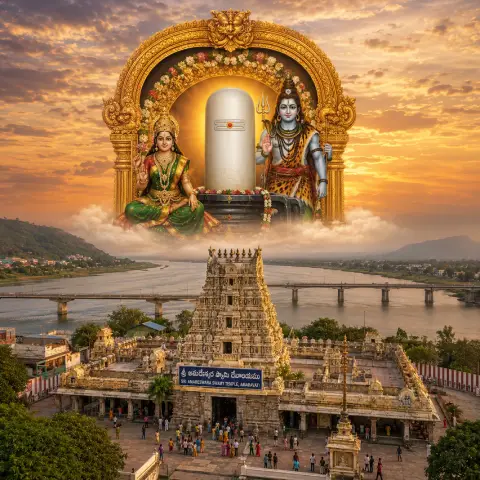
Sri Amareswara Swamy Temple, Amaravati – Overview
Introduction
Located on the southern bank of the Krishna River at Amaravati in Andhra Pradesh, Sri Amareswara Swamy Temple is a revered Shaiva pilgrimage centre dedicated to Lord Shiva. The presiding deity is worshipped as Amareswara or Amaralingeswara, while Goddess Bala Chamundika is traditionally regarded as his consort. Amaravati is traditionally known as Amararama and is counted among the five sacred Pancharama Kshetras associated with Lord Shiva.
The temple is especially noted for its exceptionally tall Shiva Lingam, its setting beside the sacred Krishna River, its long association with the religious history of Amaravati, and its inscriptions and architectural heritage. Amaravati itself is an ancient cultural centre whose history extends back to the early historic period and which later became renowned for both its Hindu and Buddhist heritage.
Legend
According to the traditional Sthala Purana, the origin of the Pancharama Kshetras is connected with the demon king Tarakasura. Tarakasura was said to possess a powerful Shiva Lingam that gave him extraordinary protection. Lord Kumaraswamy, also known as Subrahmanya, eventually fought Tarakasura and defeated him.
The Shiva Lingam associated with Tarakasura is traditionally believed to have broken into five pieces after his defeat. These five sacred pieces are said to have manifested at Amaravati, Draksharamam, Samalkota, Palakollu and Bhimavaram, giving rise to the five Pancharama Kshetras. The shrine at Amaravati is traditionally identified as Amararama.
Local religious tradition further holds that the Shiva Lingam at Amaravati was installed by Lord Indra. This association with the Devas or immortals is traditionally connected with the name Amararama and the name Amareswara given to the presiding deity.
Another popular tradition concerns the unusual height of the Amareswara Lingam. According to local belief, the Lingam continued to grow upwards and a nail was driven into its upper portion to stop its growth. The tradition says that blood emerged from the point where the nail struck the Lingam. This account belongs to the temple's devotional and Sthala Purana tradition and is presented as a religious belief rather than as a historically verified event.
History
Amaravati is one of the ancient cultural centres of Andhra Pradesh. Government historical material places the history of the settlement in the early historic period, with Amaravati becoming an important centre during the Satavahana era. The wider region was also a major centre of Buddhist activity and is renowned for the ancient Amaravati Stupa and its associated archaeological remains.
The history of the Amareswara temple itself developed over several periods. Inscriptions associated with the temple provide evidence of religious activity, donations and patronage over different centuries. The epigraphical record is an important source for understanding the temple's medieval history.
During the medieval period, the Amaravati region was associated with the Kota chiefs and subsequently came under the influence of several major dynasties and political powers of the Andhra region. The broader historical record of the region includes the Kakatiyas and the Vijayanagara Empire.
The temple has a notable association with the Vijayanagara emperor Sri Krishnadevaraya. Historical records state that after the capture of Kondavidu in 1515 CE, Krishnadevaraya proceeded to Dharanikota and presented gifts to Amareswara and to learned Brahmins. This provides documented evidence of royal patronage to the shrine during the Vijayanagara period.
In the later history of Amaravati, Raja Vasireddy Venkatadri Nayudu played an important role in the development of the region. He shifted his capital from Chintapalli to Amaravati and became associated with the construction and patronage of temples in the area. His period forms an important chapter in the later cultural history of Amaravati.
The Temple Complex
Sri Amareswara Swamy Temple is a substantial temple complex displaying features of South Indian temple architecture. Its present form reflects development and additions made over different historical periods rather than a single phase of construction.
The principal attraction is the tall Shiva Lingam of Lord Amareswara. Andhra Pradesh Tourism describes the Lingam as approximately 15 feet high, white in appearance and carved from the distinctive Palnadu stone. Because of its considerable height, priests traditionally perform worship to the Lingam from an elevated level within the temple.
The temple complex includes the principal sanctum, mandapas, prakara areas, gopurams and subsidiary sacred spaces. Stone architectural elements and inscriptions contribute to the historical importance of the complex.
Goddess Bala Chamundika is worshipped as the consort of Amareswara. The combination of the principal Shiva shrine, the associated goddess worship and the sacred Krishna River gives the temple a distinctive religious setting.
Presiding Deities
The principal deity of the temple is Lord Amareswara, a form of Lord Shiva. He is also widely known as Amaralingeswara Swamy. The name Amareswara is traditionally associated with the sacred character of Amaravati and the Pancharama tradition.
Goddess Bala Chamundika is worshipped as the divine consort of Amareswara. Devotees therefore regard the temple as an important centre for the worship of both Lord Shiva and the associated Shakti tradition.
Ritual Practice
Daily worship at Sri Amareswara Swamy Temple follows established temple traditions of Shaiva worship. Regular services include ritual purification, decoration of the deity, archana, naivedyam and other forms of worship performed according to the temple's daily schedule.
Abhishekam is an important form of devotion offered to Lord Amareswara. Devotees also participate in archana and other permitted sevas. Special worship is performed on important Shaiva occasions and during major temple festivals.
The worship of Goddess Bala Chamundika forms part of the religious activities of the temple. The annual ritual calendar combines regular daily worship with special observances associated with important Hindu and Shaiva occasions.
Festivals
- Maha Shivaratri – the principal annual Shaiva celebration associated with the temple. Large numbers of devotees gather at Amaravati for the darshan of Amareswara Swamy and for special worship and religious observances.
- Karthika Masam – the month of Kartika is especially important in Shaiva tradition. Devotees undertake special worship, abhishekam and deepa-related observances during this sacred month.
- Masa Shivaratri – monthly observances dedicated to Lord Shiva are traditionally marked with worship and darshan.
- Pradosham – the Pradosha period is traditionally considered auspicious for Shiva worship and is observed with appropriate temple rituals.
- Annual Temple Celebrations – the temple's annual religious calendar includes special rituals, sevas and ceremonial observances associated with the presiding deities.
Religious Significance
Sri Amareswara Swamy Temple has exceptional religious importance as the Amararama of the five Pancharama Kshetras. Devotees undertaking Pancharama pilgrimage traditionally visit this shrine along with the other four sacred Shiva temples associated with the Pancharama tradition.
The temple's location on the banks of the Krishna River adds another dimension to its sacred character. Amaravati has attracted pilgrims through the centuries, and the association of the river, the Shiva shrine and the ancient settlement has made the area an important religious destination in Andhra Pradesh.
The temple is also significant because its religious identity is part of the much wider sacred and cultural landscape of Amaravati. The region contains important Buddhist archaeological remains, including the famous Amaravati Stupa, while the Amareswara temple represents a living Shaiva tradition. Together, these traditions reflect the extraordinary religious and cultural history of the region.
Pancharama Kshetras
The five Pancharama Kshetras are traditionally associated with the five sacred portions of the Shiva Lingam described in the legend of Tarakasura. They are among the most important Shaiva pilgrimage centres of Andhra Pradesh.
- Amararama – Sri Amareswara Swamy Temple, Amaravati
- Draksharama – Sri Bhimeswara Swamy Temple, Draksharam
- Kumararama – Sri Kumararama Bhimeswara Swamy Temple, Samalkota
- Ksheerarama – Sri Ksheera Ramalingeswara Swamy Temple, Palakollu
- Somarama – Sri Someswara Swamy Temple, Bhimavaram
Historical and Cultural Importance
Amaravati is distinguished by the remarkable depth of its historical heritage. The settlement was an important centre in the ancient Andhra region and later became associated with several political and religious traditions. Its history includes the Satavahana period, medieval regional dynasties and the Vijayanagara era.
The Buddhist heritage of Amaravati is internationally significant. The ancient Amaravati Stupa and the sculptures discovered in the region represent an important chapter in the history of Buddhist art in India. At the same time, the continuing worship of Amareswara demonstrates the enduring Shaiva tradition of the region.
The combination of an ancient riverine settlement, a living Pancharama Shiva temple, historical inscriptions and major Buddhist archaeological remains makes Amaravati an important destination for understanding the religious and cultural history of Andhra Pradesh.
Why Visit Sri Amareswara Swamy Temple?
- To receive darshan of Lord Amareswara, the presiding form of Lord Shiva.
- To visit Amararama, one of the five Pancharama Kshetras.
- To experience the distinctive sight of the approximately 15-foot-high Shiva Lingam.
- To worship Goddess Bala Chamundika.
- To experience the sacred setting of the Krishna River.
- To explore the temple's historical architecture and inscriptions.
- To visit the wider historical landscape of ancient Amaravati.
- To experience the coexistence of Amaravati's Hindu and Buddhist cultural heritage.
- To participate in the major Shaiva observances associated with the temple, especially Maha Shivaratri.
శ్రీ అమరేశ్వర స్వామి దేవాలయం, అమరావతి – అవలోకనం
పరిచయం
ఆంధ్రప్రదేశ్లోని అమరావతిలో కృష్ణానది దక్షిణ తీరంలో కొలువై ఉన్న శ్రీ అమరేశ్వర స్వామి దేవాలయం ప్రముఖ శైవ పుణ్యక్షేత్రాలలో ఒకటి. ఇక్కడ పరమేశ్వరుడు అమరేశ్వరుడు లేదా అమరలింగేశ్వర స్వామిగా ఆరాధించబడుతున్నాడు. అమ్మవారిని సంప్రదాయంగా బాల చాముండికా దేవిగా కొలుస్తారు. అమరావతిని సంప్రదాయంగా అమరారామంగా పిలుస్తారు. ఇది శ్రీమహాశివునికి సంబంధించిన ఐదు పవిత్ర పంచారామ క్షేత్రాలలో ఒకటిగా భక్తులచే పూజించబడుతుంది.
అత్యంత ఎత్తైన శివలింగం, కృష్ణానది తీరంలోని పవిత్ర స్థానం, అమరావతి ప్రాచీన ధార్మిక చరిత్రతో ఉన్న సంబంధం, ఆలయంలోని శాసనాలు మరియు నిర్మాణ వారసత్వం ఈ క్షేత్రానికి ప్రత్యేకమైన ప్రాముఖ్యతను అందించాయి. అమరావతి స్వయంగా ప్రాచీన చారిత్రక మరియు సాంస్కృతిక కేంద్రంగా ప్రసిద్ధి చెందింది. ఈ ప్రాంతం హిందూ మరియు బౌద్ధ వారసత్వాలను రెండింటినీ కలిగి ఉంది.
స్థలపురాణం
పంచారామ క్షేత్రాల ఆవిర్భావాన్ని తారకాసురుని పురాణగాథతో అనుసంధానిస్తారు. స్థలపురాణం ప్రకారం తారకాసురుడు అత్యంత శక్తివంతమైన రాక్షసుడు. అతని వద్ద ఉన్న శక్తివంతమైన శివలింగం అతనికి విశేషమైన రక్షణను అందించేదని పురాణ సంప్రదాయం చెబుతుంది. చివరకు కుమారస్వామి లేదా సుబ్రహ్మణ్య స్వామి తారకాసురునితో యుద్ధం చేసి అతన్ని సంహరించాడు.
తారకాసురునికి సంబంధించిన శివలింగం అతని సంహారం తరువాత ఐదు భాగాలుగా విరిగిపోయిందని సంప్రదాయ విశ్వాసం. ఆ ఐదు పవిత్ర భాగాలు అమరావతి, ద్రాక్షారామం, సామర్లకోట, పాలకొల్లు మరియు భీమవరం ప్రాంతాల్లో ప్రతిష్ఠించబడి పంచారామ క్షేత్రాలుగా ప్రసిద్ధి చెందాయని స్థలపురాణం చెబుతుంది. అమరావతిలోని క్షేత్రాన్ని అమరారామంగా పిలుస్తారు.
అమరావతిలోని శివలింగాన్ని దేవేంద్రుడు ప్రతిష్ఠించాడని స్థానిక ధార్మిక సంప్రదాయం చెబుతుంది. దేవతలు లేదా అమరులతో ఉన్న ఈ సంబంధం కారణంగా అమరారామం మరియు అమరేశ్వరుడు అనే పేర్లు ఏర్పడ్డాయని భక్తుల విశ్వాసం.
అమరేశ్వర లింగానికి సంబంధించి మరో ప్రసిద్ధ స్థానిక విశ్వాసం ఉంది. శివలింగం పైకి పెరుగుతూ ఉండేదని, దాని పెరుగుదలను ఆపేందుకు దాని పైభాగంలో ఒక మేకును కొట్టారని చెబుతారు. ఆ మేకు తగిలిన ప్రదేశం నుంచి రక్తం వచ్చిందని స్థలపురాణ సంప్రదాయం చెబుతుంది. ఇది ఆలయానికి సంబంధించిన భక్తి విశ్వాసంగా మాత్రమే పరిగణించాలి; చారిత్రకంగా నిర్ధారించబడిన సంఘటనగా కాదు.
చరిత్ర
అమరావతి ఆంధ్రప్రదేశ్లోని ప్రాచీన సాంస్కృతిక కేంద్రాలలో ఒకటి. ప్రభుత్వ చారిత్రక సమాచార ప్రకారం ఈ ప్రాంత చరిత్ర ప్రాచీన కాలం వరకు వెళ్తుంది. శాతవాహనుల కాలంలో అమరావతి ముఖ్యమైన కేంద్రంగా అభివృద్ధి చెందింది. అదే సమయంలో ఈ ప్రాంతం ప్రముఖ బౌద్ధ కేంద్రంగా కూడా ప్రసిద్ధి చెందింది. ప్రాచీన అమరావతి స్థూపం మరియు అక్కడి పురావస్తు అవశేషాలు ఈ చరిత్రకు ముఖ్యమైన ఆధారాలు.
అమరేశ్వర ఆలయ చరిత్ర కూడా అనేక చారిత్రక దశల్లో అభివృద్ధి చెందింది. ఆలయానికి సంబంధించిన శాసనాలు వివిధ కాలాల్లో జరిగిన దానాలు, ధార్మిక కార్యకలాపాలు మరియు పాలకుల ఆదరణ గురించి ముఖ్యమైన సమాచారాన్ని అందిస్తాయి.
మధ్యయుగ కాలంలో అమరావతి ప్రాంతం కోట రాజులతో అనుసంధానమై ఉండేది. తరువాత ఈ ప్రాంతం కాకతీయులు, విజయనగర సామ్రాజ్యం వంటి వివిధ రాజకీయ శక్తుల ప్రభావాన్ని కూడా చూసింది.
విజయనగర చక్రవర్తి శ్రీకృష్ణదేవరాయలతో అమరేశ్వర ఆలయానికి ప్రత్యేకమైన చారిత్రక సంబంధం ఉంది. క్రీ.శ. 1515లో కొండవీడు విజయానంతరం శ్రీకృష్ణదేవరాయలు ధరణికోటకు చేరుకుని అమరేశ్వరునికి మరియు పండిత బ్రాహ్మణులకు కానుకలు సమర్పించినట్లు చారిత్రక ఆధారాలు పేర్కొంటున్నాయి. ఇది విజయనగర కాలంలో ఆలయానికి లభించిన రాజాదరణకు ముఖ్యమైన ఆధారం.
అమరావతి తరువాతి చరిత్రలో రాజా వాసిరెడ్డి వెంకటాద్రి నాయుడికి ముఖ్యమైన స్థానం ఉంది. ఆయన చింతపల్లి నుంచి తన రాజధానిని అమరావతికి మార్చుకున్నారు. ఈ ప్రాంతంలోని ఆలయాల నిర్మాణం మరియు అభివృద్ధికి ఆయన ఆదరణ అందించారు. అమరావతి చరిత్రలో ఆయన కాలం ఒక ముఖ్యమైన దశగా నిలిచింది.
ఆలయ సముదాయం
శ్రీ అమరేశ్వర స్వామి దేవాలయం దక్షిణ భారతీయ ఆలయ నిర్మాణ సంప్రదాయానికి సంబంధించిన లక్షణాలను కలిగి ఉన్న విశాలమైన ఆలయ సముదాయం. ప్రస్తుతం కనిపించే ఆలయ రూపం ఒకే కాలంలో నిర్మించబడినది కాకుండా వివిధ చారిత్రక దశల్లో జరిగిన నిర్మాణాలు మరియు అభివృద్ధుల ఫలితంగా ఏర్పడింది.
ఆలయంలో ప్రధాన ఆకర్షణ శ్రీ అమరేశ్వర స్వామి శివలింగం. ఆంధ్రప్రదేశ్ పర్యాటక శాఖ ప్రకారం ఈ లింగం సుమారు 15 అడుగుల ఎత్తు కలిగి, తెల్లని వర్ణంలో ఉండి, ప్రత్యేకమైన పల్నాడు రాతితో రూపొందించబడింది. లింగం అత్యంత ఎత్తుగా ఉండటం వల్ల అర్చకులు ఆలయంలోని ఎత్తైన స్థాయి నుంచి స్వామివారికి పూజలు నిర్వహిస్తారు.
ఆలయ సముదాయంలో ప్రధాన గర్భగృహం, మండపాలు, ప్రాకారాలు, గోపురాలు మరియు ఇతర పవిత్ర నిర్మాణాలు ఉన్నాయి. రాతి నిర్మాణ భాగాలు మరియు శాసనాలు ఆలయ చారిత్రక ప్రాముఖ్యతను మరింత పెంచుతున్నాయి.
అమరేశ్వర స్వామివారి సహధర్మచారిణిగా బాల చాముండికా దేవిని ఆరాధిస్తారు. ప్రధాన శివాలయం, అమ్మవారి ఆరాధన మరియు కృష్ణానది తీరం కలిసి ఈ క్షేత్రానికి ప్రత్యేకమైన ఆధ్యాత్మిక వాతావరణాన్ని అందిస్తున్నాయి.
ప్రధాన దేవతలు
ఆలయంలో ప్రధాన దేవత శ్రీ అమరేశ్వర స్వామి. ఆయనను అమరలింగేశ్వర స్వామి అని కూడా పిలుస్తారు. అమరావతి క్షేత్రం యొక్క పవిత్రత మరియు పంచారామ సంప్రదాయంతో అమరేశ్వరుడు అనే పేరు సంప్రదాయంగా అనుసంధానించబడింది.
బాల చాముండికా దేవిని అమరేశ్వర స్వామివారి సహధర్మచారిణిగా ఆరాధిస్తారు. అందువల్ల ఈ ఆలయం శివారాధనతో పాటు శక్తి ఆరాధనకు కూడా ప్రాధాన్యత కలిగిన క్షేత్రంగా పరిగణించబడుతుంది.
పూజా విధానాలు
శ్రీ అమరేశ్వర స్వామి దేవాలయంలో ఆలయ సంప్రదాయాలకు అనుగుణంగా నిత్య శైవ పూజలు నిర్వహిస్తారు. నిర్ణీత సమయాల్లో శుద్ధి కార్యక్రమాలు, స్వామివారి అలంకారం, అర్చన, నైవేద్యం మరియు ఇతర నిత్య పూజా కార్యక్రమాలు నిర్వహించబడతాయి.
అమరేశ్వర స్వామివారికి అభిషేకం చేయడం ముఖ్యమైన ఆరాధనా విధానాలలో ఒకటి. భక్తులు ఆలయ నియమాల ప్రకారం అర్చన, అభిషేకం మరియు ఇతర అనుమతించబడిన సేవల్లో పాల్గొనవచ్చు. ముఖ్యమైన శైవ పర్వదినాలు మరియు ఆలయ ఉత్సవాల సందర్భంగా ప్రత్యేక పూజలు నిర్వహిస్తారు.
బాల చాముండికా దేవి ఆరాధన కూడా ఆలయ ధార్మిక కార్యక్రమాలలో భాగంగా ఉంటుంది. నిత్య పూజలతో పాటు ముఖ్యమైన హిందూ మరియు శైవ పర్వదినాలకు అనుగుణంగా ప్రత్యేక ఆచారాలు నిర్వహించబడతాయి.
ఉత్సవాలు
- మహాశివరాత్రి – ఆలయంతో సంబంధం ఉన్న ప్రధాన వార్షిక శైవ పర్వదినం. ఈ సందర్భంగా పెద్ద సంఖ్యలో భక్తులు అమరావతికి చేరుకుని అమరేశ్వర స్వామివారిని దర్శించుకుని ప్రత్యేక పూజలు మరియు ధార్మిక కార్యక్రమాల్లో పాల్గొంటారు.
- కార్తీక మాసం – శైవ సంప్రదాయంలో కార్తీక మాసానికి ప్రత్యేక ప్రాధాన్యత ఉంది. ఈ పవిత్ర మాసంలో భక్తులు ప్రత్యేక పూజలు, అభిషేకాలు మరియు దీపారాధన వంటి ధార్మిక కార్యక్రమాలు నిర్వహిస్తారు.
- మాస శివరాత్రి – ప్రతి నెల శివారాధనకు పవిత్రమైన శివరాత్రి సందర్భంగా భక్తులు ప్రత్యేక దర్శనం మరియు పూజా కార్యక్రమాల్లో పాల్గొంటారు.
- ప్రదోషం – ప్రదోష కాలాన్ని శివారాధనకు పవిత్రమైన సమయంగా భావిస్తారు. ఈ సందర్భంగా ఆలయ సంప్రదాయాలకు అనుగుణంగా పూజలు నిర్వహించబడతాయి.
- వార్షిక ఆలయ ఉత్సవాలు – ఆలయ వార్షిక ధార్మిక క్యాలెండర్లో స్వామివారు మరియు అమ్మవారికి సంబంధించిన ప్రత్యేక పూజలు, సేవలు మరియు ఇతర ఉత్సవ కార్యక్రమాలు నిర్వహించబడతాయి.
ఆధ్యాత్మిక ప్రాముఖ్యత
ఐదు పంచారామ క్షేత్రాలలో అమరారామంగా ప్రసిద్ధి చెందడం వల్ల శ్రీ అమరేశ్వర స్వామి దేవాలయానికి విశిష్టమైన ఆధ్యాత్మిక ప్రాధాన్యత ఉంది. పంచారామ క్షేత్ర యాత్రను నిర్వహించే భక్తులు మిగిలిన నాలుగు క్షేత్రాలతో పాటు అమరేశ్వర స్వామిని కూడా దర్శించుకుంటారు.
కృష్ణానది తీరంలో ఆలయం ఉండటం ఈ క్షేత్రం యొక్క పవిత్రతను మరింత పెంచుతుంది. నది, ఆలయం మరియు ప్రాచీన అమరావతి పట్టణం కలిసి శతాబ్దాలుగా భక్తులను ఆకర్షిస్తున్న ప్రత్యేకమైన పవిత్ర ప్రాంతంగా అభివృద్ధి చెందాయి.
అమరేశ్వర ఆలయం అమరావతి యొక్క విస్తృతమైన ధార్మిక మరియు సాంస్కృతిక వారసత్వంలో ఒక ముఖ్యమైన భాగం. సమీపంలోని ప్రసిద్ధ అమరావతి స్థూపం మరియు బౌద్ధ పురావస్తు అవశేషాలు ఈ ప్రాంతం ఒకప్పుడు ప్రముఖ బౌద్ధ కేంద్రంగా ఉన్నదానికి సాక్ష్యాలుగా నిలుస్తాయి. అదే సమయంలో అమరేశ్వర ఆలయం అమరావతిలో కొనసాగుతున్న జీవంతమైన శైవ సంప్రదాయానికి ప్రతీకగా నిలుస్తుంది.
పంచారామ క్షేత్రాలు
తారకాసురుని పురాణగాథలో పేర్కొన్న శివలింగంలోని ఐదు పవిత్ర భాగాలతో పంచారామ క్షేత్రాలను సంప్రదాయంగా అనుసంధానిస్తారు. ఆంధ్రప్రదేశ్లోని ప్రముఖ శైవ తీర్థయాత్రా కేంద్రాలలో ఈ ఐదు క్షేత్రాలకు ప్రత్యేకమైన స్థానం ఉంది.
- అమరారామం – శ్రీ అమరేశ్వర స్వామి దేవాలయం, అమరావతి
- ద్రాక్షారామం – శ్రీ భీమేశ్వర స్వామి దేవాలయం, ద్రాక్షారామం
- కుమారారామం – శ్రీ కుమారారామ భీమేశ్వర స్వామి దేవాలయం, సామర్లకోట
- క్షీరారామం – శ్రీ క్షీర రామలింగేశ్వర స్వామి దేవాలయం, పాలకొల్లు
- సోమారామం – శ్రీ సోమేశ్వర స్వామి దేవాలయం, భీమవరం
చారిత్రక మరియు సాంస్కృతిక ప్రాముఖ్యత
అమరావతి తన విశిష్టమైన చారిత్రక వారసత్వం కారణంగా ప్రత్యేకమైన స్థానాన్ని కలిగి ఉంది. ప్రాచీన ఆంధ్రదేశంలో ఇది ముఖ్యమైన రాజకీయ, ధార్మిక మరియు సాంస్కృతిక కేంద్రంగా అభివృద్ధి చెందింది. శాతవాహనుల కాలం నుంచి మధ్యయుగ ప్రాంతీయ రాజవంశాలు మరియు విజయనగర సామ్రాజ్య కాలం వరకు ఈ ప్రాంతం అనేక చారిత్రక దశలకు సాక్ష్యంగా నిలిచింది.
అమరావతి బౌద్ధ వారసత్వానికి కూడా అంతర్జాతీయ స్థాయిలో ప్రాధాన్యత ఉంది. ప్రాచీన అమరావతి స్థూపం మరియు ఈ ప్రాంతంలో లభించిన బౌద్ధ శిల్పాలు భారతీయ బౌద్ధ కళా చరిత్రలో ముఖ్యమైన అధ్యాయాన్ని ప్రతిబింబిస్తాయి. అదే సమయంలో అమరేశ్వర స్వామి ఆలయంలో కొనసాగుతున్న శైవ ఆరాధన ఈ ప్రాంతం యొక్క జీవంతమైన ధార్మిక సంప్రదాయాన్ని చాటిచెబుతుంది.
ప్రాచీన నదీతీర పట్టణం, జీవంతమైన పంచారామ శైవ క్షేత్రం, చారిత్రక శాసనాలు మరియు ప్రముఖ బౌద్ధ పురావస్తు వారసత్వం కలిసి అమరావతిని ఆంధ్రప్రదేశ్ ధార్మిక మరియు సాంస్కృతిక చరిత్రను అర్థం చేసుకోవడానికి ప్రత్యేకమైన ప్రదేశంగా నిలబెడుతున్నాయి.
శ్రీ అమరేశ్వర స్వామి దేవాలయాన్ని ఎందుకు దర్శించాలి?
- శ్రీ అమరేశ్వర స్వామివారి పవిత్ర దర్శనం కోసం.
- పంచారామ క్షేత్రాలలో ఒకటైన అమరారామాన్ని దర్శించడానికి.
- సుమారు 15 అడుగుల ఎత్తైన ప్రత్యేకమైన శివలింగాన్ని దర్శించడానికి.
- బాల చాముండికా దేవిని ఆరాధించడానికి.
- కృష్ణానది పవిత్ర తీరంలోని ఆధ్యాత్మిక వాతావరణాన్ని అనుభవించడానికి.
- ఆలయంలోని చారిత్రక నిర్మాణాలు మరియు శాసనాలను తెలుసుకోవడానికి.
- ప్రాచీన అమరావతి యొక్క విస్తృత చారిత్రక ప్రాంతాన్ని సందర్శించడానికి.
- అమరావతిలోని హిందూ మరియు బౌద్ధ సాంస్కృతిక వారసత్వాల ప్రత్యేక సహజీవనాన్ని అనుభవించడానికి.
- ముఖ్యంగా మహాశివరాత్రి వంటి ప్రధాన శైవ పర్వదినాల సందర్భంగా జరిగే ధార్మిక కార్యక్రమాలను అనుభవించడానికి.