
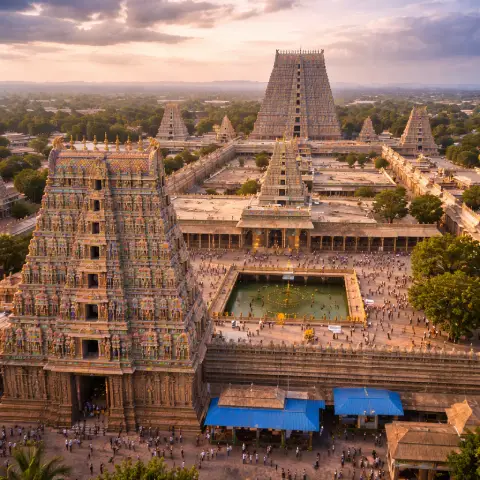
Ranganathaswamy Temple, Srirangam: Overview
Introduction
The Ranganathaswamy Temple is a major Vaishnava shrine in Srirangam, Tiruchirapalli, Tamil Nadu, dedicated to Ranganathar (a reclining form of Vishnu) and his consort Ranganayaki (Lakshmi). Celebrated in the Naalayira Divya Prabhandam by the Alvar saints, it is the foremost of the 108 Divya Desams and the largest active Hindu temple complex in the world. The open-air Rajagopuram (outer tower) stands about 73 m tall, completed in 1987, and the temple follows the Tenkalai Sri‑Vaishnava tradition.
Location
Situated on an island between the Kaveri and Kollidam rivers, roughly 12 km north of Tiruchirappalli, Srirangam is accessible by road, rail and nearby Tiruchirappalli International Airport. The vast complex is arranged in seven concentric enclosures (sapta‑prakaram) with living quarters and markets in the two outer rings and shrines in the inner five.
Legend
Several Tamil puranic legends surround the temple. One holds that the image of Ranganatha surfaced during the churning of the ocean and came to Ayodhya, then Srirangam – refusing to leave the island when carried away by Vibhishana. Another tale explains the south‑facing orientation as a boon to Lanka. A story of the four sages and the curse of Jaya‑Vijaya links the deity to the avatars Varaha, Narasimha, Rama and Krishna.
History
Early structures date from the 1st–3rd centuries CE under Chola patronage. The temple expanded under Cholas, Pandyas, Hoysalas, Vijayanagar and Nayak rulers; inscriptions from the 7th–17th centuries record gifts, grants and administration. Invasions by Malik Kafur (1311) and Muhammad bin Tughluq (1323–27) resulted in plunder and destruction; the main idol was hidden and later restored circa 1371 under Vijayanagar rule. Fortifications and new gopurams followed, and the Rajagopuram finally completed in 1987. Continuous renovation has kept the temple a “living” institution.
Architecture and Features
The complex covers some 63 ha with 81 shrines, 21 towers, 39 pavilions, numerous water tanks and the famed thousand‑pillared hall. Major elements include:
- Shrines – the inner sanctum houses a 6 m stone image of Ranganatha reclining on Adisesha; separate sanctums exist for Ranganayaki, Vishnu’s avatars, saints and the Chakratalvar. The Utsavar (processional) images and a brass substitute idol used in medieval crises are also venerated.
- Mandapams – the Thousand‑Pillar hall (Vijayanagara era), the Nayak‑period Sesharayar and Garuda mandapams, the Kili mandapam, and others are rich with carved pillars depicting animals, gods, apsaras and mythical scenes.
- Gopurams – 21 in all, the east‑facing 13‑storey Rajagopuram dominates; other historic towers date from the 12th–17th centuries (Vellai, Ranga Ranga etc.). All were repainted during the 2015 mahasamprokshanam.
Inscriptions & Monuments
Over 800 inscriptions in Tamil, Sanskrit, Kannada, Telugu, Marathi and Odia document donations, temple management and regional history. Frescoes depict legends and Vaishnava scholars. The complex also contains medieval granaries, water tanks (Surya and Chandra Pushkarinis), hospitals and schools cited in the epigraphy, and richly carved wooden procession chariots.
Significance
Ranganathaswamy Temple is uniquely honoured by all twelve Alvars, with 247 pasurams in the Divya Prabandham. It played a pivotal role in the Sri‑Vaishnava tradition, nurturing philosophers like Nathamuni, Ramanuja, Vedanta Desika and Manavala Mamunigal. Ramanuja’s mummified remains are entombed here, and the site remains a centre for Vishishtadvaita learning. It is one of the eight self‑manifested (svayambhu) kshetras and part of the Pancharanga pilgrimage.
Administration
The Hindu Religious and Charitable Endowments Department of Tamil Nadu manages the temple, with an executive officer, trustees and a chairman. Annadhanam (free food) is served daily. The Dashavatara shrine is administered separately by the Ahobila Mutt.
Festivals & Rituals
The temple’s calendar is filled with utsavams (celebrations). Major events include:
- Vaikunta Ekadashi – the ten‑day Ra‑Pathu festival when the Paramapada Vasal (gate to paradise) opens and lakhs throng the 1 000‑pillar hall.
- Pagal‑Pathu & Ra‑Pathu – a 20‑day Margazhi festival with Araiyar Sevai recitals of the Divya Prabandham.
- Jyestabishekam – annual three‑day armour anointing in Aani (June–July).
- Brahmotsavam – Panguni (March–April) grand procession around the temple and across the Kaveri.
- Serthi Sevai – once‑a‑year divine union of Ranganatha and Ranganayaki on Panguni Uthiram.
- Other festivals include Rathothsavam (car festival), Chitra Poornima, Vasanthothsavam and numerous monthly observances.
శ్రీ రంగనాథ స్వామి దేవాలయం, శ్రీరంగం – అవలోకనం
పరిచయం
తమిళనాడులోని తిరుచిరాపల్లి నగరానికి చెందిన శ్రీరంగం ద్వీపంలోని ఈ దేవాలయం వైష్ణవతత్వానికి ప్రసిద్ధి గాంచినది. రామలా ప్రతిష్ఠ చేసిన రంగనాథ (శయనం రేఖ) మరియు ఆయన సత్యభామ రంగనాయకి (లక్ష్మీ) కి అల్ప సమయాల్లో సేవ జరిగే ఈ సర్వాపర వైష్ణవ దేవాలయం. నాళాయిర దివ్యప్రబంధంలో ఆల్వారు కవులచే గేయపాటలతో పూజించబడిన 108 దివ్య దేశములలో శ్రీఉదయస్థానం. ప్రపంచంలో అతి పెద్ద నిరంతర ఆరాధన ఉన్న దేవాలయ కాంప్లెక్స్. 1987లో 73 మీ ని ఎత్తున దిగువుగా పరిధి గల రాజగోపురం నిర్మితమైనది. దీని పరిపాలన తేంకళై శ్రీ వైష్ణవ సంప్రదాయ పనిచేస్తుంది.
స్థానం
కోవేరి, కొల్లీదాం నదుల మధ్య ఉన్న ద్వీపంలో 12 కి.మీ. మేర సౌత్ప తిరుచిరాపల్లి వద్ద. రోడ్డు, రైలు ద్వారా చేరుకోవచ్చు; తిరుచిరాపల్లి అంతర్జాతీయ విమానాశ్రయం సమీపంలో ఉంది. ఏడు ఛుట్టువలైన జోడపు ప్రకారములో పరివేశం; బయట రెండు ప్రకారాలు నివాస, మార్కెట్ ప్రాంతాలు, కాకముందటి ఐదు శ్రయాలలో ద్విగుణ శివార్లు, పుష్కరాలు మొదలైనవి.
పురాణ కథలు
యత్నులలో ఒక కథ ప్రకారం సముద్ర మంథన సమయంలో పొలిపెట్టు వెలువడిన దివ్య విమానం అంబరస లోకంలోంచి అయ్యోధ్యకు, అనంతరం విభీశణుడి చేత శ్రీరంగంకు వచ్చింది కానీ అక్కడ నుంచి కదలలేదు – అందుకే దయం == పూర్వ దిక్కు చూస్తుంది. మరొక కథలో నాలుగు సంపాడు సంస్కార శిష్యులు జయ విజయులపై శాపం వేసారు; విష్ణు ఆ శాపాన్ని తిరిగి పొందటం కోసం నాలుగుసార్లు అవతరిస్తాడన్నది. భరతయుద్ధంలో అర్జునుడు శ్రీరంగానికి యాత్ర చేసి ప్రార్థించారు.
చరిత్ర
మొదట ఆశోక శకంలో, శతక్ర దశాబ్దాల్లో చోల రాజులచే నిర్మితమైనది అని భావించబడినది. శ్రీరంగం గోపురాలు, మండపాలు చోళ, పాండ్య, హోయ్సళ, విజయనగర, నాయక సహా అనేక వంశాల కాలంలో విస్తరించబడ్డాయి; ఇన్స్క్రిప్షన్లు 7వ–17వ శతాబ్దాల నుంచి సమాచారమిస్తాయి. 1311లో మాళిక్ అఫ్సార్ దాడి, 1323–27లో మొహమ్మద్ బీన్ తుఘ్లక్ పరాక్రమం వల్ల అలవెన్కి నష్టమైందని చెబుతారు; 1371లో విజయనగర శక్తుల్లో స్వరూపం తిరిగి ఆరాధించబడింది. 1987లో రాజగోపురం పూర్తిచేసి సేవ పీఠం ప్రత్యేక ఆకర్షణగా నిలిచింది.
వాస్తు, ముఖ్యాంశాలు
దేవాలయం సుమారు 63 హెక్టర్లు, 81 ఆలయాలు, 21 గోపురాలు, 39 మండపాలు, 50 ఆలయవర్గాలు, పదిహేను జలాశయాలు కలదు. కేంద్రంగా ఉండే రావణభూస రంగనాథ విగ్రహం 6 మీటర్లు. అదిశేషంపై కదలిక, వైపు దిశను యాపటం ఆశ్చర్యకరం. ప్రధాన ఆలయంలో కోసం ఉత్సవ విగ్రహాలు, చక్రతల్వర ఉపాధి, అఖండ బృహత్తర బెల్లంకి శివలింగాలు ఉన్నాయి. వేల్లై గోపురం, రంగరంగా గోపురం వంటి చరిత్రాత్మక గోపురాలు 12–17వ శతాబ్దాల పురాతన భావం చూపుతాయి.
ఇస్క్రిప్షన్లు & స్మారకాలు
800కి పైగా శిలాశాసనాలు – విభిన్న భాషల్లో (తమిళం, సంస్కృతం, తెలుగు, కన్నడ, మరాఠీ, ఒడియా) – ఉంచబడ్డాయి. ఇవి విరాళాలు, ఆర్ధిక-సామాజిక చరిత్రకు మూల్యమైనవి. కొన్నిస్సాహిత్యంలో పూర్వదేవ పౌరాణిక చిత్రాలు, ఆల్వారు కవుల జీవిత రేఖలు, శాస్త్రపరమైన సంకీర్తనలు పెయింటింగ్స్ ద్వారా కూడ మిగిలివున్నాయి. రాజవాసాలుచే నిర్మించిన గోధ సంగ్రహాలూ, పుష్కరాలు, ఆరిషగాళి చికిత్సశాలలు, ఆహారశాలలు చేర్చబడ్డాయి.
ప్రాముఖ్యత
అల్వారులందరి గేయాలతో కూడిన ఏకైక దివ్యదేశం. శ్రీ వైష్ణవ తత్వవేత్త నాథముని, రామానుజ, వేదాంత దేశిక, మనవళ మామునిగల్ వంటి గౌరవనీయ ఆచార్యుల స్థావరంగా నిలిచింది. రామానుజ నిత్యదేహ విగ్రహం ఇక్కడే ఉన్నది. సేవిష్టాద్వైత సిద్ధాంతం విద్యా కేంద్రంగా కొనసాగుతోంది. స్వయంభు క్షేత్రాలలో ఒకటిగా పరిగణించబడుతుంది; పంచరంగ క్షేత్ర ఒక భాగం.
పరిపాలన
తమిళనాడు హిందూ రీలిజియస్ అండ్ చారిటబుల్ ఎండోమెంట్స్ శాఖ పరిపాలిస్తుంది; ఒక కార్యనిర్వాహక అధికారి, ట్రస్టీలు, చైర్మన్ ఉన్నారు. అన్నధానం రెండురవ డవమరికి ఉచిత భోజనం ఇస్తారు. దశావతర శ్రీస్థలం అహోబిల మూతవారి పర్యవేక్షణలో ఉంటుంది.
ఉత్సవాలు & పూజలు
- వైకుంఠ ఏకాదశి – 10 రోజుల రాత్రి‑పతు వేడుక, పరమపదవాసల ద్వారి తెరుస్తారు; లక్షాదేకులు 1000(ఒక వేల) స్తంభాల మండపంలో ప్రవేశిస్తారు.
- పగల్‑పathu & రా‑పathu – మარგజి (డిసెంబర్‑జనవరి) 20‑రోజుల ఉత్సవం; అరయ్యార్ సేవై ద్వారా(divya prabandham) నాడకాలు.
- జ్యేష్ఠాబిషేకం – ఆని (జూన్‑జూలై) పాదం అబ్బరణాలుగా విగ్రహాల విన్యాసం.
- బ్రహ్మోత్సవం – పంగుణి (మార్చ్‑ఏప్రిల్) సర్వ ఆలయ చుట్టూ విహారం; కేవేరి నదిపై పల్లకిలో వెనడినపుడు జియార్పురం లోనికి తీసుకెళ్తారు.
- సెర్తి సేవై – ప్రతి సంవత్సరం పంగుణి ఉత్తిరం రోజున రంగనాథ, రంగనాయకి ఒకే సింహాసనంపై సమాహారము.
- ఇతరఫెస్టివళులు: రథోత్సవం (జనవరి‑ఫిబ్రవరి), చిత్ర పిల్లమా, వసంతోత్సవము, మరియు ప్రతి నెల పూజా కార్యక్రమాలు.